The phrase “science fiction” is superfluous because all science is fiction.
— Agustín Fernández Mallo
Bruno Schulz on the fictions of the ‘human being’:
The word ‘human being’ in itself is a brilliant fiction, concealing with a beautiful and reassuring lie those abysses and worlds, those undischarged universes, that individuals are. There is no human being--there are only sovereign ways of being, infinitely distant from each other, that don't fit into any uniform formula, that cannot be reduced to a common denominator. From one human being to another is a leap greater than from a worm to the highest vertebrate. Moving from one face to another we must rethink and rebuild entirely, we must change all dimensions and postulates. None of the categories that applied when we were talking about one person remain when we stand before another... When I meet a new person, all of my previous experiences, anticipations, and tactics prepared in advance become useless. Between me and each new person the world begins anew.
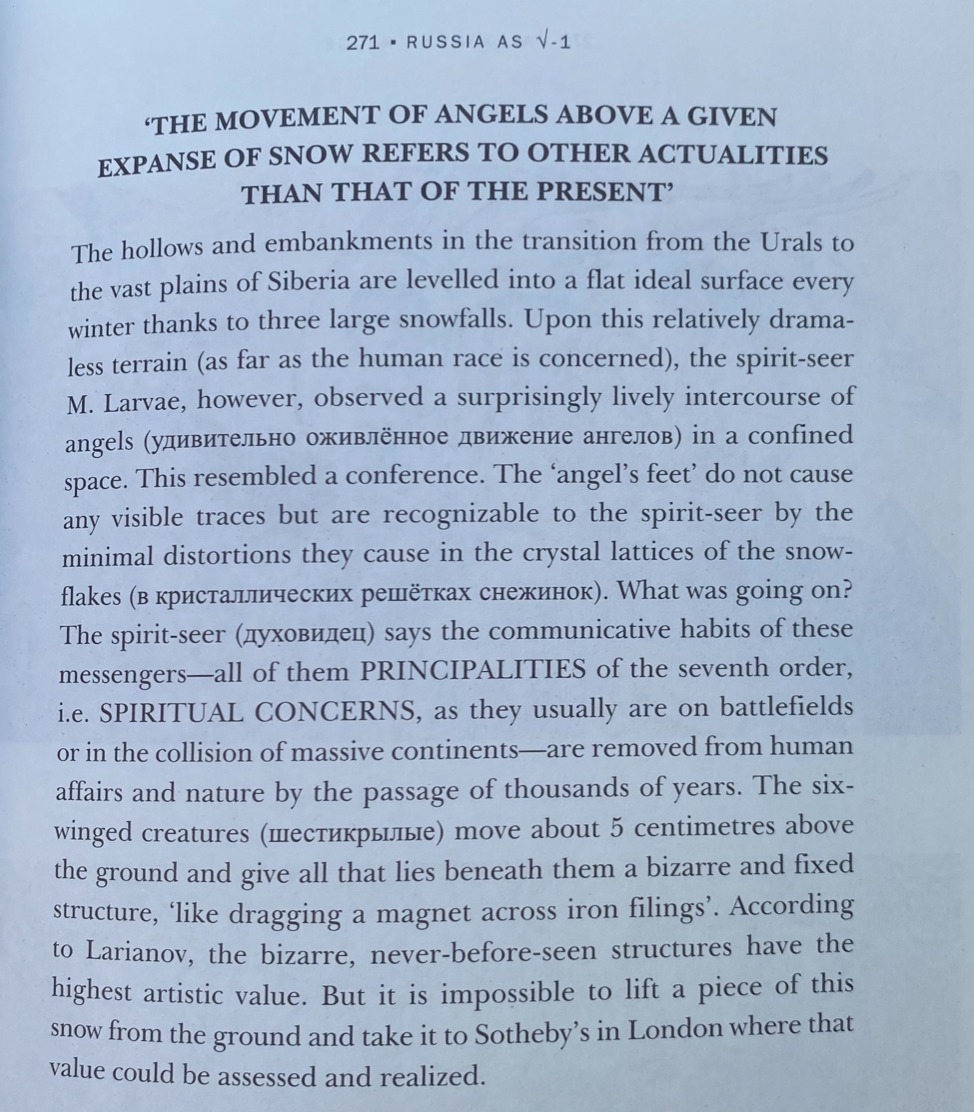
Alexander Kluge, “The Movement of Angels Above a Given Expanse of Snow Refers to Other Actualities Than That of the Present”
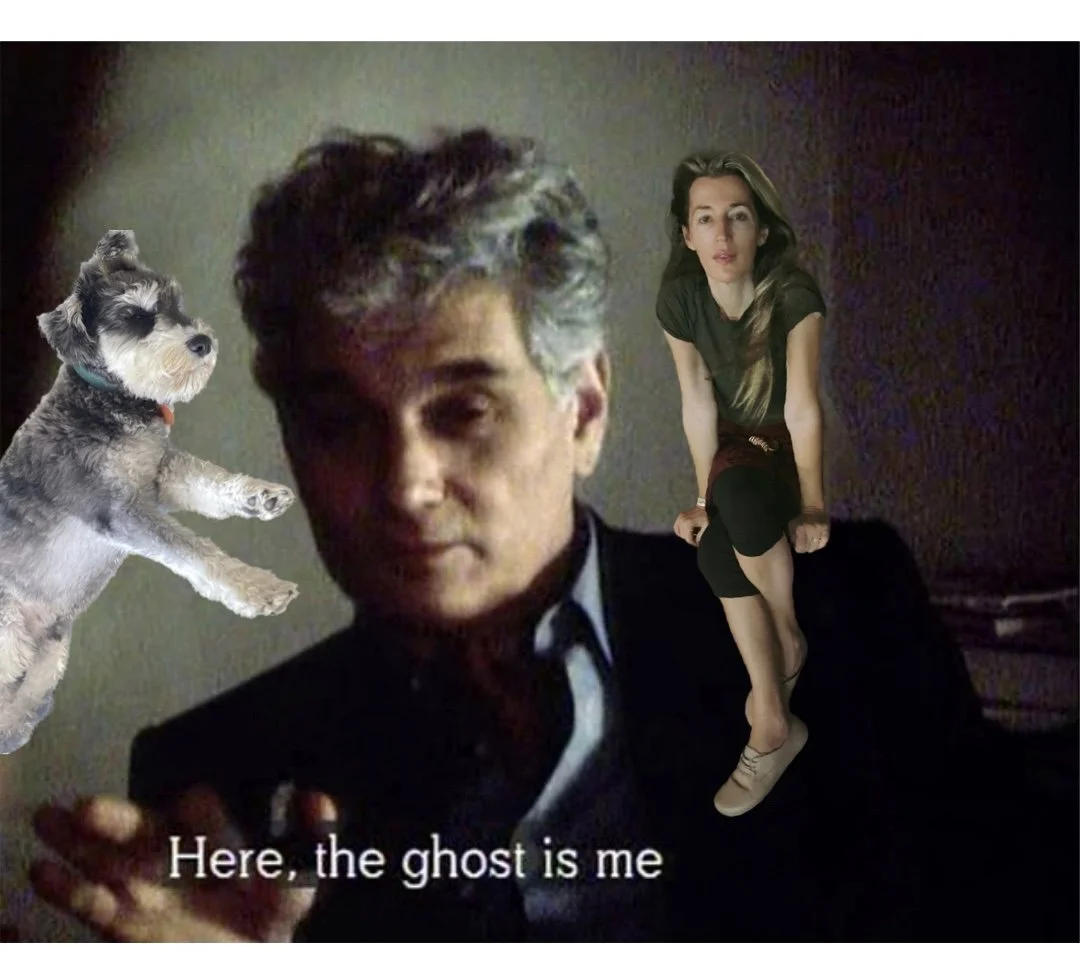
“a surprisingly lively intercourse of angels”
BATAILLE:
I feel I am among you as the opposite of the person who calmly watches from the shore the ships which have lost their masts. I am on the ship which has lost its mast ... I am having a good time, and I laugh as I look at the people on the shore, I think, much more than anyone could laugh from the shore while looking at the mastless ship, because after all, I don't see that anyone could be so cruel as to laugh freely from the shore at a ship without a mast. If you're sinking, it's different, you can welcome it with a joyous heart [s'en donner à coeur joie].
HYPPOLITE:
It's Zarathustra's laughter.
BATAILLE:
If you like. In any case I'm amazed that people see it as so bitter.
HYPPOLITE:
Not bitter.
MARCEL:
All the same, that story ended badly ... Just a historical point. [C'est tout de même une histoire qui a mal fine . . . Simple référence historique.]
BATAILLE:
And?
MARCEL:
Was Nietzsche still laughing in Turin? I'm not sure he was.
BATAILLE:
On the contrary, I believe he was laughing then.
DE GANDILLAC:
We are not speaking about the laughter in Turin.
BATAILLE:
What does anything mean at that moment?
*
Alexander Kluge, “The Movement of Angels Above a Given Expanse of Snow Refers to Other Actualities Than That of the Present”