I don’t think I’m smart Adam Smith
but what we despise may be a mystery
coping with shyness.
— Joe Ross & Rod Smith, “Interlacktual Za”
LENS: Any kind of thing could be the accidental cause of joy, sadness, or desire.
— Norma Cole & Michael Palmer, from A Library Book
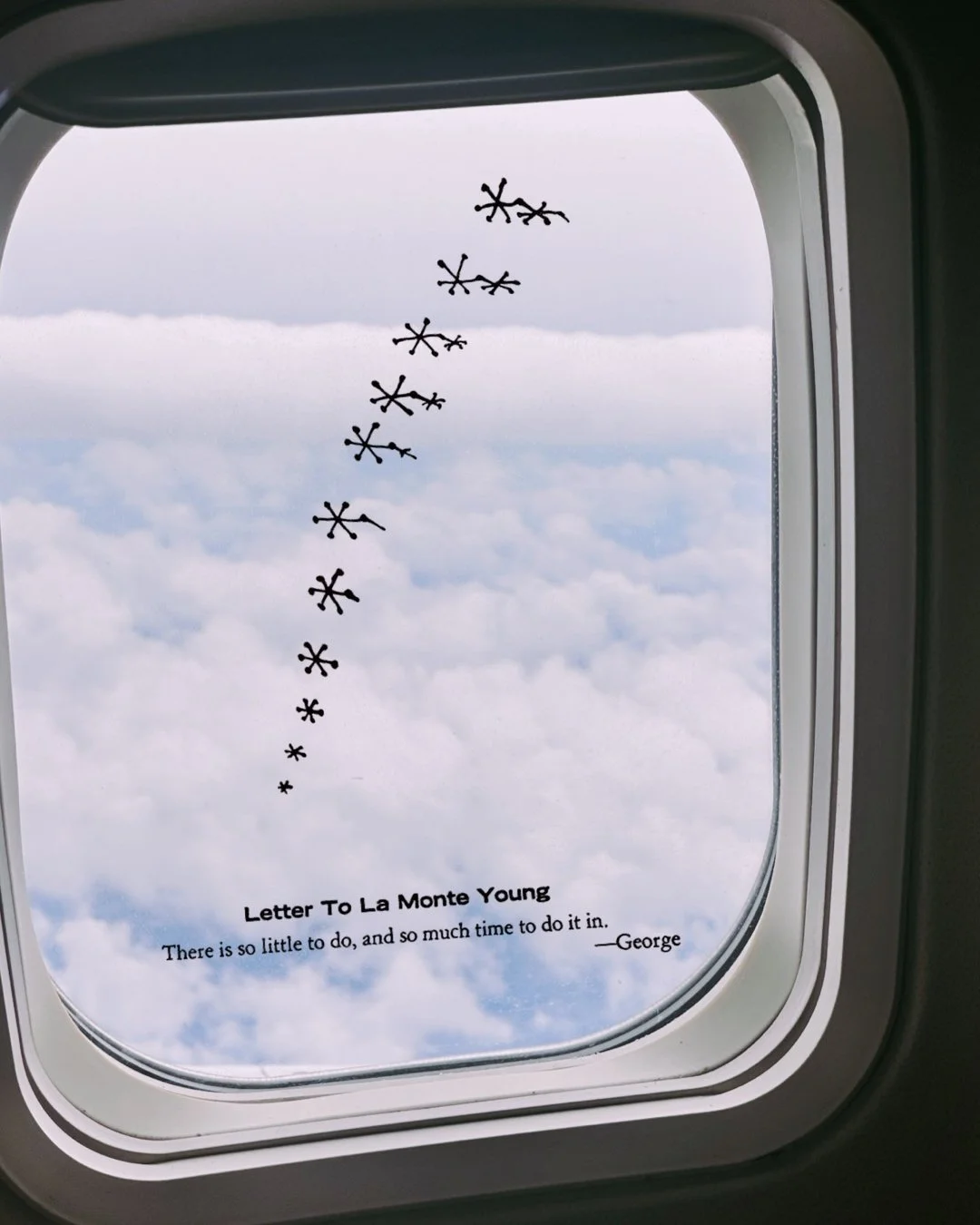
Having stumbled upon a veritable treasure-trove of collaborative poetry and poetics— Saints of Hysteria: A Half-Century of Collaborative American Poetry, edited by Denise Duhamel, Maureen Seaton & David Trinidad — a spellbinding elaboration of possibilities and ruses, complete with notes on process by the authors. Take “Waves of Particles,” for example, co-written by Bill Berkson, Michael Brownstein & Ron Padgett:
Waves of Particles
Television is great. The wind blows
across a screen in Nevada, Utah. That’s great,
greater than Utah. The little dots come out to play
in lines of grey and waves of gravy. Navy blue.
A physicist lights a cigarette on a horse,
although he doesn’t know it
because the TV doesn’t show it.
But we can see it although we can’t smoke it.
Maybe that’s the end of it, a little dot of light
shining its name on the great white what.
According to the process notes, in late summer 1969, Michael Brownstein, Ron Padgett and Bill Berkson visited the home of Berkson’s mother in Port Jefferson, Long Island. “Waves of Particles” was conceived there, with Brownstein recording lines as they were called them out, before adding his own response to a pad of paper, thus acquiring the dual titles of “coauthor” and “director” for this poem. As for B’s mom and the house, she/it acquired the code name “Brenda” to honor the hurricane that passed through the Long Island around the time this poem was written.
*
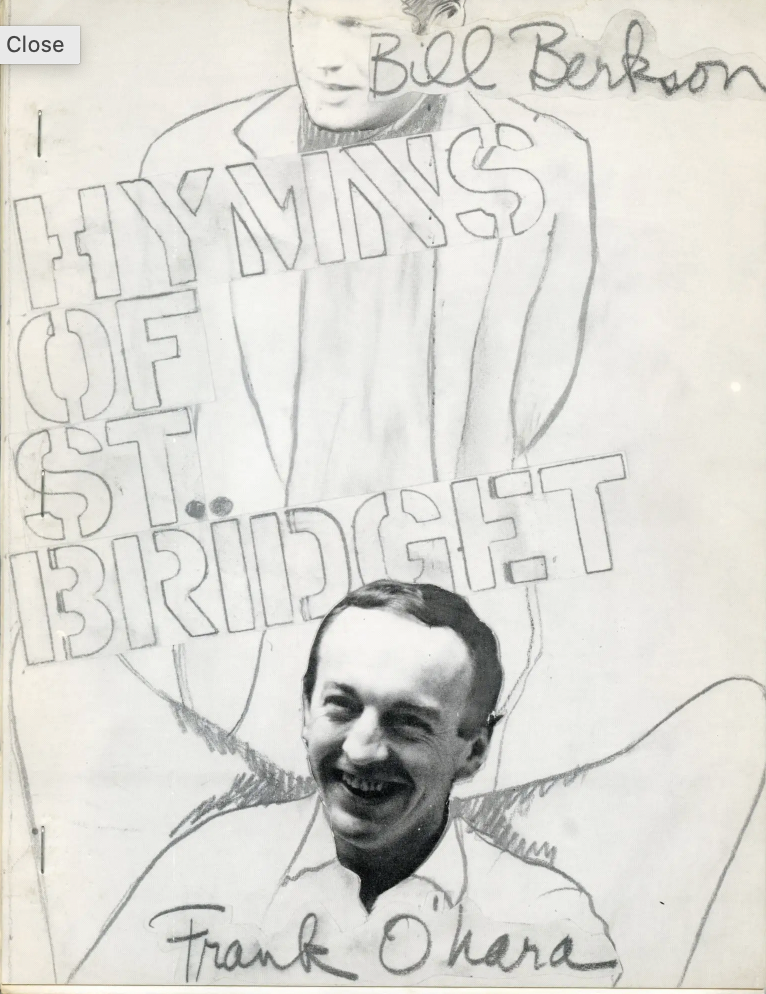
Cover art by Larry Rivers for Hymns of St. Bridget by Bill Berkson and Frank O’Hara.
Speaking of resonance — even if I wasn’t, even though I’m always thinking of resonance in some way or shape— there is much to be said for the creative potential in glitches and tiny errancies. To say: I collect beautiful accidents to keep myself from inadvertently falling prey to the binaries of purity. There is a poetics of place in this, which is to say, particular (and titular) misspellings make it possible create an alternate version of a person or place.
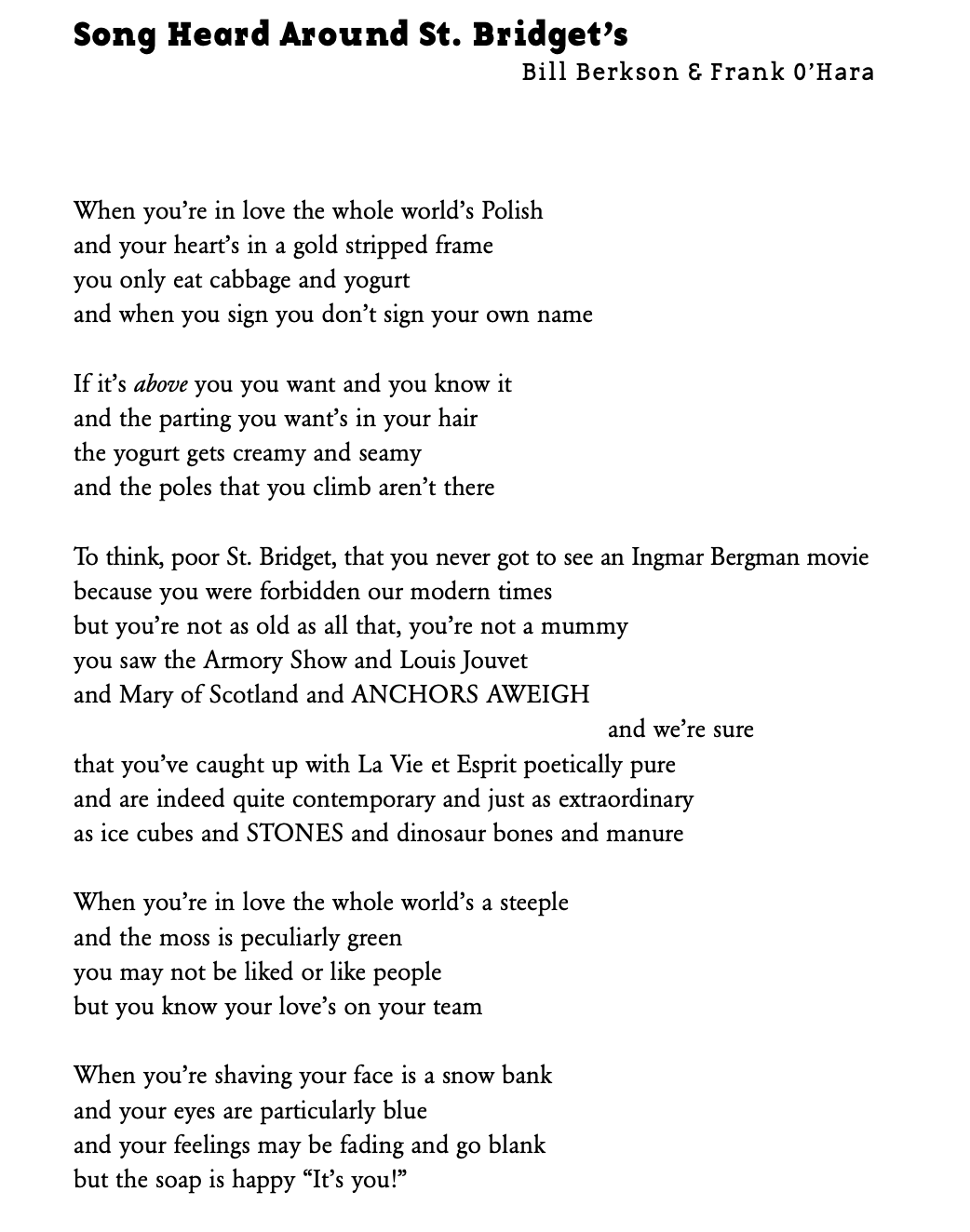
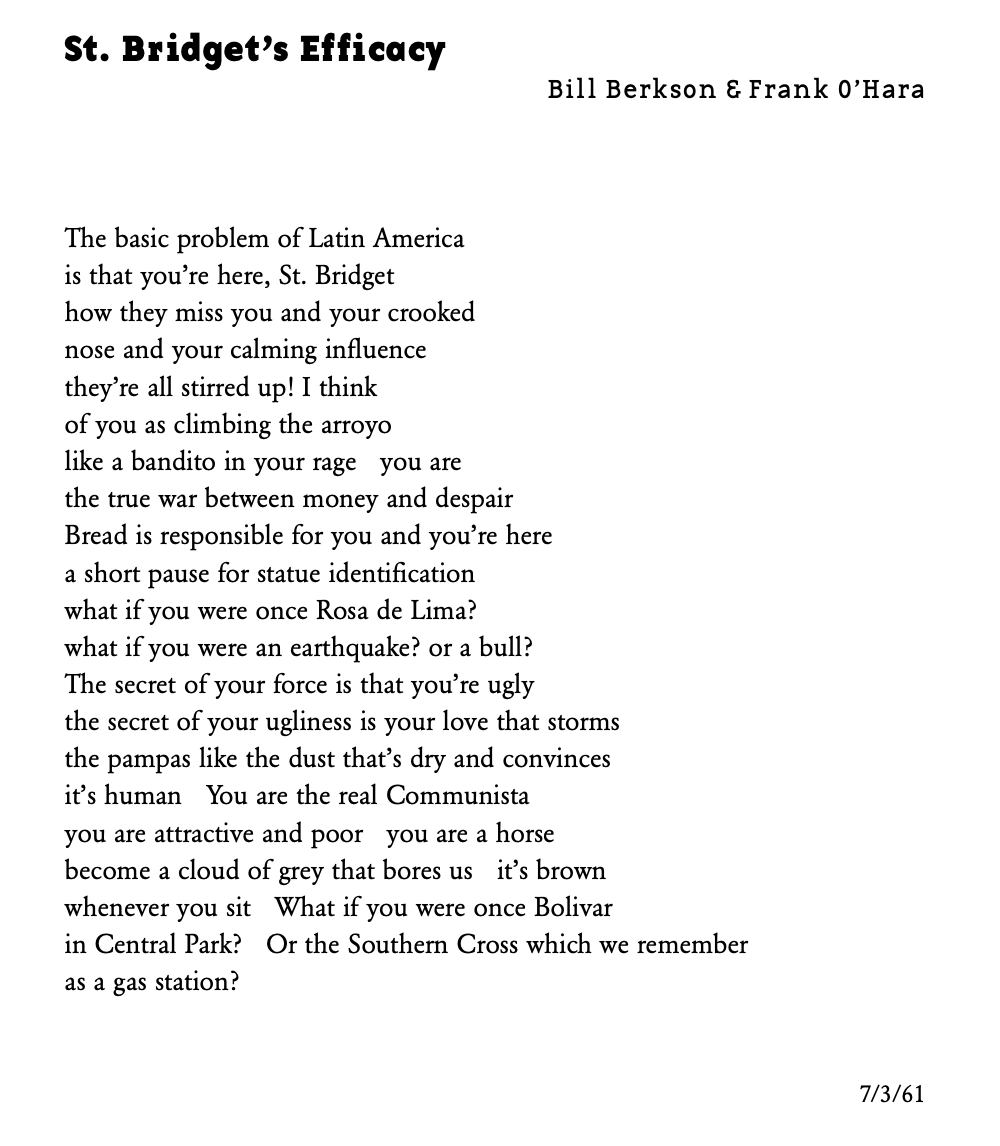
Example: In 1962, Bill Berkson and Frank O’Hara co-authored a splendid book titled Hymns of St. Bridget, but the name of the eponymous Irish saint they referenced is actually spelled “Brigid.” And this makes their hymns of St. Bridget particular to the St. of their manuscript, a being that arose from the poets’ shared walks in relation to a perceived flaw in a “steeple”. Berkson describes the genesis in his process notes:
One autumn afternoon in 1960, Frank and I were walking up First Avenue [in New York City] and suddenly noticed something odd about St. Bridget’s Irish Catholic church on the Avenue B side of Tompkins Square Park, across from Frank’s place at 441 East Ninth Street, near Avenue A. The left-hand steeple of the church was curving inward. This flaw (on account of which, apparently, years later, the steeple was removed) struck both of us as hilarious. Later that day, I went home and wrote “Hymn to St. Bridget’s Steeple,” the first of the “St. Bridget” series, in rather clunky imitation of what Frank later called his “I do this I do that poems.” Most of the hymns were written, taking turns at the typewriter, either at Frank’s or at Larry Rivers’s house in Southampton. Frank’s keyboard attack was fabulously quick, so most of these—as well as most of the other collaborations we did—are mostly by him, and the parts by me are mostly me trying to keep up. [ . . . ] Whenever the exact date of writing is indicated on the manuscript I have included it (the dates are cumulatively October 19, 1960 to April 1, 1962). Otherwise, the set is pretty much in the order as retyped by Frank for a possible book manuscript (he thought Grove Press might be interested) in 1962.
Meet St. Bridget, the “Saint of Hysteria” — the muse-friend of two poets moving through their shared world, making a jig of it, knowing that most of what thrills them will never be published:
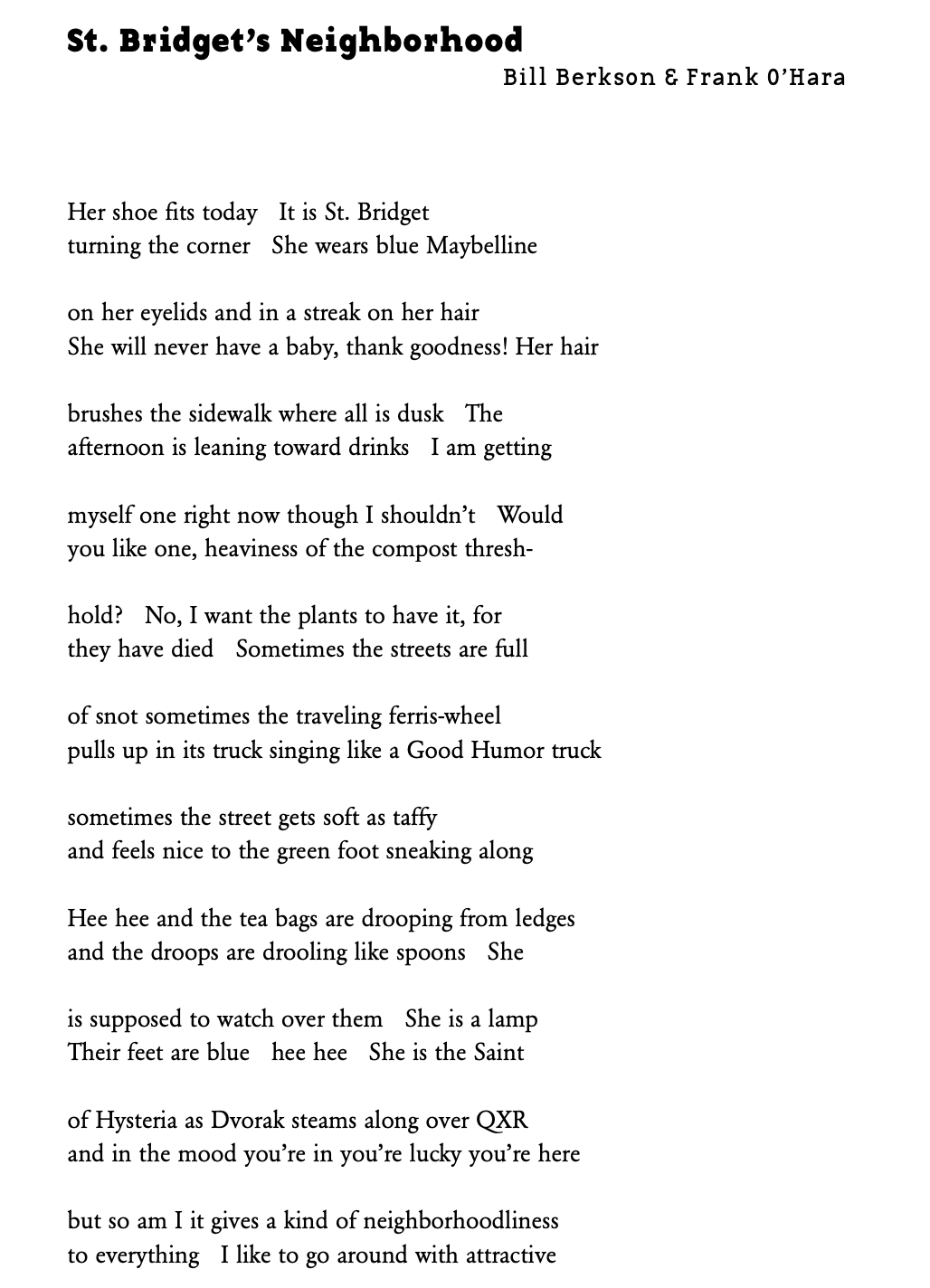
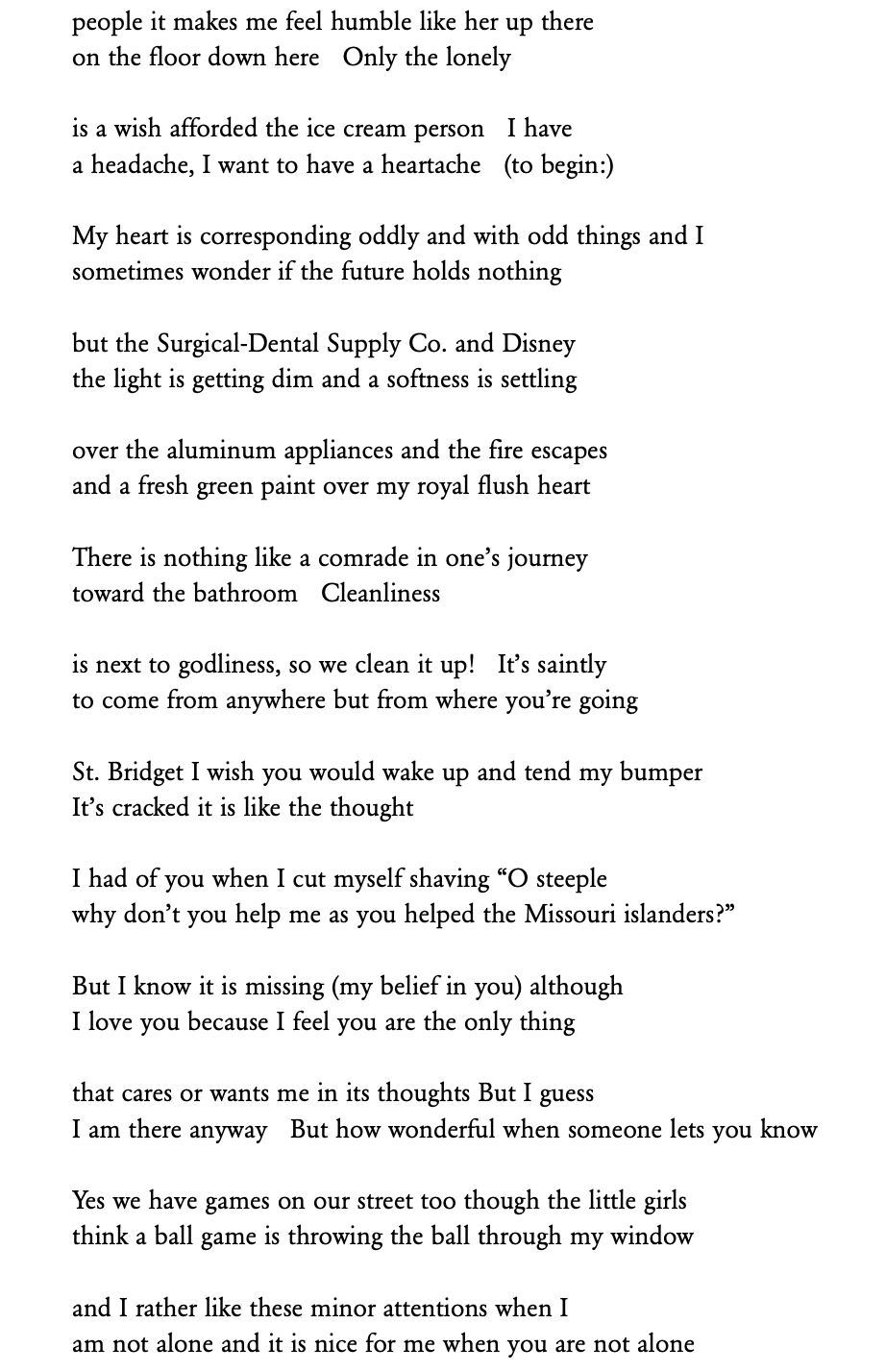
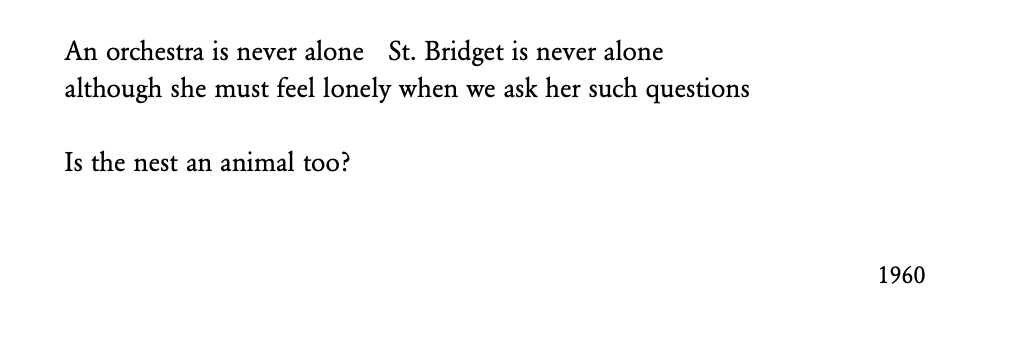
A note adds that “St. Bridget’s Neighborhood” was inspired by — and partly imitative of — Robert Desnos’s poem, “Quartier San Merri.”
And —- since it is snowing in Alabama, and Radu’s head is covered in snowflakes — an excerpt from Maxine Chernoff and Paul Hoover’s “Slow Flurries” seems like an appropriate way to distend this:
Two birds on the same stretch of air—
two leaves, different trees.
But pinching someone else’s skin
is very different from pinching your own
a different shading.
If we pinch each other
at the same time,
we’re doing the same thing
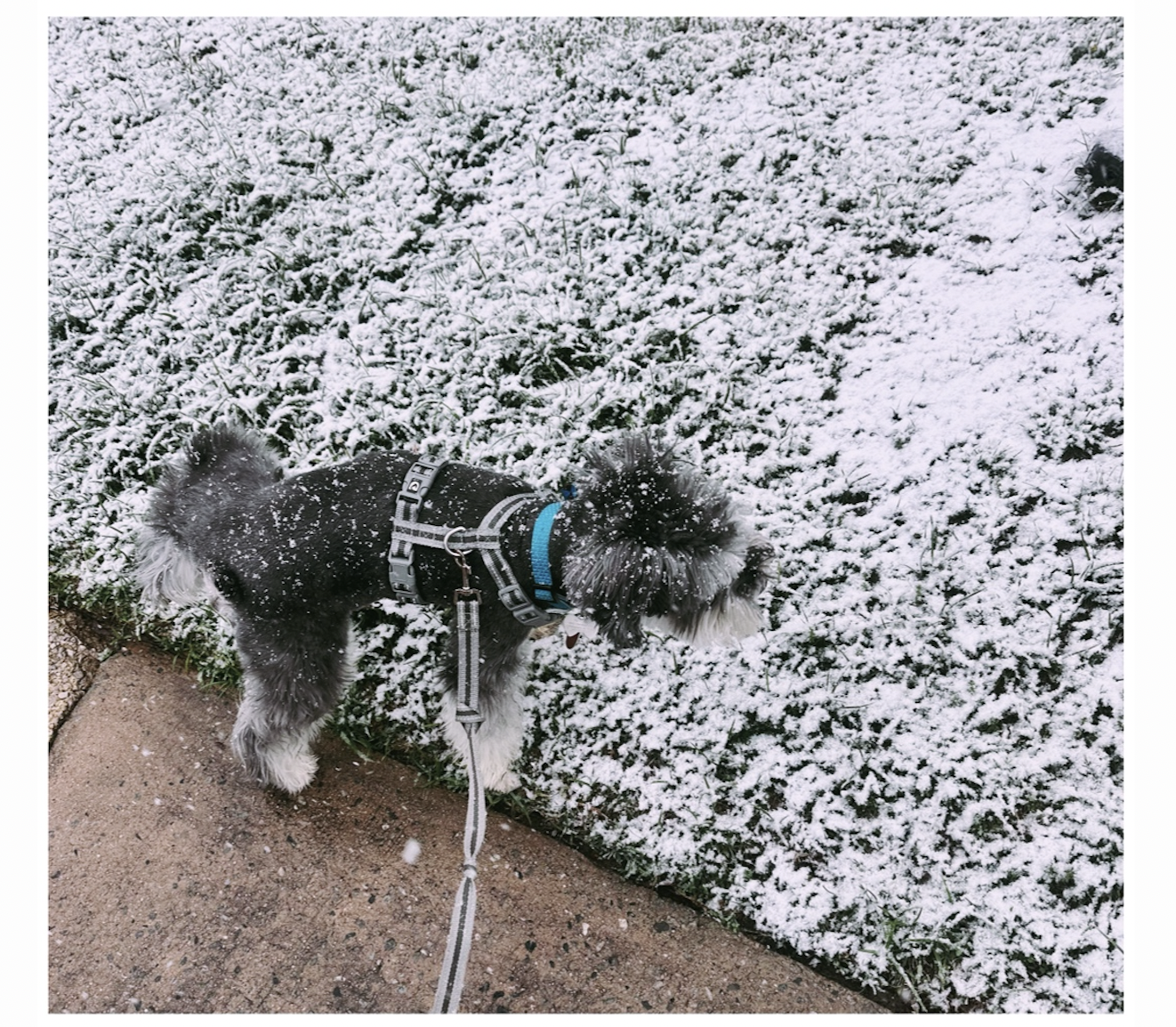
Radu with snow.
*
Allen Ginsberg & Ron Padgett, “Thundering Undies”
Bernadette Mayer and Alice Notley, “From a continuing collaboration” (PDF)
Denise Duhamel, Maureen Seaton & David Trinidad, eds. Saints of Hysteria: A Half-Century of Collaborative American Poetry (Penguin Random House)
Denise Duhamel and Maureen Seaton, “Madame Bovary”
Dennis Cooper & David Trinidad, “S. O. A.”
Douglas Kearney and Haryette Mullen, “Sprung Flung” (PDF)
Miles Davis, “Minor Ninths: Part 1”
Stephen Dunn & Lawrence Raab, “In the Cities of Someone Else’s Anxiety”
Postscript
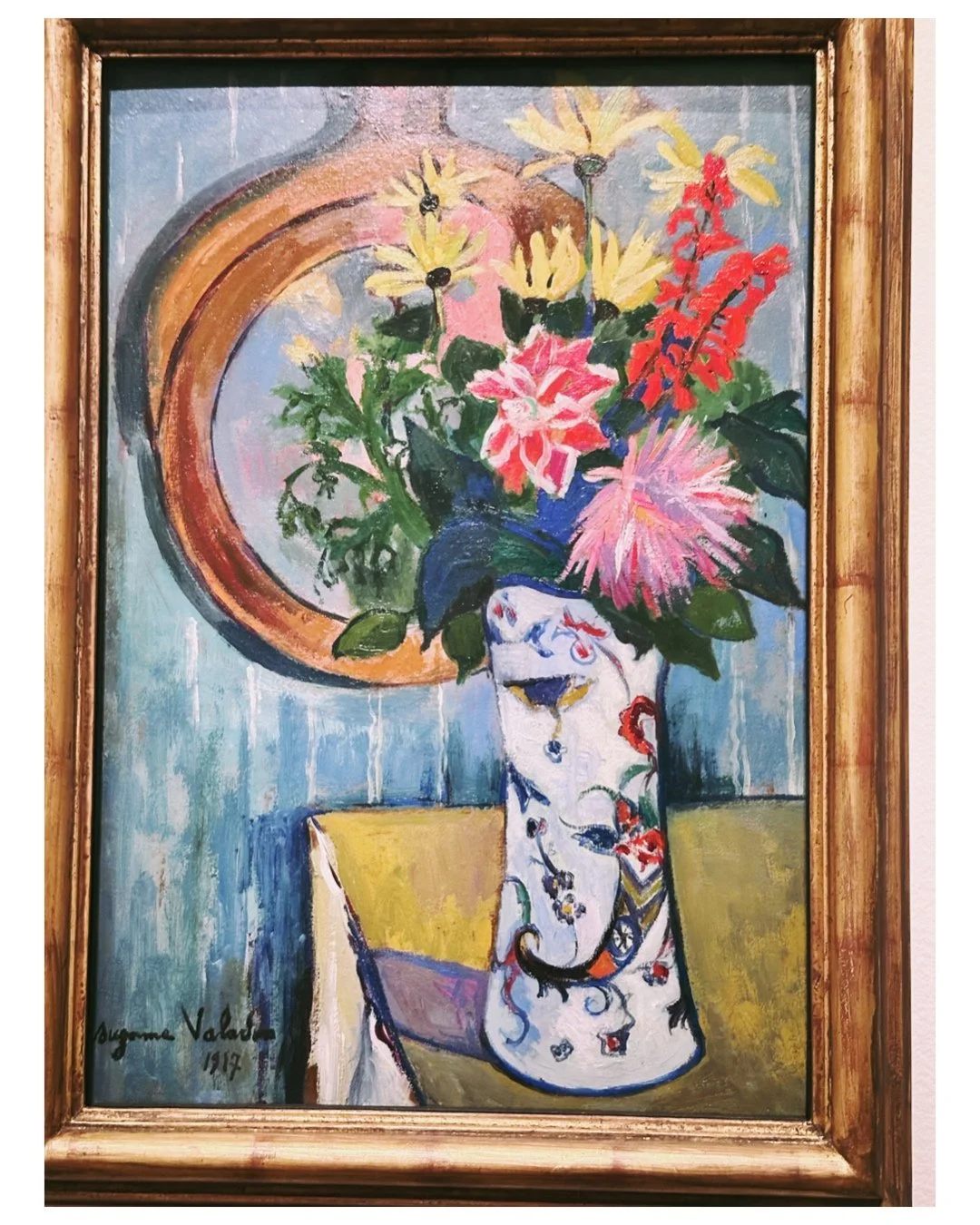
A painting by Suzanne Valadon that I came upon in the Baltimore Museum of Art last week. I love how an ersatz eye looks down from the vase.