
Untimely meditations.
Friedrich Nietzsche’s Unzeitgemässe Betrachtungen have been translated as Untimely Meditations and/or Unfashionable Observations and/or Thoughts Out of Season. Of the two untimelys devoted to Schopenhauer and Wagner, Nietzsche said:
“What I did by and large was take to take two famous and still altogether undetermined types... in order to say something, in order to have a couple more formulas, signs, means of expression in my hands... It was in this way that Plato used Socrates, as a semiotic for Plato. — Now I look back from a distance at the circumstances of which these essays are a witness, I would not wish to deny that fundamentally they speak only of me.”
*
Speaking of timeliness, Julian Talamantez Brolanski titled a poem as an instruction to hasten slowly, or to hurry lolling, to slack about speedily. I love his use of “betelgeuse” as a marker in this poem’s soundings:
“hasten slowly and you shall soon arrive”
hasten slowly and you shall soon arrive
priyanka said, quoting milarepa
after all this time
my patience waned its way
into the dipping sun
with the pin-tailed one
whose knowledge was encyclopedic. . . .
betelgeuse is turning on and off
like your love—everybody knows
it’s dying.
the angels might get so sad
knowing what I do
as I mourn over you
in this weird atonal interlude
and then to know
what makes a pleasant music
who played their fiddle knee-to-knee and whose
wings beat in tawdry time
cinch up your saddle
what could be worse
than a home without a horse
you may never know my mind
and you may never
stroke its thigh
and that is how you’ll go
unto the clotted breast of god
Labyrinthitis.
Intense vertigo of the spinning variety, hearing loss, tinnitus (ringing in the ear), nausea, vomiting, and imbalance.
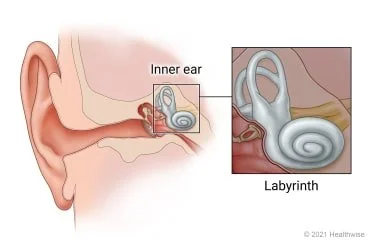
These are the symptoms of a condition caused by an ear infection or a virus attacking a particular part of the ear known as the bony LABYRINTH, a delicate complex located inside the inner ear that includes three specialized structures: the vestibule, the semicircular canal, and the cochlea.
The labyrinth converts mechanical signals transmitted by the middle ear into electrical signals, which are then relayed on to the auditory pathway in the brain.
The labyrinth also detects motion and position in order to maintain balance.
An inflamed labyrinth.
A hidden snail snell with oval handles.
A series of letters in which Samuel Beckett mentions his ear issues, and how motion is displaced by vertigo.
Inexistance.
A fellow named Skeffington died.
This fellow’s death gave birth to a widow.
The widow knew her husband had attended Beckett’s lectures in Paris.
On March 7th, in the year of the lordless 1972, Beckett offered his condolences to Mrs. Shechy-Skeffington in a letter confirming “a vague memory of a lecture” that had given on “an inexistant literary movement baptized Le Concentrisme.”
It is true that Beckett delivered this presentation in November of 1930 to the TCD Modern Language Society as a parody of academic scholarship on the work of fictional poet Jean du Chas.
And it is also true that Beckett's 'inexistant' is a fabulous way to deny the lecture's nonexistence.
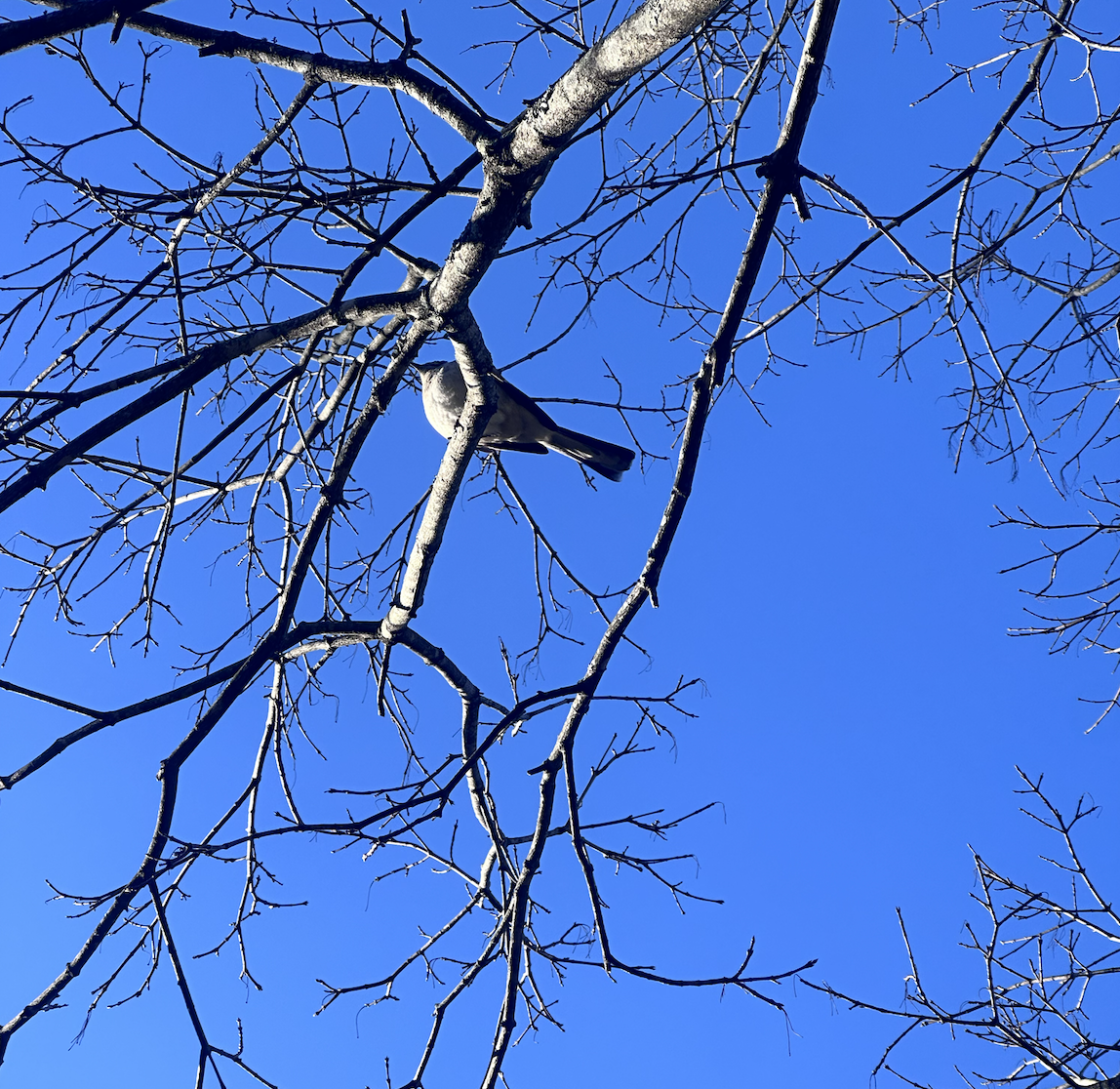
A full-breasted being spied when looking up on my walk today.
And a poem by Franz Wright thanking the leaves:
Leave Me Hidden
I was having trouble deciding
which to watch: Night
of the Living Bloggers, or
Attack of the Neck-Brace People.
In the end I just went for a walk.
In the woods I stopped wondering why
of all trees
this one: my hand
pressed to fissures
and ridges of
bark's hugely magnified
fingerprint, forehead
resting against it
finally, feeling
distinctly
a heartbeat, vast, silently
booming there deep in
my hidden leaves, blessed
motherworld, personal
underworld, thank you
thank you.
*
Destroyer, “Labyrinthitis”
Franz Wright, “Leave Me Hidden”
Julian Talamantez Brolanski, “hasten slowly and you shall soon arrive”
Saul Williams, “Untimely Meditations” (from Amethyst Rock Star)