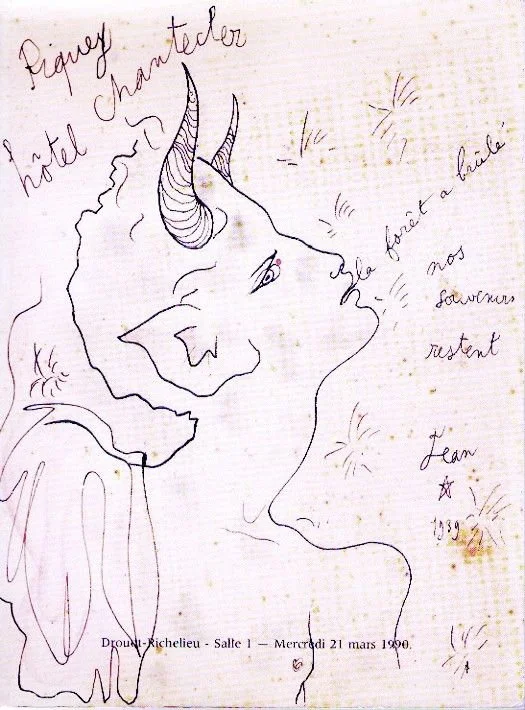
Je rêve d'un printemps définitif . . .
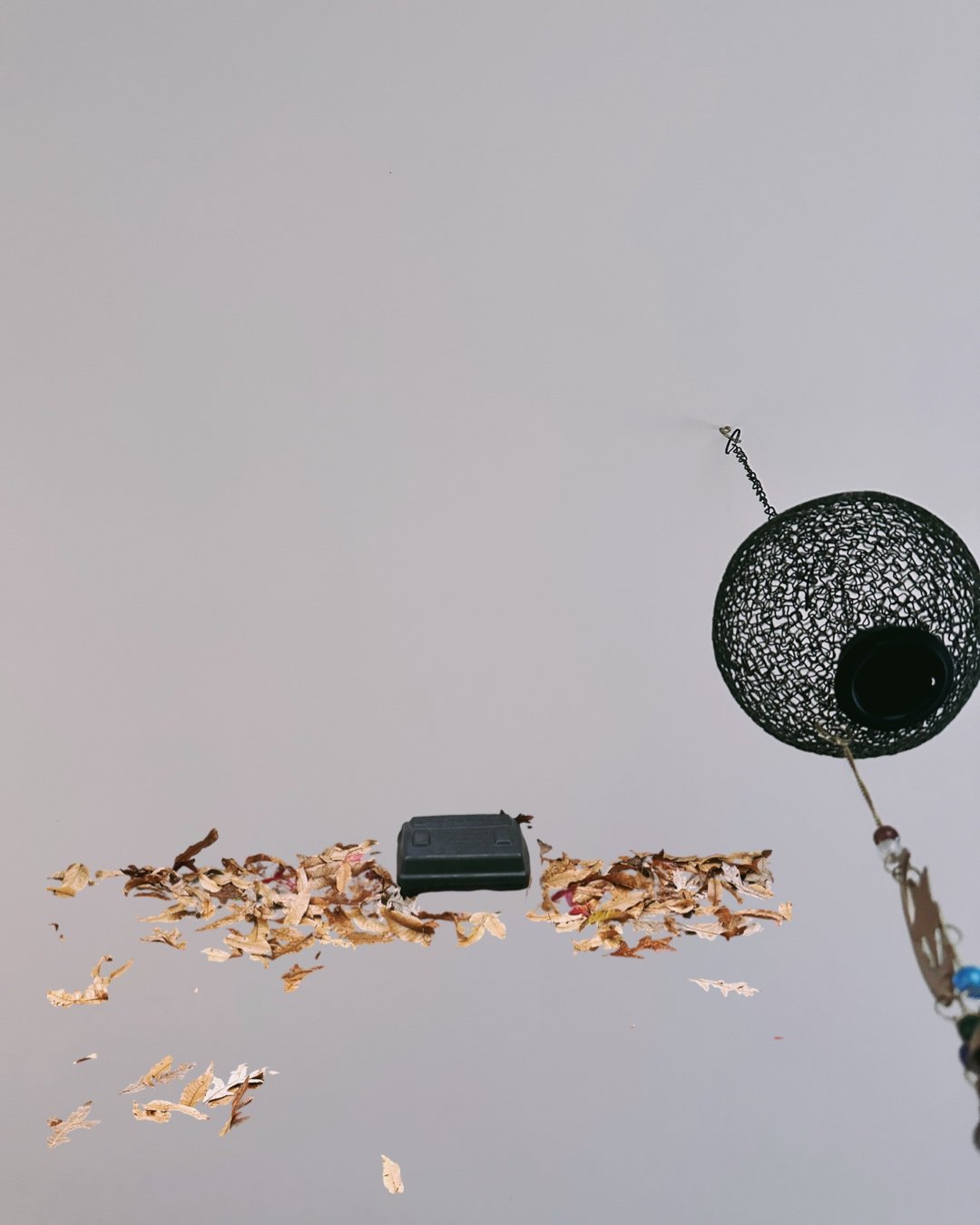
The first of December.
Most leaves have abandoned their trees and settled upon the dying grasses in clumps of soft brown, or else lingering in patches of desaturated gold. Along the hillside of Avondale Park, the eye catches a series of blankets woven together from leaves, their colors blown into ensembles by a windy weekend. I am trying to think my way out of the slats and the slots of this month, battling a sense the usual sense of urgency that upends the annual.
leafpile 1
Still chasing Picabia through the prior weekend.
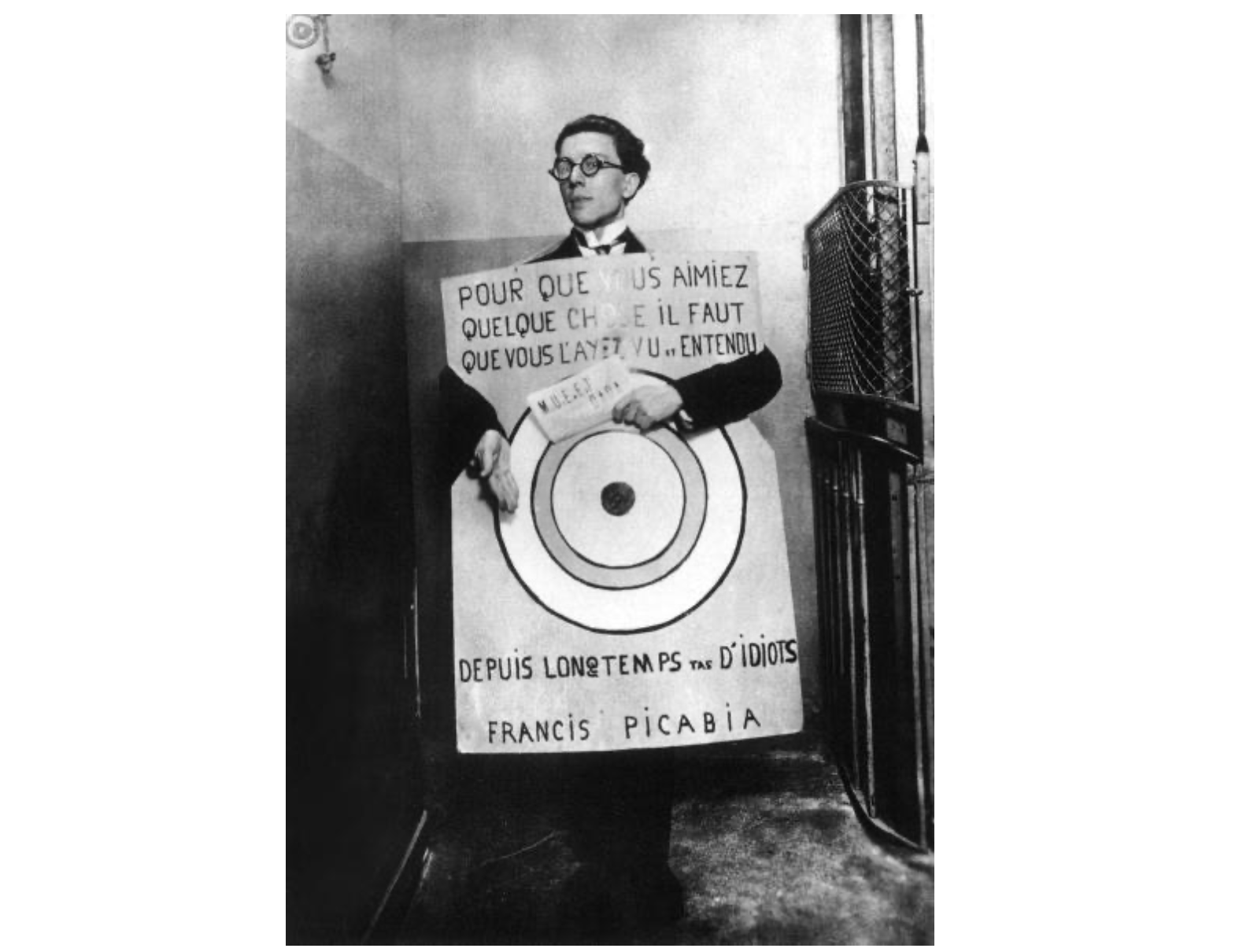
Andre Breton as sandwich man by Francis Picabia at Dada Festival, Paris, March 27, 1920.

leafpile 2
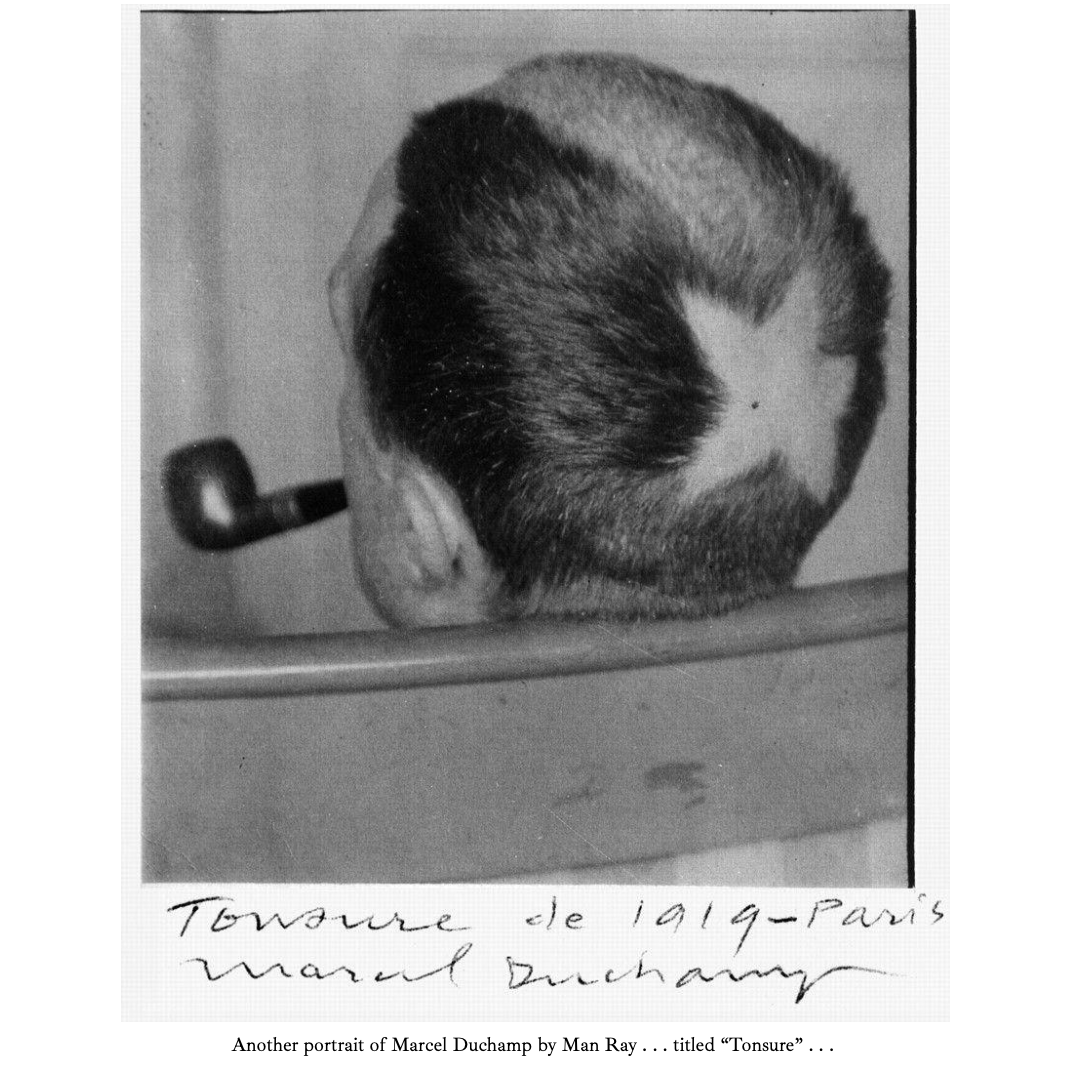
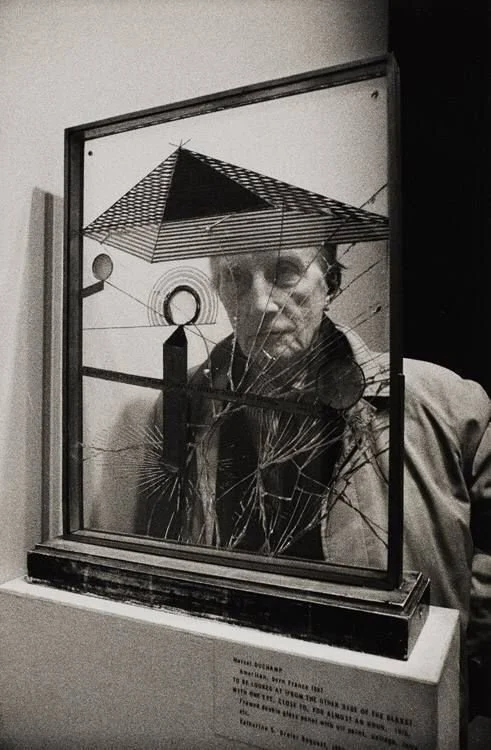
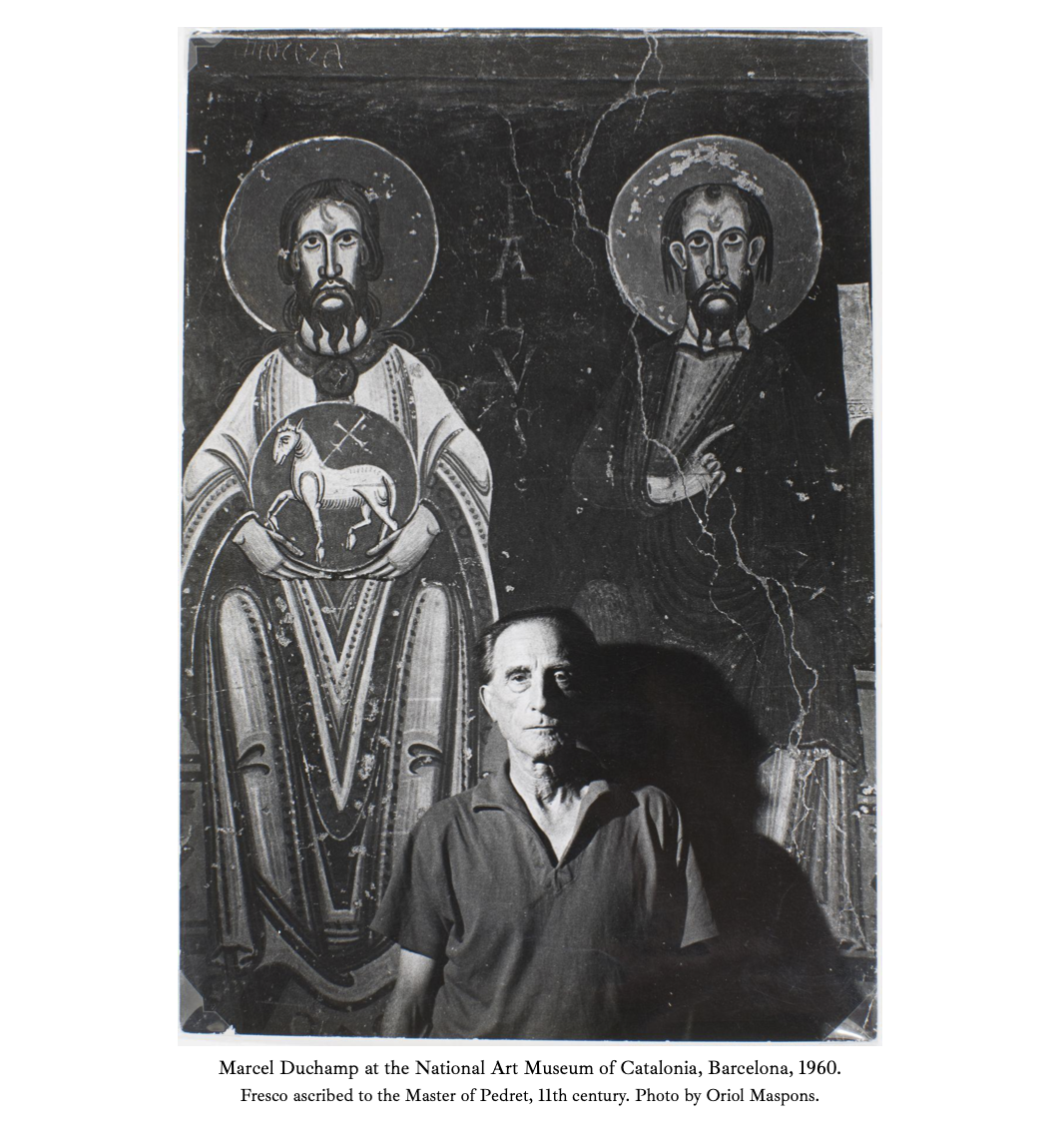
The subject is portraiture, or— more specifically — a portrait of Marcel Duchamp.
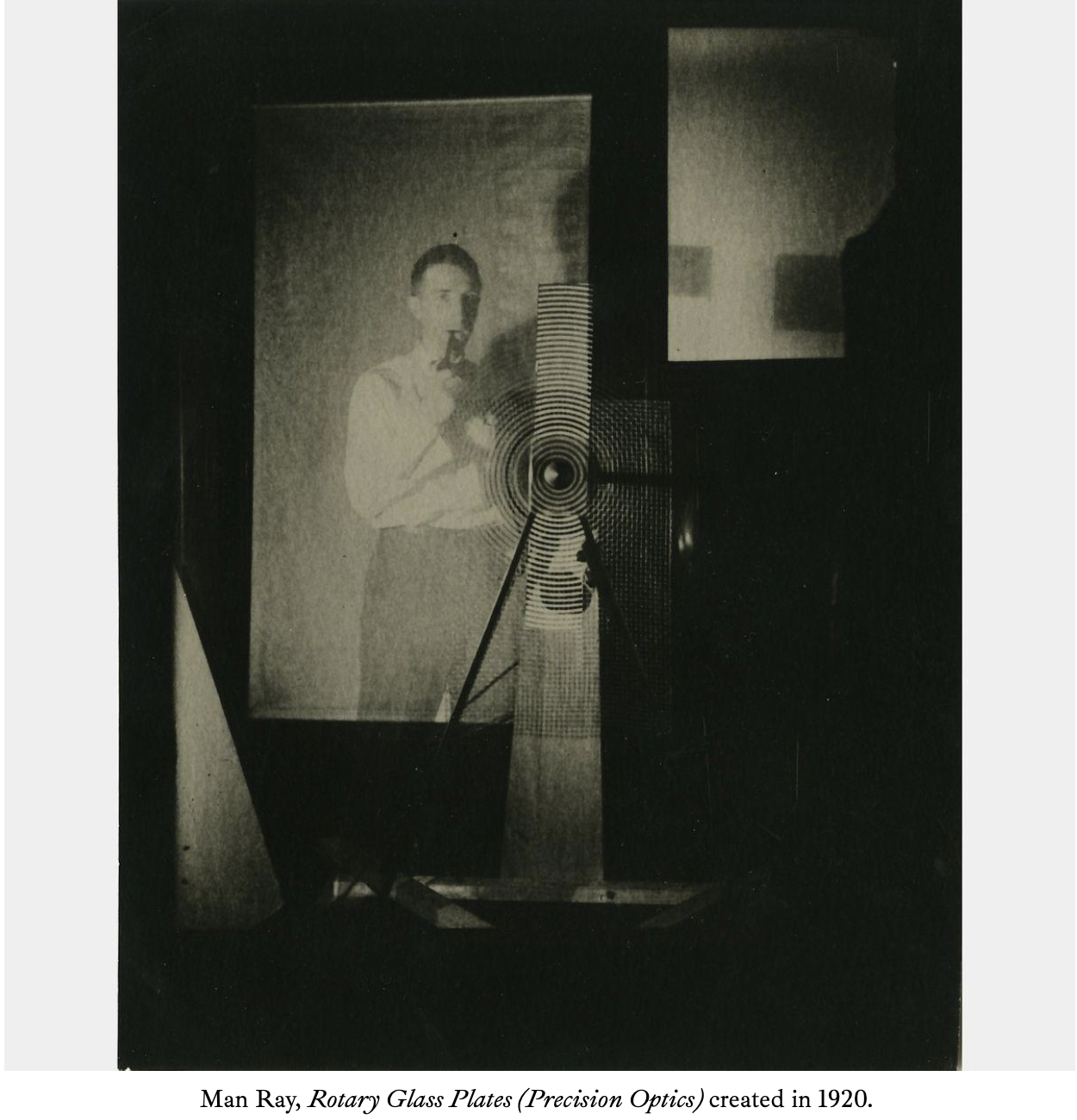
Exploring the relationship between optics and art, Rotary Glass Plates (Precision Optics) was one of Man Ray’s first kinetic art pieces, created by mounting five painted glass plates of diminishing sizes on a metal axis which was then spun by a motor. When activated, the spinning plates appear as a single flat spiral that creates an optical illusion.
leafpile 3
“A signature is more than a name but less than the trace of an entire absent body,” wrote Eugenie Brinkema in an essay addressing Sophie Calle’s work.
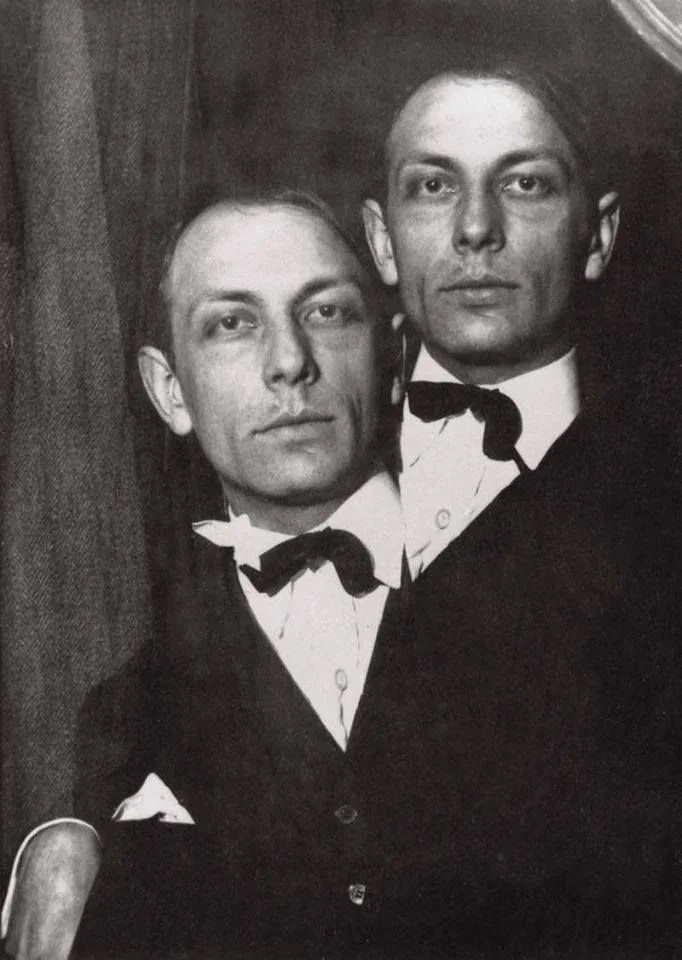
Claude Cahun, “Henri Michaux” (1925)
Claude Cahun took this photograph of Henri Michaux in 1925. The image lives at the Art Institute of Chicago. I love it dearly, and can’t quite explain why the fold of Michaux’s hand keeps catching my eye and drawing a line between the white crumpling of a handkerchief and the pocket and the expression hanky-panky.
leafpile 4
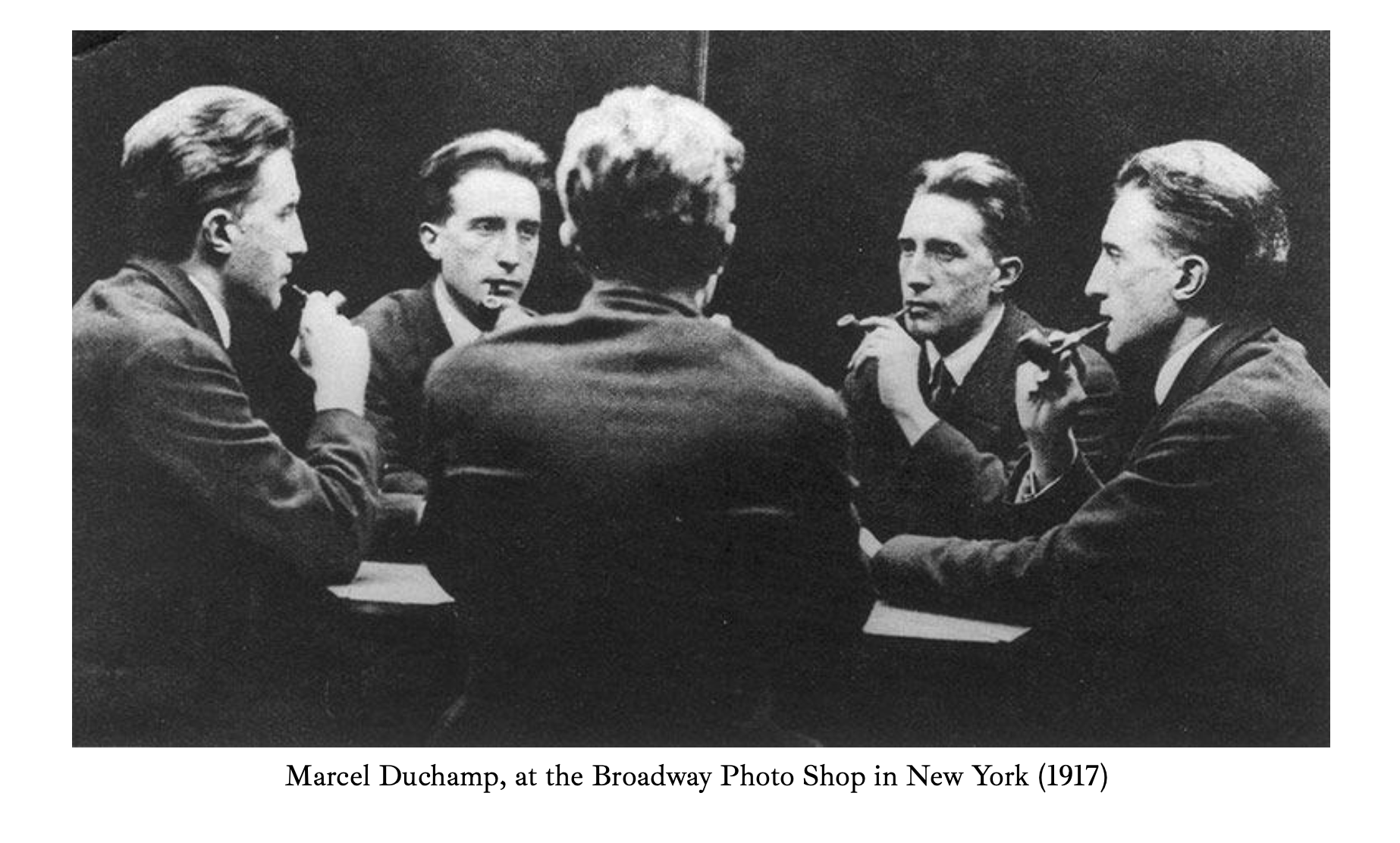
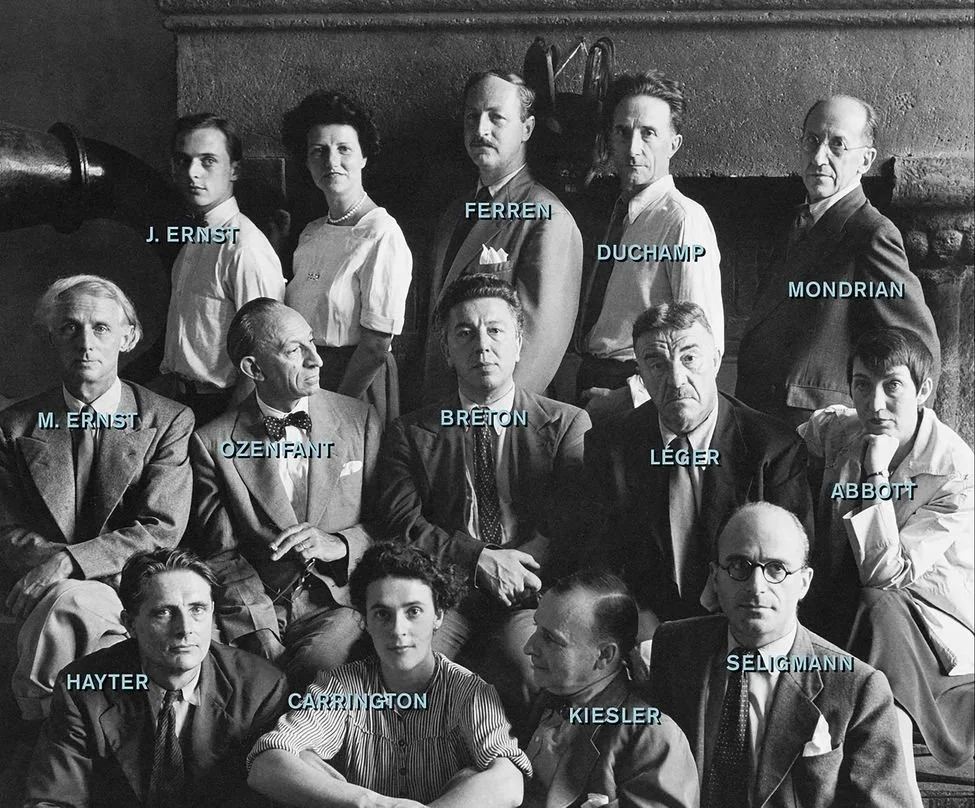
Uncanniess rippling through the year 1917, when the avant-garde dialogued through short-lived journals and art magazines that often vanished as quickly as they were created, so that Witkacy’s multiple self-portrait in mirrors speaks to that of Duchamp, as if to play upon the mode of being “in uniform” while also disputing the possibility of unanimity within a single subject.
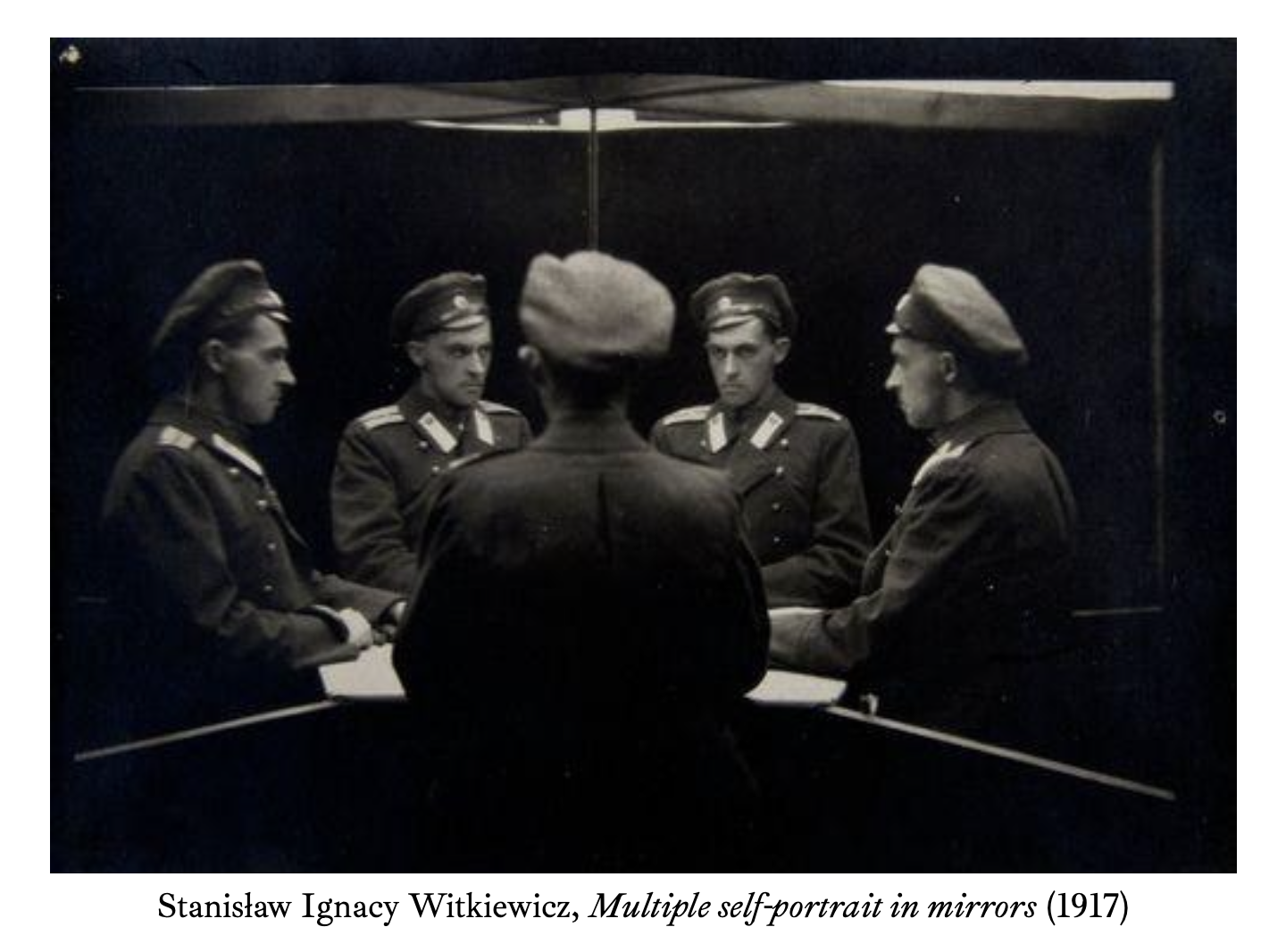
To be of five minds about the war.
To play with pipe that will be used to challenge the notions of representativity in art.
leafpile 5
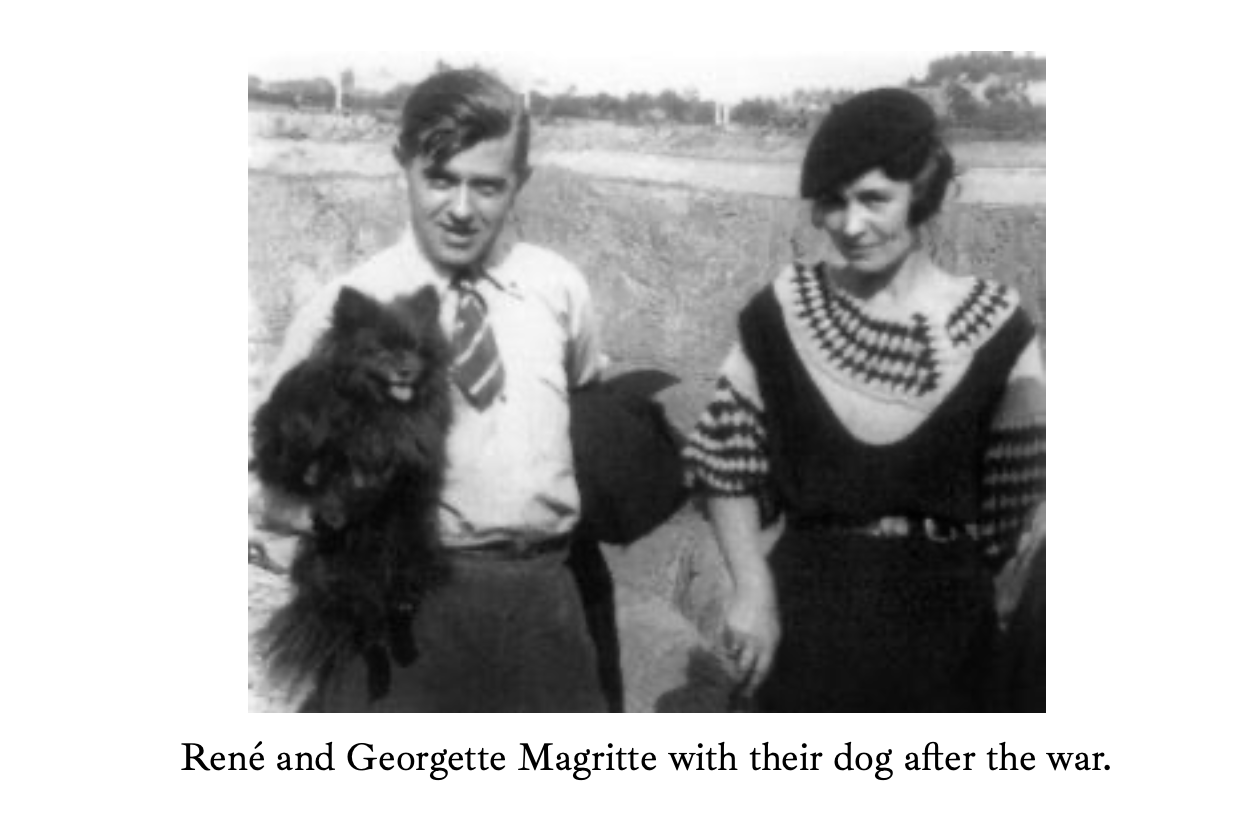
Margitte and his wife, the treachery of images soon to arrive in the late 1920’s as that series of word-images inspired by children’s books and his early career in advertising.
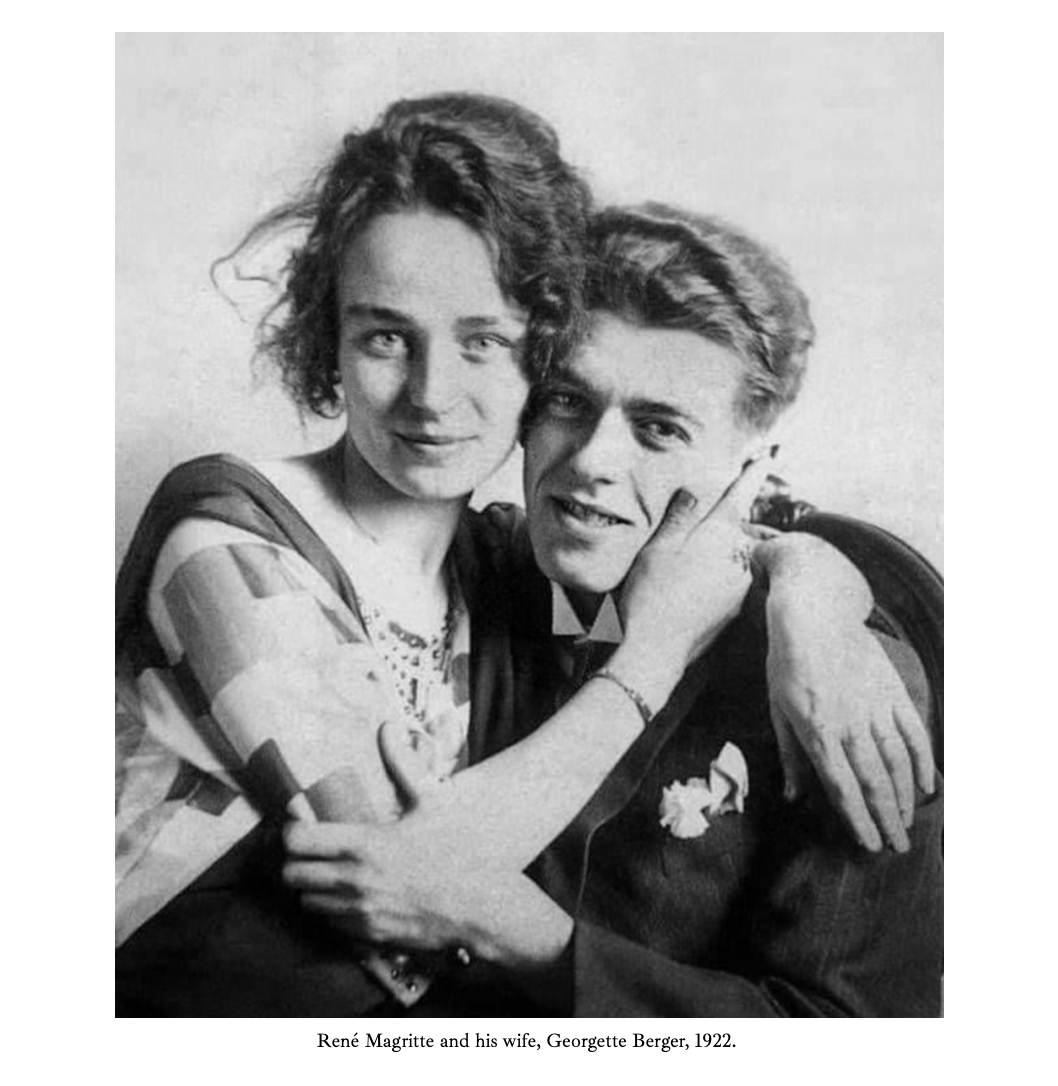
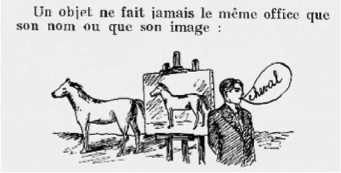
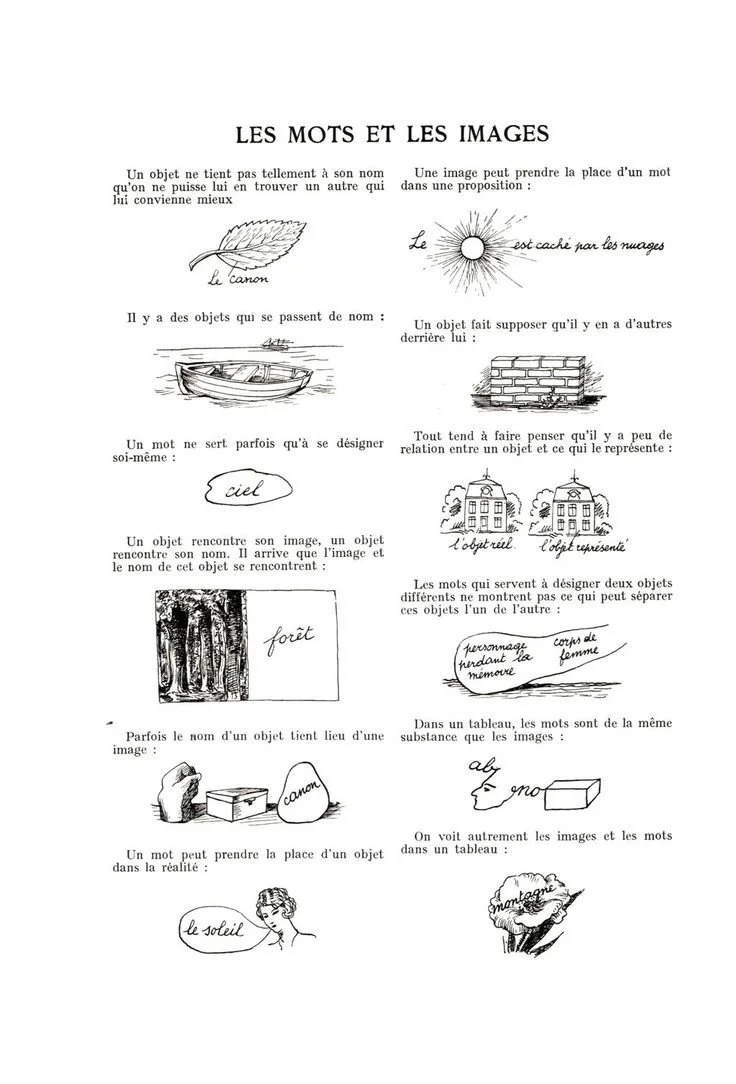
Magritte eventually laid out his rationale for word-image paintings in an illustrated text called Words and Images.
leafpile 6
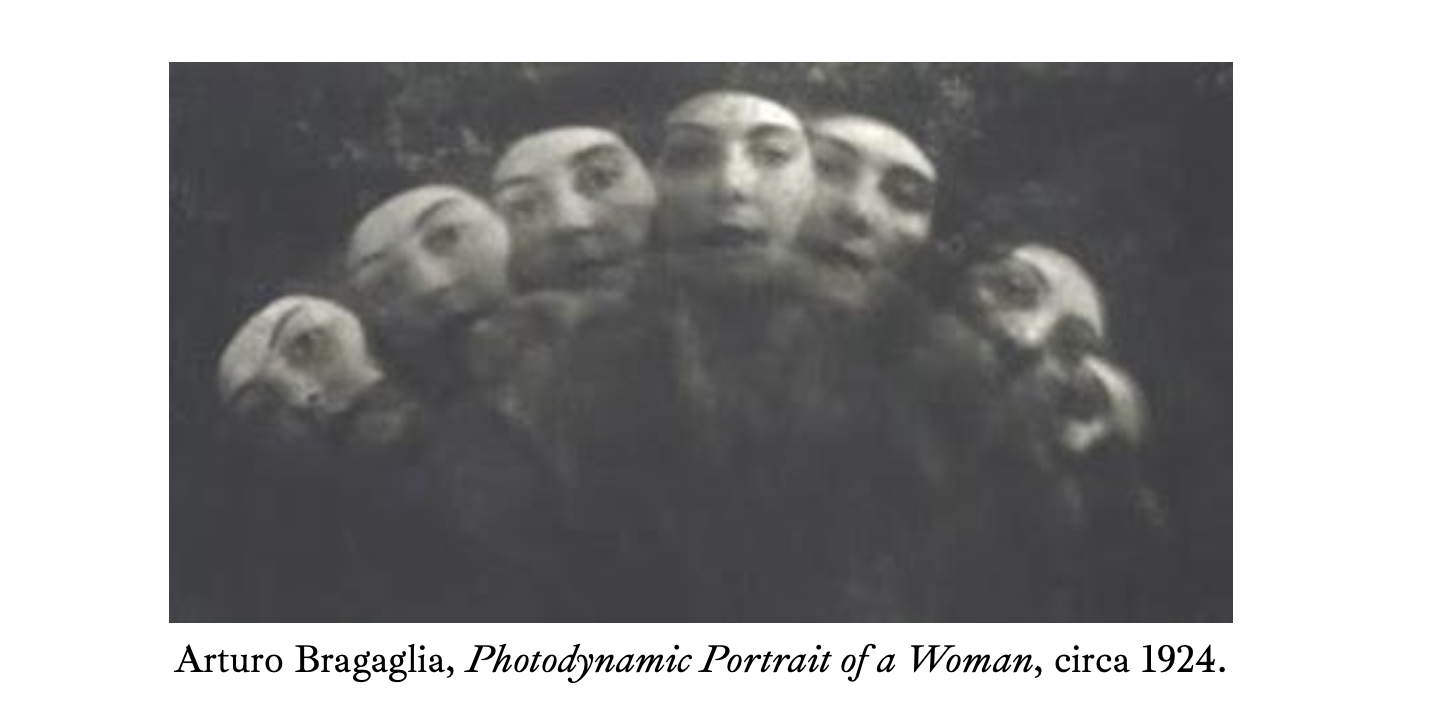
Motion’s entanglement with futurist notions of progress through industrialization reminds me of our contemporary fetish for technology as the savior and redeemer of future time. Not industry but tech. Not Industrialists but Tech Bros and Billionaires. Not snake oil but Bitcoin.
Collected from the corners of this day:
The theremin yowling from the corners of Biolay’s “Chère inconnue”
The tiny creaking sound that appears in Ólafur Arnalds’ “Near Light” — and the reverb that cuts, claps, moves like light scissoring across a sofa in the afternoon.
Face à l'étendue de ma peine que n'ai-je entendu les sirènes. Face à l'étendue de ma peine je me baignerai nu dans la Seine.
John Cassavetes in an interview, pushing back against the (fairly common) interpretation of his films as negative or depressing: “The world is so downbeat, so cynical; people want something to believe in. At least, people do deep down, but they're afraid to admit to humanities out loud for fear their friends and neighbors will think they are square. I get awfully sick of the mass flip attitude. I wish we weren't so hard-boiled. The human spirit is really at a dangerously low ebb. We need to pump adrenaline into our sentimental values, which have become so badly depleted. In this age of war fears, the destruction of everything and the fantastic progress of scientific wonders, we seem to have adopted only the rasping emotions of nerves for feelings - not emotions of the heart and soul that speak for faith and kindness and understanding There is something important in people, something that's dying, - the senses, a universal thing. We can't agree on politics, but maybe we can agree on senses. We are dying of sadness. The whole world is dying of sadness. We are the enemy. People don't want to say, 'Yes, we are confused; we are nothing.' It destroys all kinds of entertainment. If you really observe and put within the framework of the story some more important facet of life, if you say something that is a positive statement rather than a negative one, you have confirmed somebody's belief. If you affirm somebody's emotion or ideas, they don't feel ashamed of feeling this belief. I want to stress the indomitable qualities of people, not the defeatism.”
Jeanne Moreau’s shredded voice dueting with Etienne Daho in “Le Vent qui roule un coeur.”
Aragon’s rant on a Saturday long ago.
Still staring at Wim Wender’s statement from “Like flying blind without instruments….”, and circling it the way one circles an installation in a museum or a raised car in a body shop: “A lot of my films start off with roadmaps instead of scripts. Sometimes it feels like flying blind without instruments. You fly all night and in the morning you arrive somewhere. That is: you have to try to make a landing somewhere so the film can end.For me this film has come off better than, or differently to, my previous films. Once more, we flew all night without instruments, but this time we landed exactly where we meant to. From the outset, Paris, Texas had a much straighter trajectory and a much more precise destination. And from the beginning, too, it had more of a story than my earlier films, and I wanted to tell that story till I dropped.” Still thinking about how Wenders’ “I” is what drops rather than the story or its characters.
“In its instantaneous desire, [intimacy] destabilizes the very things institutions of intimacy are created to stabilize and people are constantly surprised by this,” Lauren Berlant wrote.
The futility of passionate love: the motif illustrated in/by Josef von Sternberg’s film, The Devil Is A Woman (1935), with its screenplay written by John Dos Passos and based on the 1898 novel The Woman and the Puppet by Pierre Louÿs.
“If poetry didn’t limp, it would run. . .” per Jean Cocteau.

*
Alfred Schnittke, Cello Sonata No. 1 (1978)
Benjamin Biolay, “Negatif”
Benjamin Biolay, “Chère inconnue”
Claude Cahun, “Henri Michaux” (1925)
Francis Picabia, Portrait of Andre Breton as sandwich-man (Dada Festival, Paris, March 27, 1920)
Monica Fernandez, “Why This Is Not a Pipe” (Fusion Magazine)
Ólafur Arnalds, “Near Light” (Living Room Songs)
Rene Magritte, “Les mots et les images” (1929)
Susan Buck-Morss, “The Flaneur, the Sandwichman, and the Whore: The Politics of Loitering” (New German Critique, no. 39)
Wim Wenders, “Like flying blind without instruments: On the turning point in Paris, Texas” (May 1984)