The future is a form of dark ;
compare it to a midnight's quiet;
there, in that future, too abstract
for us to have a right to eye it
— Joseph Brodsky, “A Song to No Music”
Verra Ia morte e avra i tuoi occhi.
— Cesare Pavese
The young Americans are going to Europe to fight in the war. Or join the brigades. War is the story everyone is telling. War is the bright opportunity for the sons who wish to escape the land of their fathers. John Dos Passos is there, volunteering with the American Red Cross, making his tour of southern Europe in a cloud of sirens. The scent of bombs pricks the nostrils. The older man recalls his younger self and makes a book of this recollection: The Best Times: An Informal Memoir. Flash to Dos Passos, in that ambulance en route to Italy:
Our convoy of ambulances, amid every conceivable sort of comic misadventure, proceeded by slow stages to Nevers, then up the Loire, and across the wine country to Macon and Lyon, and down the Sonne to Valence. Every gray castle and turreted church was a revelation. It was marvelous to come out from under the leaden sky of northern France into the valley of the Rhone and sunlight and the pollarded planetrees of the Midi. We almost lost our minds at the sight of the first Roman arches. We kept straying away from our ambulances to see the sights and guzzle the vintages.
Now flash to Marseilles, which Dos Passos hardly remembers apart from the car crash that occurred while trying to back his ambulance into line. And the solace “a macabre dockside dive where the girls picked up coins with their private parts if you set their tips on the corner of the table.” All within a single paragraph; no transition or technical segue between the former and the latter.
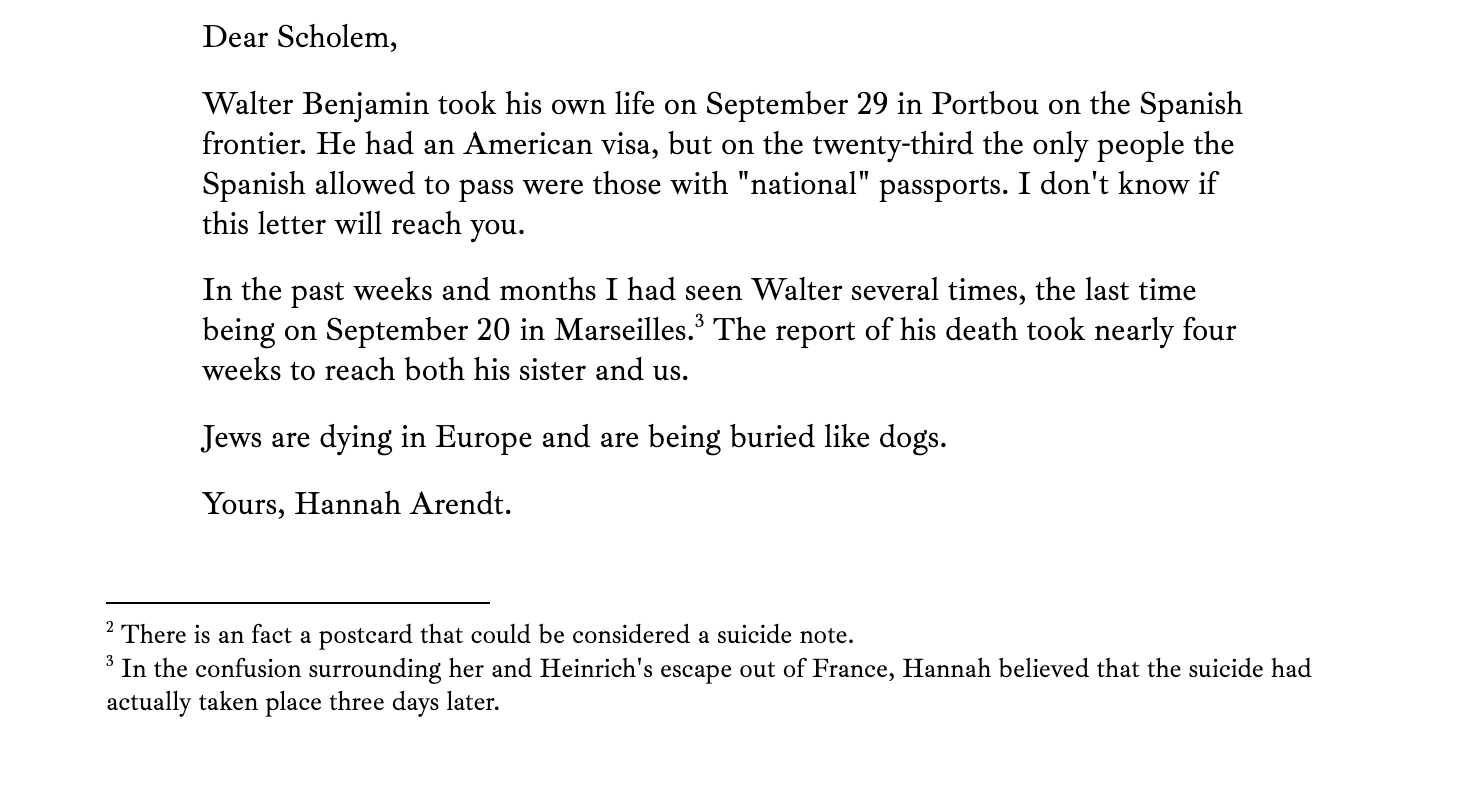
Marseilles. . . a city that will hold memories for Kracauer, Arendt, Benjamin, Feuchtwanger, Werfel, and so many others ….
And then there is Paris. We follow Dos Passos back and forth through the city, noting that his final memory of Parisian literary life appears to be “an odd one”:
Don Stewart and I somehow got mixed up with a Manifestation Dada. I believe it was after dining with Louis Aragon and Drieux La Rochelle. Aragon was very much the dashing young poet. He certainly showed talent. Drieux, his best friend, was a tall aristocratic youth, whom I thought at the time was the coming French writer. I liked him particularly; he seemed completely on the level; the aristocratic French are more like the wellborn English than they are like the smalltown French bourgeois or the mercenary Parisians. The men had strangely diverse histories. Aragon ended up an orthodox and respectable Communist Party dignitary, but poor Drieux, like quite a few of his more fastidious compatriots, ended up a Fascist and blew his brains out one fine morning during the German war.
Anyway that night we were all full of beans and wanted to do something outrageous. We joined Tristan Tzara in a glary café somewhere near the Tour St. Jacques. He was surrounded by some mighty odd fish. I've forgotten their names but it was a prime collection of zanies.
Everybody was racking his brains to think up something abracadabra-ting to do. Suddenly Tzara, a sallow Rumanian who looked like a chartered accountant, rose and cried "Follow me" The Dadas jumped to their feet leaving half their saucers unpaid for. Don and I, as so often happens to trusting Americans in the hands of the European literati, found ourselves settling their score with the waiters.
It turned into a game of follow the leader. Tzara, trailed by the rest in a solemnfaced cue, marched about the streets executing a number of idiotic maneuvers. They had a little chant: Dada, Dada. Any other place we would have been arrested but the French in those days were tolerant of anything which would pass as a manifestation artistique. We ended marching pokerfaced through a Turkish bath. Fat men sweating in steam rooms or dunking in swimming pools looked up astonished but offered no resistance. The attendants asked “What the hell?” All any of the marchers would say was “C'est le Dada.” It certainly wasn't very funny. When we got back out in the air again, Don and I slipped into a cab and made for our respective hotels. Dada left us feeling just a wee mite squeamish.
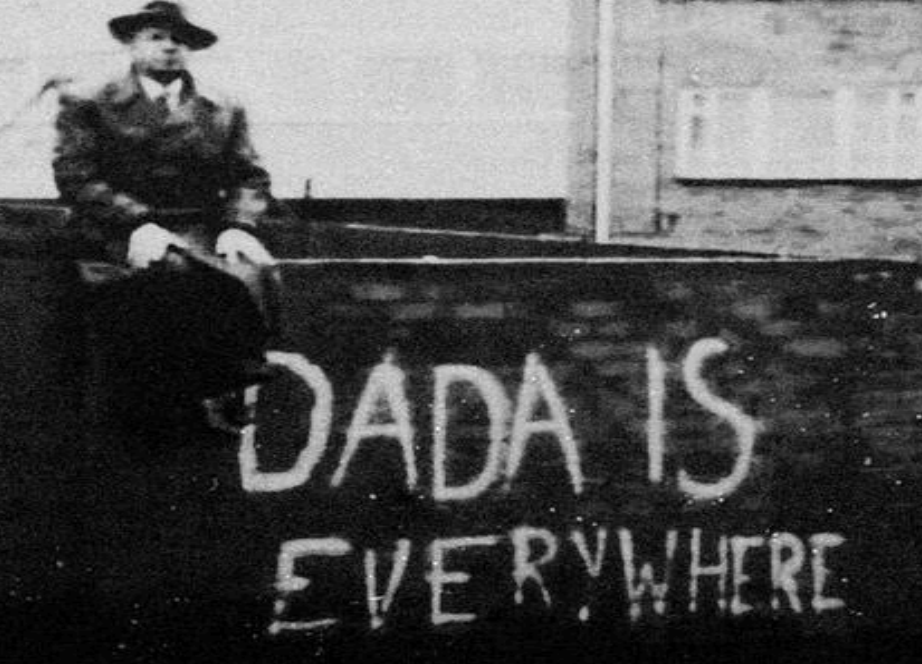
The Dada, of course, is always on you.
As for fascism, that’s on us, too. Albeit, the Drieuxs don’t die by suicide anymore. Instead, they get a podcast and move to Washington D.C. to work for the MAGA kleptocracy where the only required skill and expertise is the capacity to lick the leader’s boots and flatter his ginormous ego.
That’s our meeting place. A spot
in clouds. A seraphic grotto.
A pergola in spheres. A sort
of corner—a good one. I ought to
admit: there is no one to seize
us hiding in those fleecy orchards
owned solely by our eyes:
the ultimate attempt to purchase.
—- Joseph Brodsky, “A Song to No Music”
Danse-moi à ta beauté avec un violon en flammes,
Danse-moi dans la panique jusqu'au repos de mon âme,
Lève-moi comme un olivier, sois ma colombe de retour
*
Graeme Allwright, “Danse‐moi vers la fin de l’amour”
John Dos Passos, The Best Times: An Informal Memoir
Joseph Brodsky, “A Song to No Music” (from A Part of Speech)
Uwe Wittstock, Marseilles 1940: The Flight of Literature