The more invisible something is,
the more certain it’s been around,
and the more obviously it’s everywhere.
— Joseph Brodkey
since the bright beams cannot cut the cloud in two, the light gathers into itself
– Anaximenes, translated by Dan Beachy-Quick

La foule les chante un peu distraite
En ignorant le nom de l'auteur
Sans savoir pour qui battait leur cœur
— Charles Trenet
*
Among my notes on Hélène Bessette’s Twenty Minutes, there is an aside on Walter Benjamin’s address to forgotten future in A Berlin Chronicle. And there is a hat-tip to Chronos in the title’s reference to the mode known as “chronicle.” Time is what “makes personal the condition / life calls itself,” says Dan Beachy-Quick in a poem titled “T.” — which he published in a collection of poems that grew alongside his translation of pre-Socratic philosophers. Poems may create the site where the past enjoins the present, a feat accomplished by expanding the terrain of address, as seen in the last verse of Joseph Brodkey’s “Roman Elegies” (To Urania):
Lean over. I’ll whisper something to you: I am
grateful for everything: for the chicken cartilage
and for the chirr of scissors already cutting
out the void for me—for it is your hem.
Doesn’t matter if it’s pitch-black, doesn’t matter if
it holds nothing: no ovals, no limbs to count.
The more invisible something is,
the more certain it’s been around,
and the more obviously it’s everywhere. You
were the first to whom all this happened, were you?
For a nail holding something one would divide by two—
were it not for remainders—there is no gentler quarry.
I was in Rome. I was flooded by light. The way
a splinter can only dream about.
Golden coins on the retina are to stay—
enough to last one through the whole blackout.
“Golden coins”: this image of an ending, glistening on the surface of an eyelid. But not even gold can keep the eye from re-membering, as Marcel Proust knew. If one abandons chronology, it’s hard to know where to begin chronicling a July in France . . .
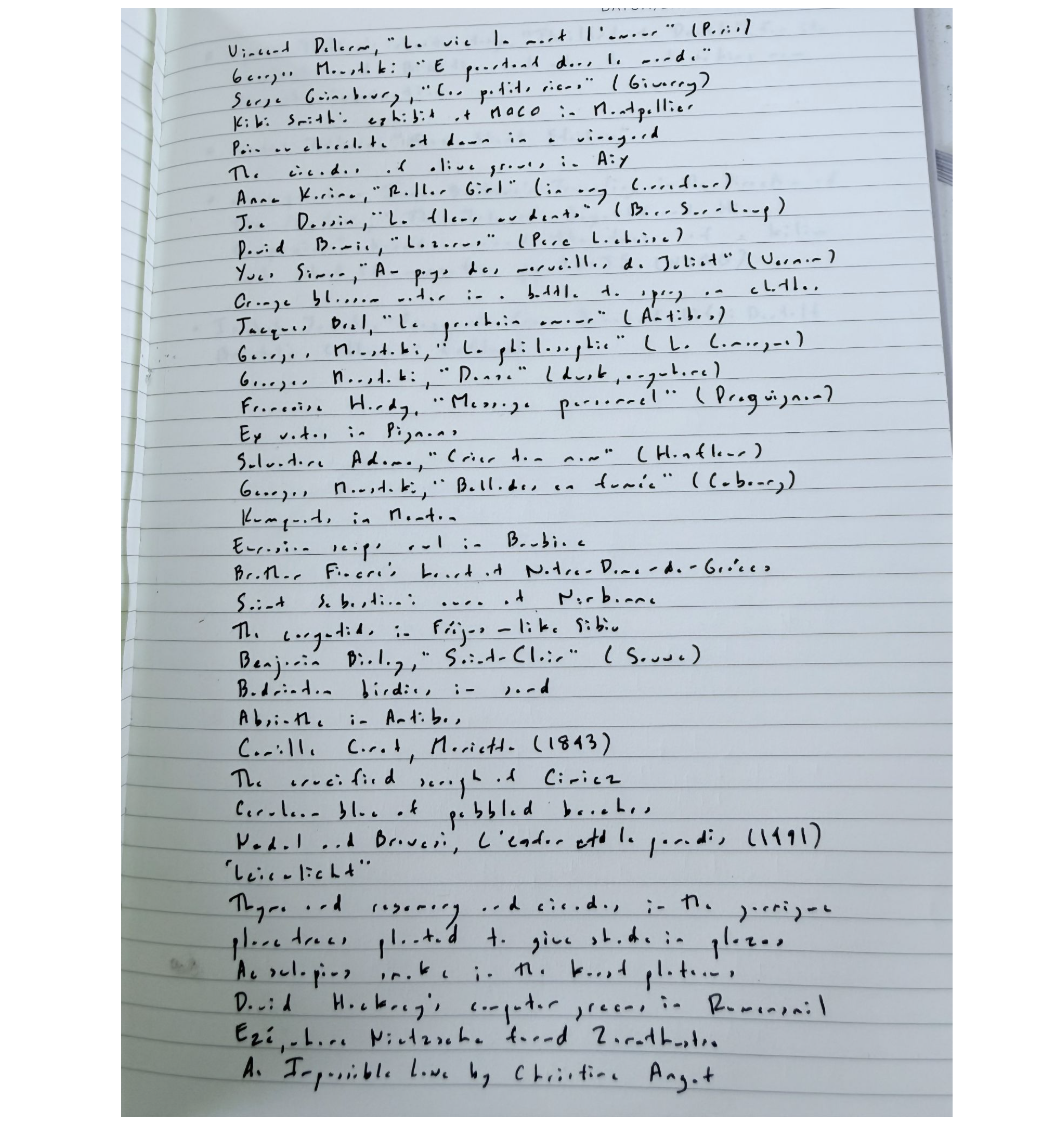
Where to begin?
In the again of this daunting question, there is an effort to match fragments and pieces of memory, to make a map of the mind. One might, for example, leave a page from a notebook on the kitchen table, promising to return to it and find a strand. One might walk the dog and return to the table. One might stare at the paper and prevaricate, maybe spin a wheel to see where the urge to narrate lands. One might procrastinate and pace the summer-warmed floor and settle on the place in the Cote d’Azur where the mouth of the wolf meets the beach.
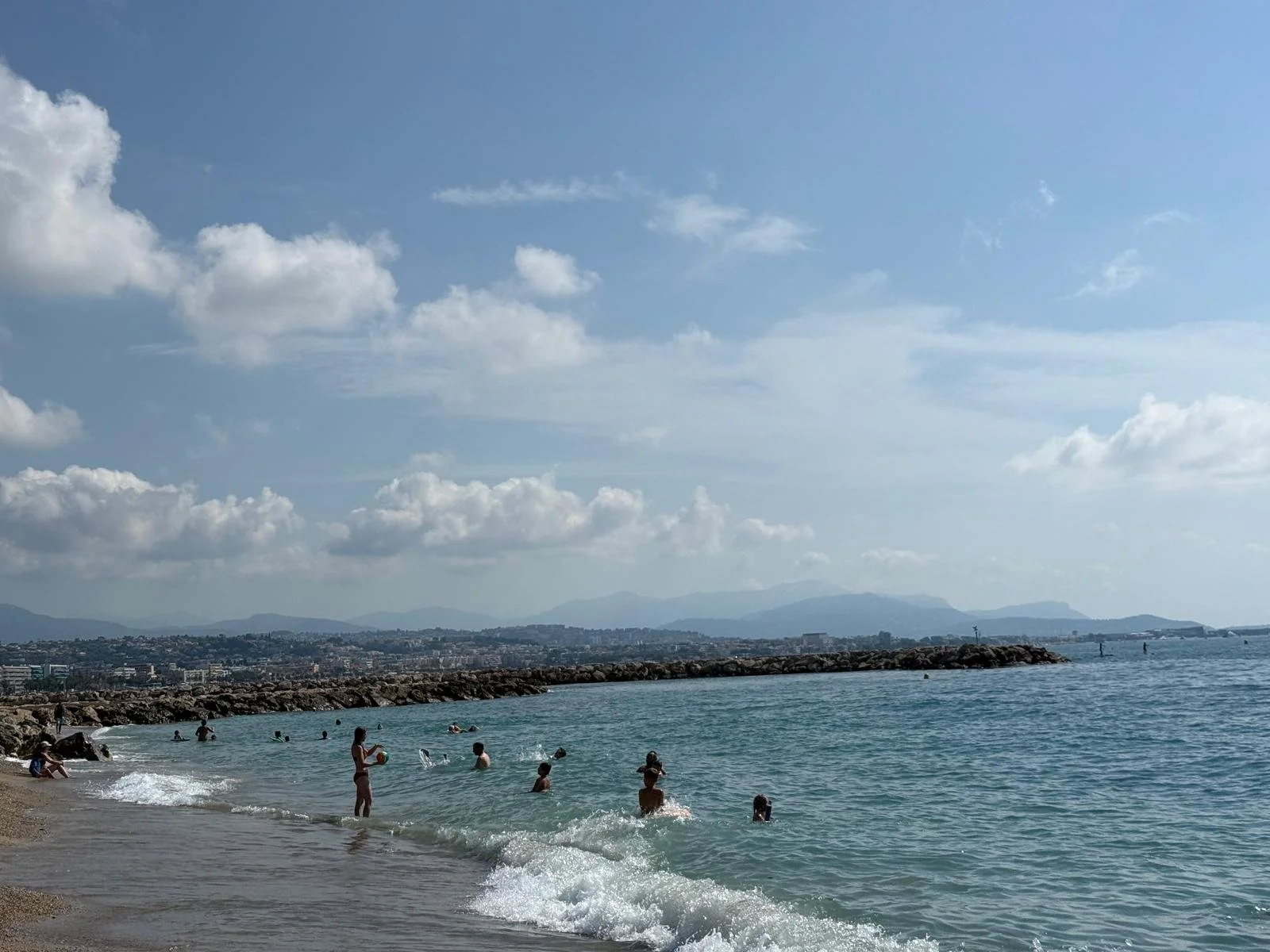
Plage du Loup in Villeneuve-Loubet
Lean over. We stayed in the bottom floor of a house in the village of Le-Bar-Sur-Loup, nested between pre-alpine massifs and the Loup, a coastal river which runs for 48 kilometers from its source in a mountain-side (at 1,217 meters) to its confluence with the sea at a beach which may or may be not be called Plage du Loup, where the seven of us threw ourselves into the Mediterranean. After thanking the beach for allowing us to meet in the mouth of the Loup, I surveyed the local swans, catcalled the thriving minnows, and studied the adolescent boys strutting through sand in jelly-shoes with snails dangling from their fishing poles. I am grateful for everything. Le Plage du Loup deprived us of proximate gorges, but the water was extraordinary. After swimming a distance of 30 feet away from the shore, the small pebbles at the bottom were still visible. At a depth ranging between 8 to 10 feet, I marveled at how much I’d forgotten: the salinity of the Mediterranean, for example.… and how buoyant the water. When I removed my bikini top while treading water, far from the shoreline ruled by the teens, I lost my swimsuit for a moment, only to discover that it floated up to the surface. The more invisible something is, the more certain it’s been around… The always-concerned teens noted that there was less nudity on this beach than what we’d encountered in Normandy, which seemed surprising. And so we discussed nudism in France, which officially began when Kienné de Mongeot opened the Sparta Club in 1926. But nudism as a lifestyle practice really took off when André and Gaston Durville, a pair of doctor-brothers, opened Héliopolis in 1930 on Île du Levant, making it officially the first village where you could practice nudism. While naturists like to share a lifestyle and a state of mind with others, nudists live alone or in closed circles that are more comfortable for them. Nudism isn’t necessarily communal or ideological: it can be a matter of preference, impulse, pleasure, etc. What matters in the eyes of the law depends on how the law sees things. There is no gentler quarry. Article 222-32/Section III of the French penal code equates nudism with exhibitionism and makes it an offense to public decency. Although the law is rarely applied, certain communes have by-laws banning the practice. Those who break the rules risk paying a fine. France currently claims to have at least 225 nude-friendly clubs and associations with a total of 85,000 members. Anyone who wants to stay at a naturist club or holiday resort has to join the Fédération Française de Naturisme.
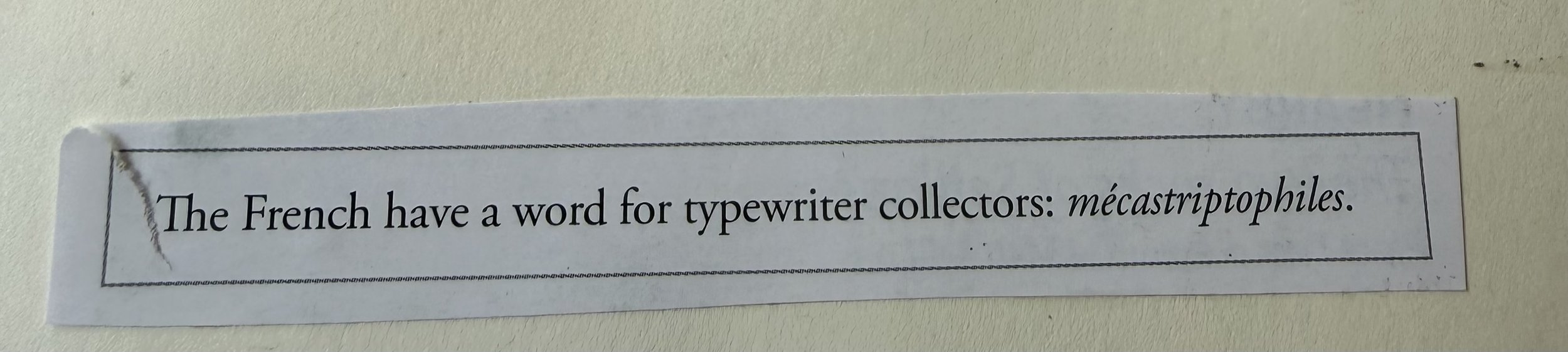
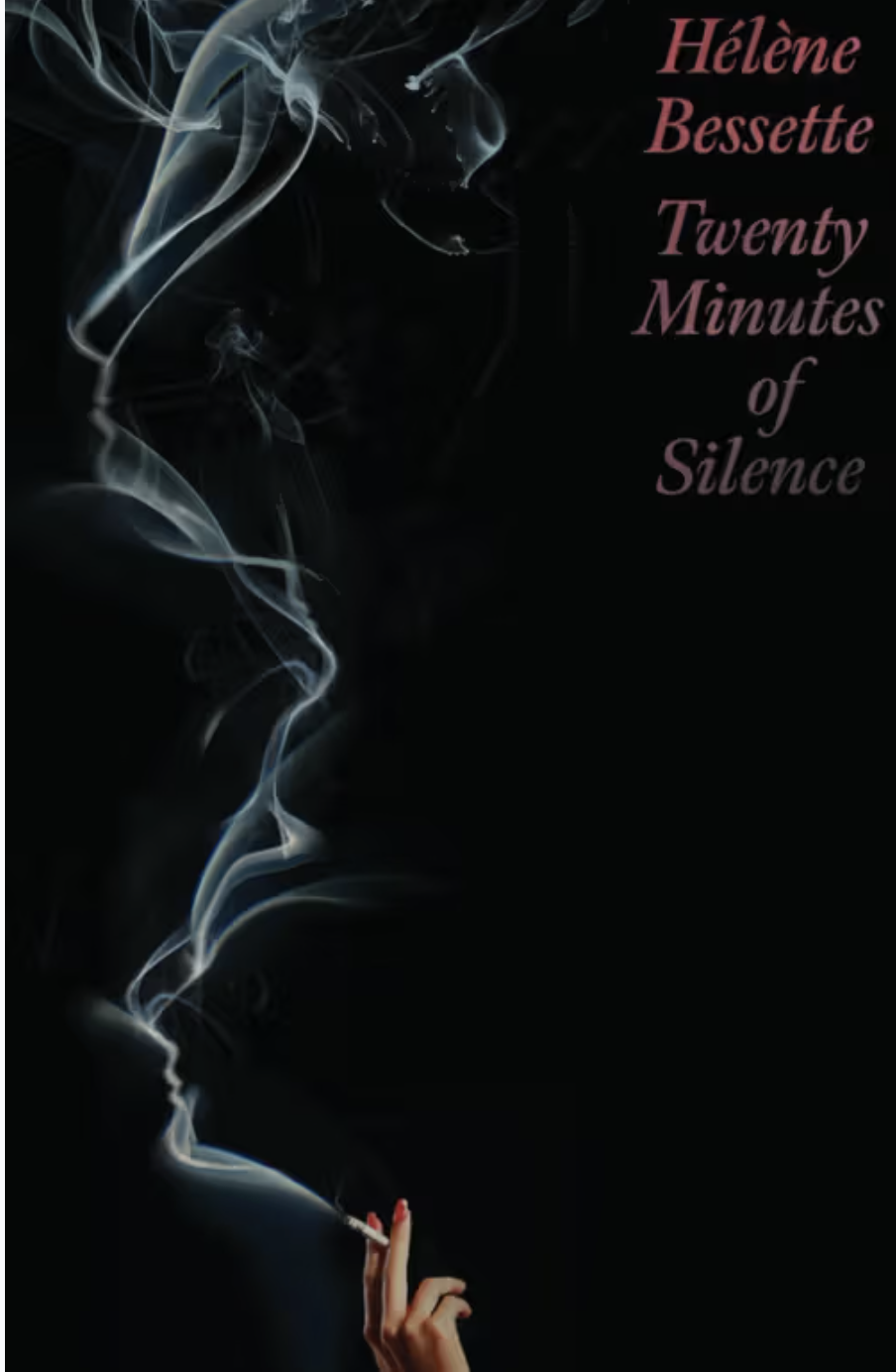
I was flooded by light. Dazzled by the “novelist-narrator” of Bessette’s Twenty Minutes of Silence and a literary context populated entirely with “cardboard, collapsible” persons. The way a splinter can only dream I was looking for post office hours so I could buy stamps. And there are passages where the narrator’s memories collapse into those of the child who may have killed his father. Freud would not be surprised. The French have a word for how old you were when that horrible thing happened. I wish I knew it. In lieu of the word, I give you an excerpt from the aforementioned by Bessette:
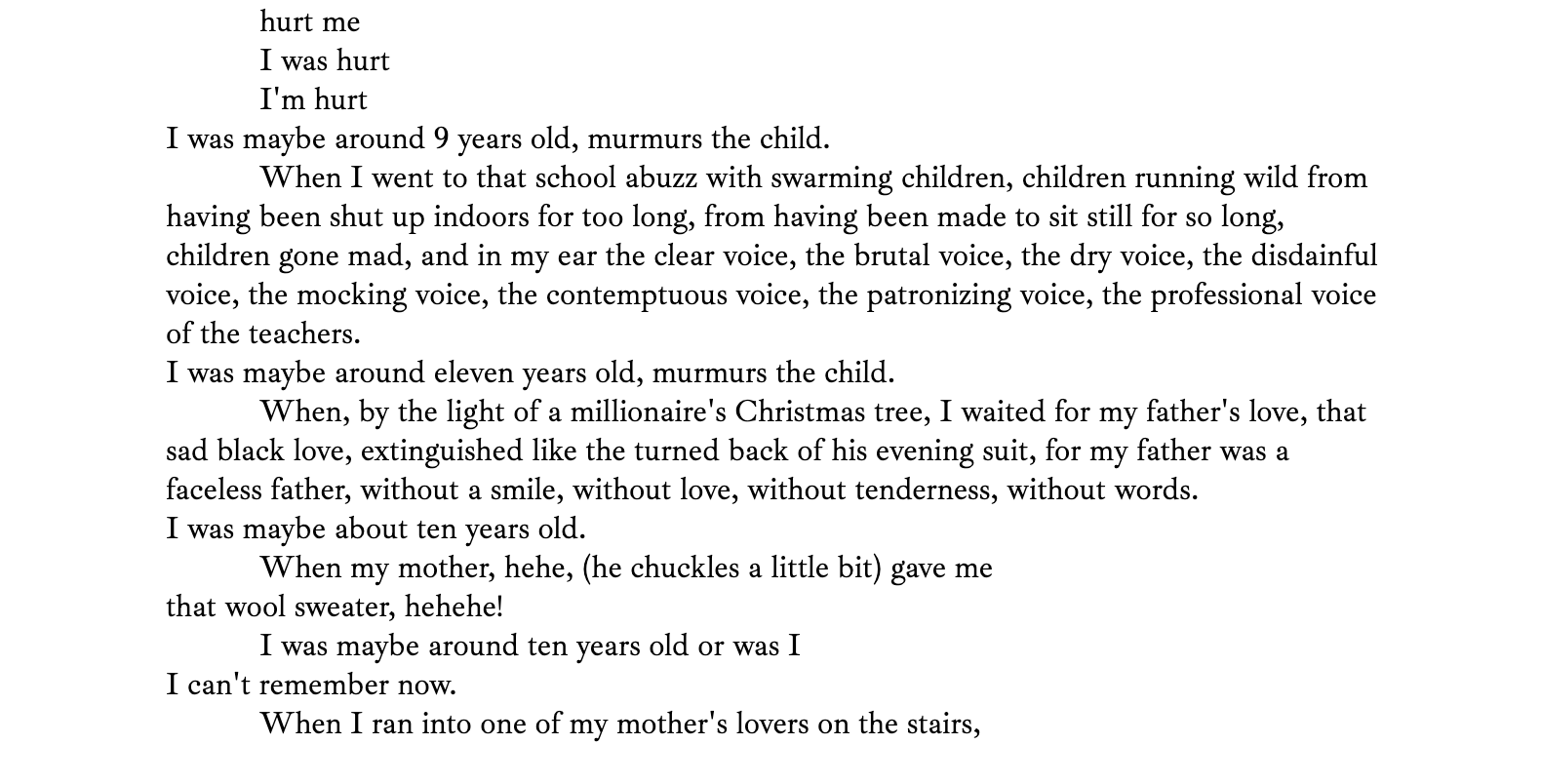
excerpt from Hélène Bessette’s Twenty Minutes of Silence translated by Kate Briggs
Ou, quelque part au bord de l'eau
Au printemps tournera-t-il sur un phono
*
In Thesis II of his Theses on the Philosophy of History, Walter Benjamin questioned the notion of history as a description of ‘what happened’ and hinted instead at its (controversial) immanent meaning. There were others there. In the passage. Marcel Proust and Karl Marx rubbed shoulders in Benjamin’s understanding of Erfahrung as experience which forms the substance of narrative as well as the praxis of transmitting wisdom from one generation to another.
Benjamin celebrated Proust for making the novel relevant in the abyss after the war, when all dominant narratives were dictated by the victors. He relished how Proust brought the chronicler back into literature, thus sacrificing the chronos-driven novel as a genre in order to preserve its capacity to communicate the concept of experience perched on the verge of dissolution. And there is a coincidence in the fact that Bessette was vacationing in Proust’s Normandy when the gunshot went off in her hotel, inspiring her to write a novel which also dissolves any sense of solid, settled history. No single narrative wins the tussle.
It would be scandalous to claim there is a Proustian strain in Bessette’s experiment, but I sense a resonance in her use of literature to study reality and truth. Resonance is where so many things begin. . . . in the fragments and shards of broken bottles, in the pieces that ask to be lifted and touched and reassembled differently. The scandal is endemic to poetry, for poems gnaw the bones and taste a different story. And in my ear the clear voice, the brutal voice, the dry voice, the one in the mirror.
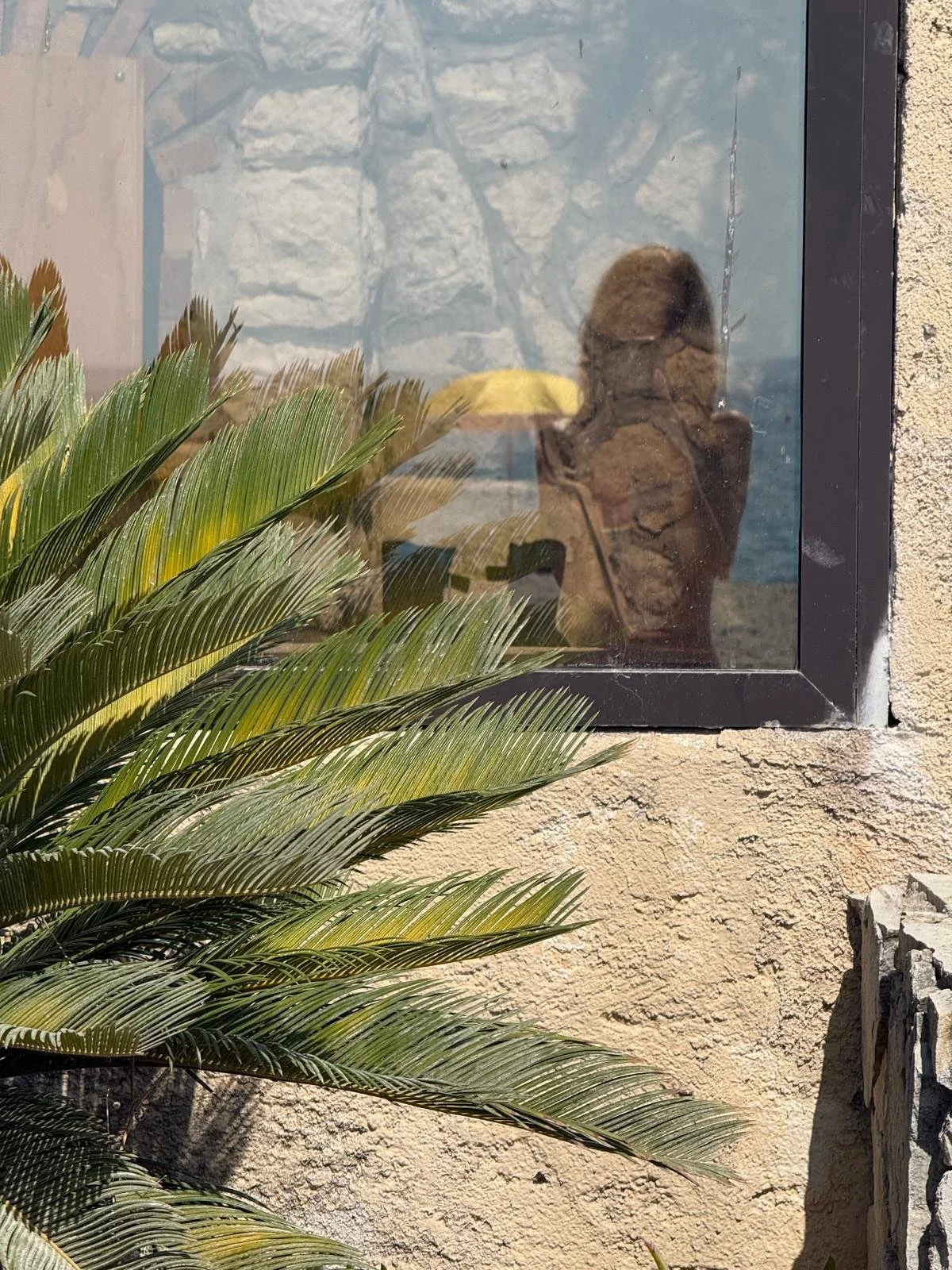
All the wist in this gift of knowing one’s voice and one’s shadow is nothing unique and nothing spectacular but rather one more little lyre in the chorus:
Longtemps, longtemps, longtemps
Après que les poètes ont disparu
Leurs chansons courent encore dans les rues
*
Benjamin Biolay, “L'Âme des poètes”
Georges Moustaki, “L’Amant du Soleil et de la Musique”