The only way of expressing emotion in the form of art is by finding an ‘objective correlative’; in other words, a set of objects, a situation, a chain of events which shall be the formula of that particular emotion; such that when the external facts, which must terminate in sensory experience, are given, the emotion is immediately evoked.
— T. S. Eliot, “Hamlet and His Problems”
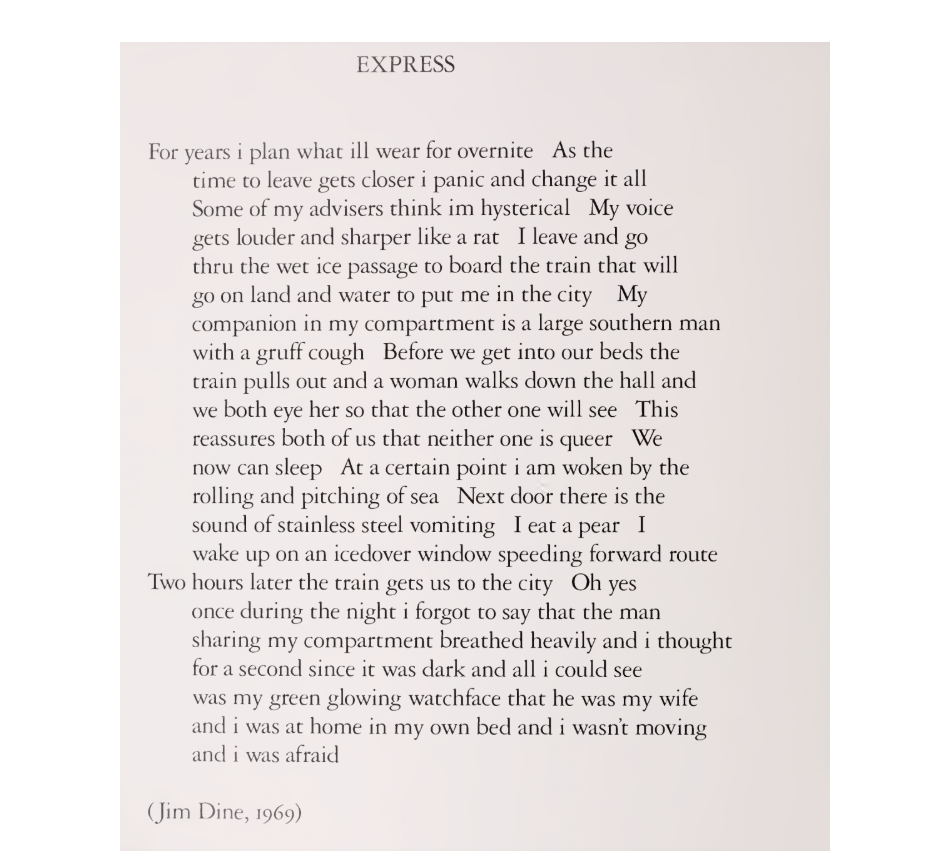
Some of my advisers think im hysterical
— Jim Dine
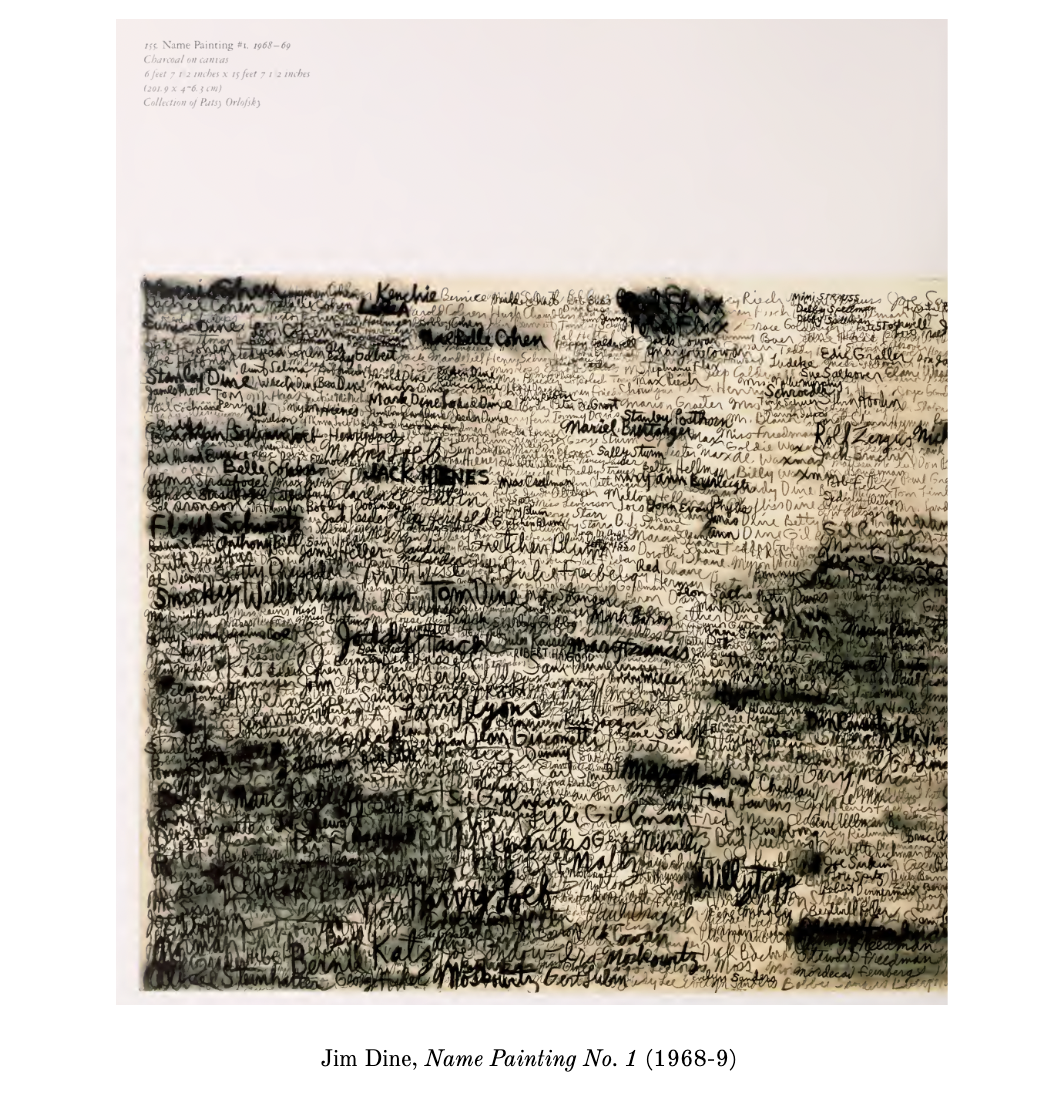
“Name Painting No. 1” by Jim Dine
“Bishop” is where the coincidence happened, but the end-notes is where this painting began. I’m referring to the explanatory notes for Donald Barthelme’s Sixty Stories, particularly the note of identification murmured about “Bishop”:
“Jim Dine: American pop artist, born in 1935.”
Do not tell me about wasting time until you have written a self entire from it. Call it a name painting, if you need a convention or an excuse. Call it a failure of the will which resulted from other failures. For there are so many others involved. Among them, there are these other things one might glean from the notes to Sixty Stories, and there is my desire to impose an abecedarical order upon them.
AIR is the acronym for an Artist in Residence in a shower of gold.
Arne Jacobsen was a Danish architect and designer who gets mentioned in a critique of the quotidienne life.
Aria is the title of a piece by Barthelme which he later identified as “a woman’s monologue.”
Battologized refers to something repeated excessively.
Bibblemann is an apparently fictional composer who appears in Paraguay.
Boudu Saved From Drowning is a film by Jean Renoir from 1932 which inspired Barthelme’s titling.
Cabochons are highly polished, convex unfaceted gemstones.
Caracoling is a half-turn on horseback.
Chrysoberyls are a class of gemstones that includes alexandrite, which changes color from green to violet-red, and cat’s eye.
Condylarths are extinct, horsy-ratty looking mammals about the size of a cocker spaniel.
Confusion Oil is used to bring confusion to those working against you in the emerald.
Das Lied von der Erde (“The Song of the Earth”) is Gustave Mahler’s 1909 symphonic work that set translations of Chinese poems for two singers to music, and lands in the leap.
Diktats are strictures in a new music.
Diet of Worms is the Imperial German Reichstag, which issued an edict in 1521 against Martin Luther which appears in the party.
Dimidiation is halving.
Dog cart is a small, light carriage which originally had a box under the seat for a dog.
Dwale is another name for belladonna or deadly nightshade.
Esse est percipi means “to be is to be perceived,” as promulgated by British idealist George Berkeley who maintained that physical existence is an idea in the mind, and that the whole of reality (including human life) exists as ideas in the mind of God, as it appears in a preliminary account of nothing.
Fumaroles are openings in a volcano that let out steam and gases which creep into the king of jazz.
Gamomania is an obsession with issuing marriage proposals.
Golden Earrings is a song by Raymond B. Evans, Jay Livingston, and Victor from the 1947 film of the same title, with Marlene Dietrich and Ray Milland, as mentioned in a shower of gold.
Gree is an archaic word for goodwill or satisfaction.
Gustave Aschenbach is the protagonist of Thomas Mann’s Death in Venice.
Happy dust is cocaine.
Harmonica rascal is a reference to Borrah Minnevich’s Harmonica Rascals, who performed from the 1920s to the 1950s, and landed in Alice.
Hock is a White Rhine wine associated with dreaming.
Imperator is another word for an emperor.
Intimations of mortality is an allusion to William Wordsworth’s “Ode: Intimations of Immortality from Recollections of Early Childhood.”
Ixias is a South American plants of the iris family.
John Masefield was a British poet who makes an appearance in the glass mountain.
Komsomol was the Soviet Union’s communist youth organization.
Krummhorn is an early double-reed wind instrument involved a new music.
Lost-horse principle alludes to the lost-wax process, a method of casting using a wax mold that melts away during baking in Paraguay.
Messalina was the notoriously lascivious third wife of the Roman emperor Claudius.
Montane refers to a cool, moist zone near a timberline involved with the king of jazz.
“Nothing: A Preliminary Account” is one of my favorite stories by Barthelme who plays very well with another B who loved negative theology.
Olympia Press was founded by publisher Maurice Girodias in 1953. It printed both trash erotica and then-controversial fiction by the likes of Terry Sothern, J. P. Donleavy, and Henry Miller, as well as Nabokov’s Lolita, and appears in the falling dog.
Padparadscha sapphire is a pink-orange sapphire.
Palestrina was a sixteenth-century Italian composer of motets and masses.
Paxwax is a dialect term for the ligament at the back of the neck in many mammals, which helps support the head.
Peridots are green gemstones, also called olivine.
Petronius mothballs are a treasure to which I shall return a little latter.
Preen glands are the oil-secreting glands near the base of a bird’s tail.
Putzi was Franz Liszt’s childhood nickname which returns in dreaming.
Quetzal is the royal bird of Central America, as found in a story on angels.
Red rock is landscape feature as well as an allusion to a line from T. S. Eliot’s The Waste Land: “Only/There is shadow under this red rock,/(Come in under the shadow of this red rock).”
Registration refers to the labor of matching the position of lines on opposite sides of a single sheet printing successive layers of color in our work and why we do it.
Robert Kennedy is a plot device.
Sardonyx is a banded variety of quartz.
Surd is a sum containing one or more irrational roots of numbers, or the homophone of being deaf in Romanian.
Sunderland pink is a glossy metallic pink luster glaze used in nineteenth-century England which appears in aria.
Sunfishing occurs when a horse writhes violently from side to side, turning its belly toward the sun.
The Martyrdom of St. Sebastian is Debussy’s score for Gabriele d’Anunzio’s 1911 sacred drama, as referenced in Barthelme’s prior golden shower.
Träumerei (“Dreaming”) is the familiar heartbreaker from Robert Schumann’s piano suite Kinderszenen (“Childhood Scenes”).
Travel dust is a poem involving two eggs.
Unwraps the sky may be an allusion to a line from John Dryden’s poem, “A Song for St. Cecilia’s Day” — “And music shall untune the sky.” — made available in the new music.
Victimas del Pecado is the 1950 Mexican film noir which appears in city life.
Viridian is a bluish-green which appears in Rebecca.
Whoring after beauty occurs twice: once in dreaming, and then again in a manual for sons.
Williwaw is a sudden cold wind in far northern or southern latitudes and/or a state of turmoil, as well as the title of a 1946 novel by Gore Vidal which wiggles through B’s aria.
Wine of possibility is a drink concocted in Kierkegaard’s Either/Or; called into being by the exclamation: “What wine is so sparkling, what so fragrant, what so intoxicating, as possibility!” This can be sampled in the leap.
Wrasse is a marine fish.
X is totally absent, so I offer the usual streetflower, as immortalized by Eliot — “You gave my hyacinths first a year ago; They called me the hyacinth girl.” — and then recounted by Barthelme in an ejaculation “— Go peddle your hyacinths, Hyacinth girl.” X marks the spot it is not.
Yataghan is a Turkish sword involved in a manual for sons.
Ya Ya Oil is a magic oil to increase fertility and potency.
Zocalo is a South American term for marketplace that shows up in a manual for sons.
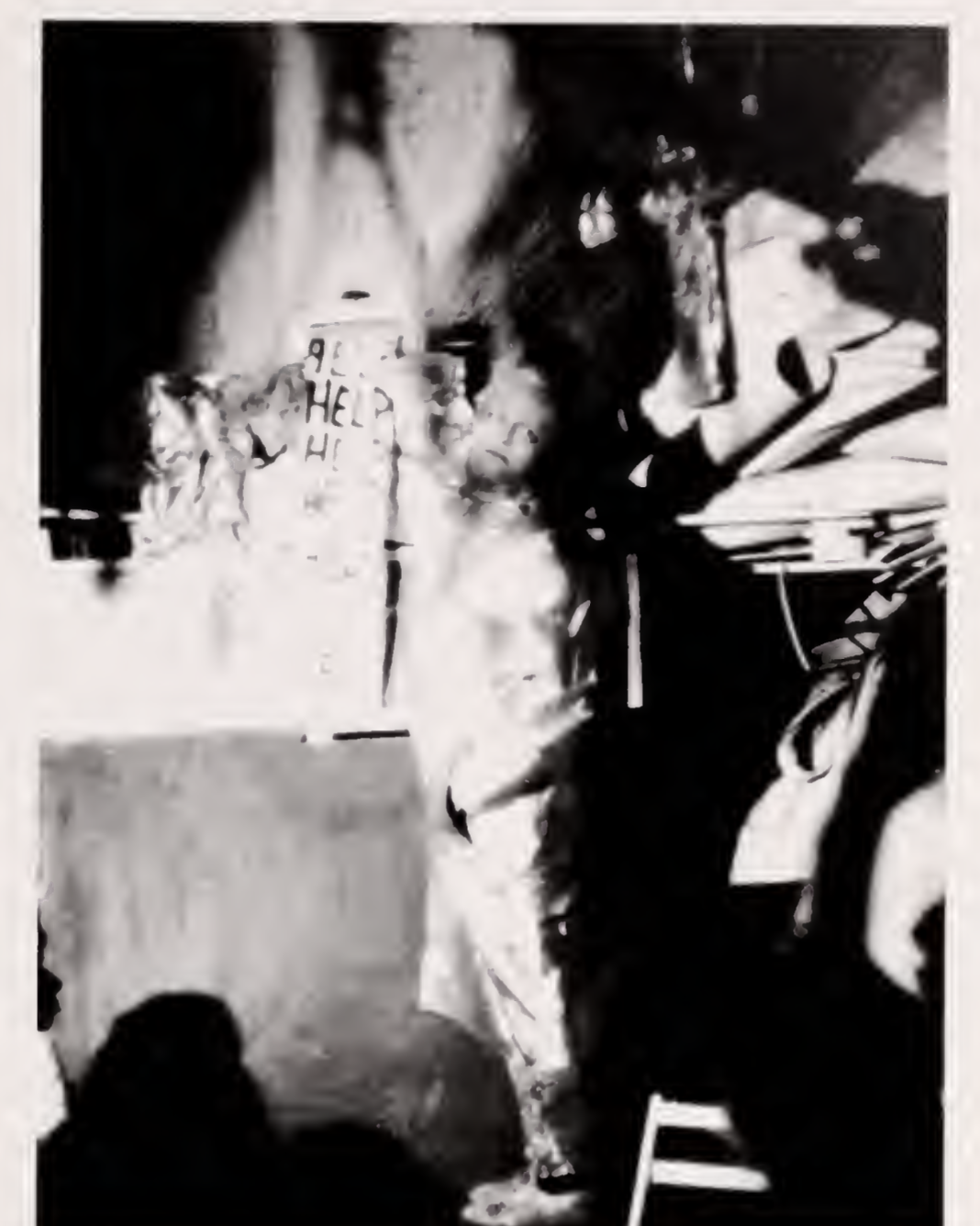
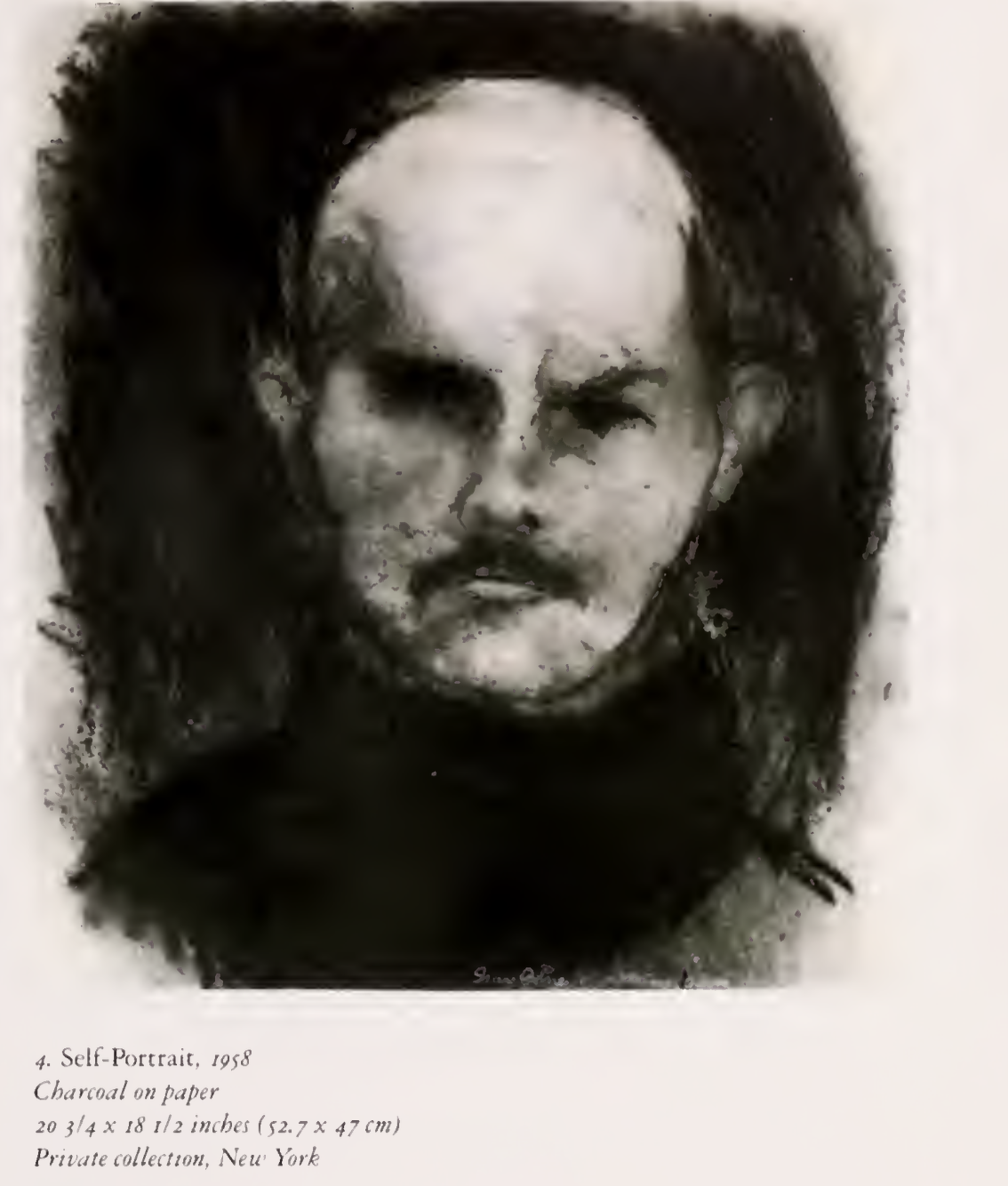
“Travel Dust” by Jim Dine
two eggs follow me to the Food Derby
I set my sights on toast and loads of tea and pumpkin seeds
mix with 4 or 5 grapes in my mouth
so I have the energy to breathe
going real slow
by foot
down river
to smell fumes belching out of you in Moscow
there would be heavy guards around your smokestacks
here the interior is painted cream with a pale blue trim
all the greasy machines get down on their knees to spray hearts on clear plastic
the red rubber rim covered by my jock strap
and an old sock
soup meat tramps along
my throat with horseradish already there to receive the mixture
pumpkin seeds again and sky with a few grapes and now an inch of yogurt
it seals off the chest fumes
the spray bomb lays down a silver heart on the dirt
kissed by a red nail
silver removes the stencil, reverses it, then acetone hits the yogurt puddle
smack on the sycamores stick to my face
the Thames washes eels up.
they carry me to the pavement
letting it all melt at my feet like tigers
pumpkin seeds and lime stone drip along the sidewalk
a few more lunatic hearts appear celebrating Ron Padgett & Reverdy & Sky
the scum of which is silver mixed with green
tomatoes bubble on the stove to prepare for the lemon colored moth
that just this minute came alive on your forehead smiling
*
Dine’s “Travel Dust” was first published Paris Review in the 70s. I love how the pumpkin seeds and lunatic hearts recur like chords that link particular places and affects. It makes me think of how Donald Barthelme re-uses a line from Mikhail Lermontov’s introduction to his 1849 novel, A Hero of Our Time. “It is a portrait, Hubert said . . . of their development,” Barthelme quotes without attribution in the story titled “Will You Tell Me?” It makes a place of the portrait’s development, as well as the postmodern mistrust of heroism.
Like Dine, Barthelme played with resonance and quotation. He stared at museum paintings and noticed his own reflection superimposed on the protected domestic interiors of nineteenth century tropes. In one of B’s stories, we are presented with “the hinder portion scalding-house”; it particular to a passage where Barthelme employed his “pointillist technique,” which he later described in a 1981 interview. With pointillist writing technique, said Barthelme, “what you get is . . . merged meanings, whether from words placed side by side in a seemingly arbitrary way or phrases similarly arrayed . . . ‘Petronius mothballs.’ Of course you can do this all day long and the results will be fully as poor as the specimen furnished. Still, it’s a North Sea to be explored.”
And this brings me back to the smokestacks in Dine’s poem, and their proximity to “Moscow” — which brings me to Walter Benjamin’s Moscow diaries. In an essay titled after the city itself, a city which housed his paramour, Benjamin said “each thought, each day, each life lies here as one laboratory table.” Moscow’s residents wore black armbands on the anniversary of Lenin's death; flags stood at half-mast; “the mourning for Lenin is, for Bolsheviks, also mourning for heroic communism,” wrote Benjamin. Beneath the longing for Lenin, he sensed nostalgia for a purer time, prior to the end of NEP and the onslaught of the purges. “In the optic of history—opposite in this to that of space—movement in the distance means enlargement.”
It wasn’t the smokestacks so much as the pumpkin seeds. In Moscow, sunflower seeds had been criminalized: it was illegal to chew them in public places. Street vending was also illegal. And the sale of icons was made part of the paper and pictures trade so icons stood in booths next to other paper goods “flanked by portraits of Lenin, like a prisoner between two policeman,” as Benjamin put it. The essay, itself, stutters a little, as if Benjamin isn’t sure how to interpret what he sees. So he oscillates: cynicism seems gone; social conscience “opens purses so much wider than does pity.” Taking the public treatment of beggars as a measure of community and shared social trust, Benjamin bases this trust on the belief that no human being can deserve being placed as the lowest in the pyramid of struggle. Only the “unchanging wretchedness” of the beggars stayed the same as everything else in Moscow shifted and changed.
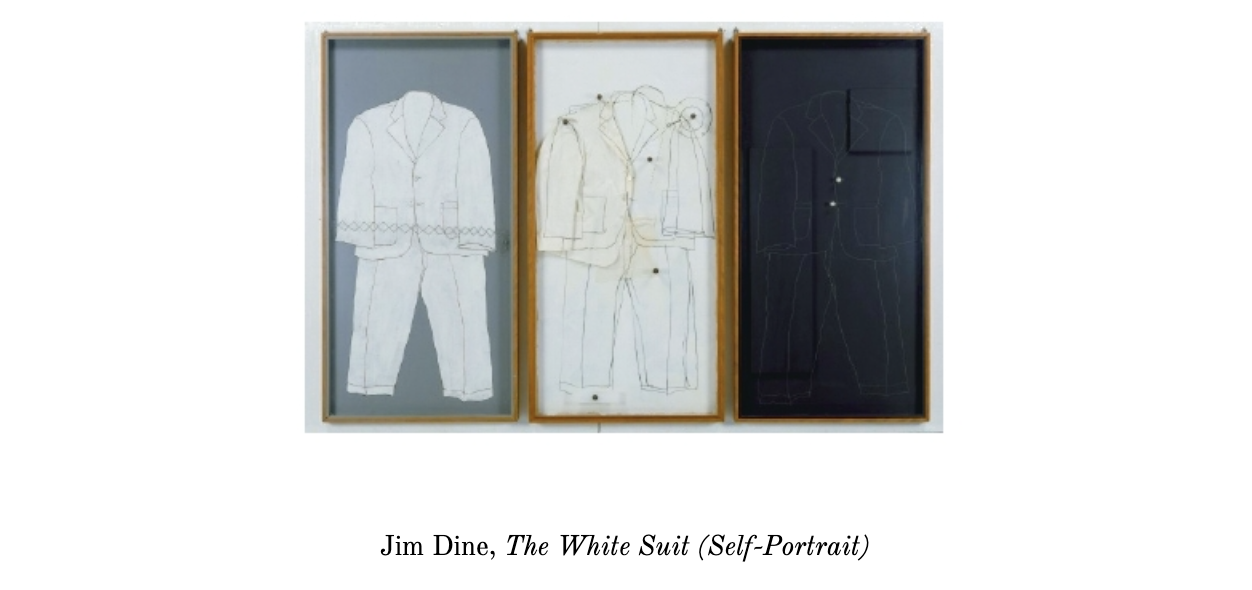
“Newyorkerism” by Edmund White
A heart too big too verdant, made of all feed & just as I didn't plan to think of you & the
best sex we ever had sitting over the orchestra silent & barely touching
Michael Tilson Thomas conducted Rachmaninoff's third aural orgasm my hand bruised by your clench of delight.
— Jill Bergantz, “For Jim Dine’s Green Piece in My Meadow”
*
I woke up thinking about a conversation related to psychiatrists that I might have read in Edmund White’s City Boy, a memoir covering White’s earlier years. Sure enough, after much flipping through and flopping about, I found the excerpt where White chats with Ashbery.
“While writing U.S. history, I, of course, still wanted to write fiction,” White confesses. And he “was talking to John Ashbery, who had been to see a shrink who specialized in writer's block.” Ashbery quoted the conversation with his shrink to White, and this is how it wound up in City Boy, as excerpted below:
Shrink: So tell me what your daily schedule is.
Ashbery: Well, I wake up and get up and-
Shrink: You do what?
Ashbery: I get up-
Shrink: You must never, never get up. Okay, pee and make a cup of coffee, but then get back in bed if only for half an hour every day and write longhand in a notebook.
Ashbery: Why?
Shrink: That way your inhibitions will still be low and you'll be closer to your dreams. That's the surefire way out of writer's block
A few lines later, White returns to his fiction issues:
But my sense of personal identity required that I write fiction. If I thought that my only take on life would be the clever remarks or vague thoughts I might be able to cook up on the spot, then I wouldn't be able to recognize myself. I knew I had to keep on writing or else I'd let the ambient cultural noise drown out my thoughts, which weren't paraphrasable wisecracks or wisdom but rather a way of looking at the world or the self. French people dismiss the cultural chatter and self-centered attitudinizing of Paris as parisianisme. A similar noise is generated by hip New Yorkers, though we don't have a word for it and perhaps we haven't isolated it yet as a reprehensible phenomenon. This “new yorkism” is so opinionated, so debilitating, so contagious with its knowingness, its instant formulas that replace any slow discoveries, that only people who are serious and ponderous can resist its blandishments, its quick substitutes for authenticity. No wonder the psychiatrist had said one should write first thing in the morning before the tide of newyorkism swept over one, washing away actual honest thought and replacing it with trendy pronouncements.
“But my sense of personal identity required that I write fiction,” White declares at the outset. He is a fiction writer explaining why the book we are reading is actually a memoir. Unlike White, I’m not sure I have a sense of “personal identity,” per se, or what such a sense as mine would require if it existed. The truth is that fiction, poetry, and critique all serve similar purposes for me, which is to express what feels necessary or urgent.
Sometimes the urgency is ontological. Sometimes a story of origin sates it. Usually, the wires get tangled and, if my best moments, I tend to follow them rather than fiddle with sorting one from the other. “My mother was . . . and my father a shower of gold,” said Perseus, whose mother, Danaë, was impregnated by Zeus in the form of a shower of gold. In one of his stories, Barthelme mentions The Cow on the Roof, a restaurant in Paris named after a Brazilian pop song which also became the title for Darius Milhaud’s 1919 composition, “Le boeuf sur le toit.” Which came first— the feast or the song? How does art commit itself to collaboration across time and space? How to express my pleasure to Barthelme for the fictive historical intervention titled “Robert Kennedy Saved From Drowning”? In this case, the story grows richer with the author’s explanation — and this is true for many fictions which endeavor to theorize rather than entertain.
In a 1975 interview, Barthelme sliced open the back of “Robert Kennedy Saved From Drowning” and showed us its entrails:
There’s nothing real in the Robert Kennedy story whatsoever, with one single exception—where Robert Kennedy comes into a gallery and looks at a painting and makes some joke. . . . That actually took place, because I was in the gallery, and I believe it was a Kenneth Nolan show. . . . It was a story I wrote in Copenhagen, about a year before he was assassinated, I believe. I always want to put a date on that story when it’s reprinted so that people won’t think it was written after he was assassinated.
Hail to all the great literature written in Copenhagen, including that of Barthelme’s long-savored muse, Soren Kierkegaard. Cheers to “the cuckooflower, the doctorfish,” the “Report” Barthelme used to carry them, and the end-note insisting: “Yes, they both exist.” I raise my mug, again, to the “banjo splint” in the ibid. And the libido of the endnote which reads “So does this.”
“In the optic of history—opposite in this to that of space—movement in the distance means enlargement.”
— Walter Benjamin, “Moscow”
“I never met Robert Kennedy nor did I talk to people who had. The story was begun while I was living in Denmark in 1965...the only 'true' thing in it was Kennedy's remark about the painter. I happened to be in the gallery when he came in with a group; I think the artist was Kenneth Noland. Kennedy made the remark quoted about the ruler---not the newest joke in the world. The story was published in New American Review well before the assassination. I cannot account for the concluding impulse of the I-character to 'save' him other than by reference to John Kennedy's death; still, a second assassination was unthinkable at that time. In sum, any precision in the piece was the result of watching television and reading the New York Times.”
—- Donald Barthelme to Arthur Schlesinger, July 16, 1977.
*
Edmund White, City Boy
Darius Milhaud, Le boeuf sur le toit, Op. 58 (1919)
Donald Barthelme, explanatory notes to Sixty Stories
Donald Barthelme, “Robert Kennedy Saved From Drowning”
Jill Bergantz, “For Jim Dine’s Green Piece in My Meadow” Memoir Mixtapes, v. 11
Jim Dine, “Express”, 1969
Jim Dine, Name Painting No. 1 (1968-69)
Jim Dine, “Travel Dust” The Paris Review
Julia Blaut, “‘Painter's Theater’: Jim Dine's Environments and Performances”
T. S. Eliot, “Hamlet and His Problems”, 1922
Walter Benjamin, “Moscow”, 1938