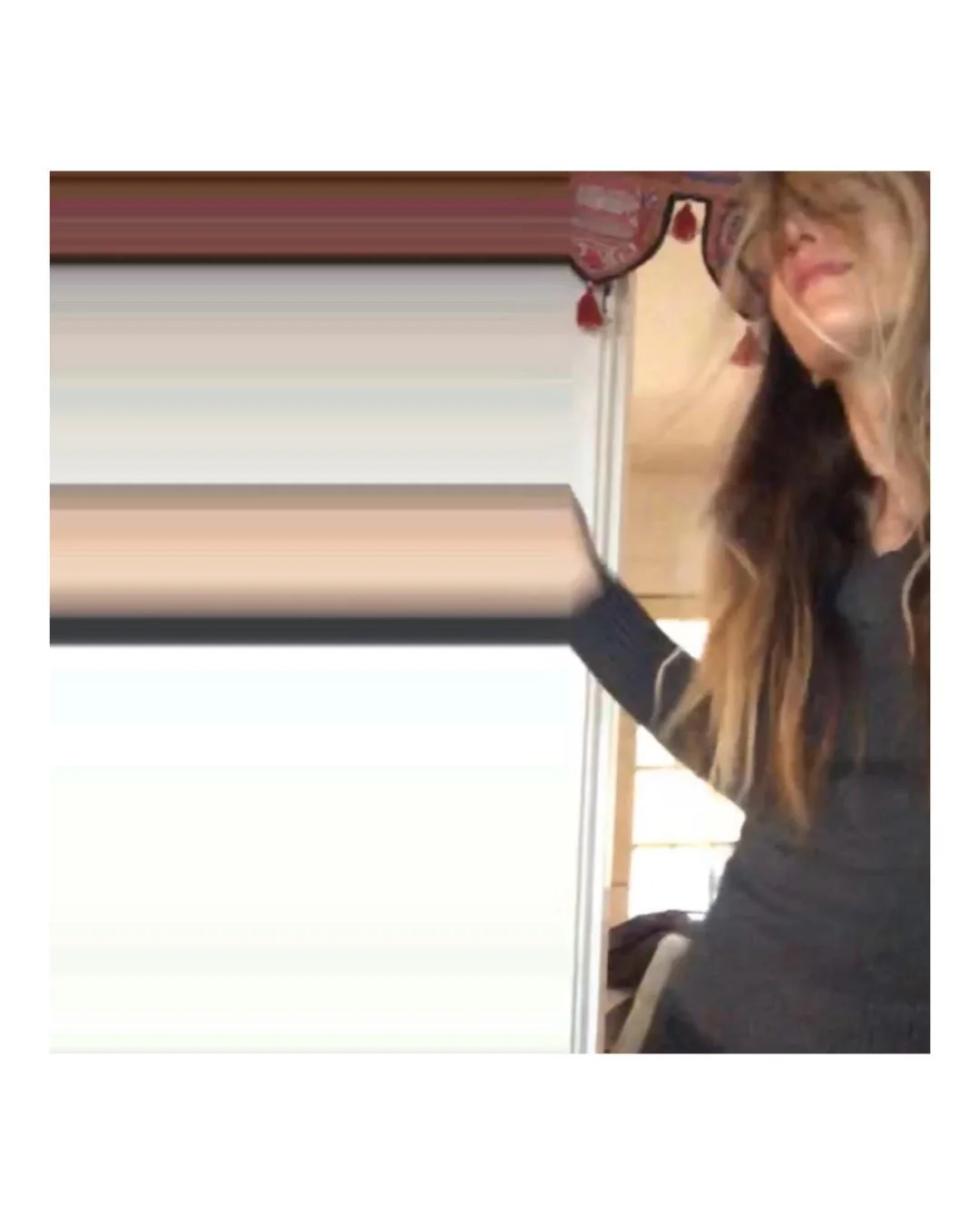
The common assumption is that there are real people and there are others who are pretending to be something they're not. There is also an assumption that there's something morally wrong with pretending. My assumptions about culture as a place where you can take psychological risks without incurring physical penalties make me think that pretending is the most important thing we do. It's the way we make our thought experiments, find out what it would be like to be otherwise.
— Brian Eno on being “pretentious”
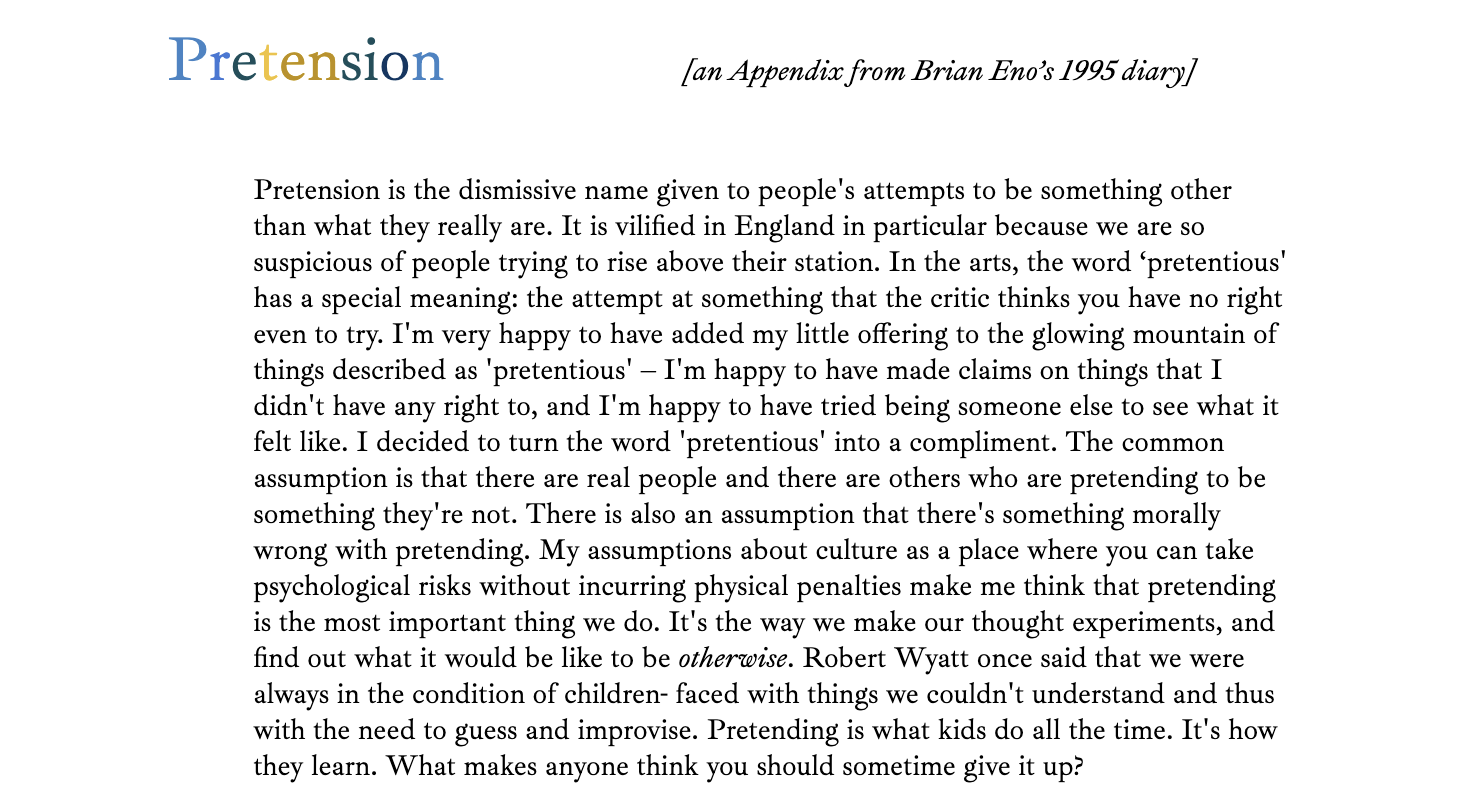
Memory, as Proust knew, rewrites itself in that involuntary mode, or what Paul Westerberg elicits in his demarcation of “every once in a while, forever.” No art or creation can exist without it. Memory is our meaning-making forge, the metallurgy of being and feeling and living and divining sense from what is given.
“Givenness” gave me pause as I absorbed a poem by Delmore Schwartz — “What Is To Be Given” — superbly wrought from suppleness and the ghosts of the stumbled-upon, whether shells or scallops or the swoop of strange colors. The speaker is indistinguishable from the poem itself, or the act of the poem-ing; he hovers in “spirit, yet animal” holding that “blue, yellow, beautiful” in its hand — and then taking leave of it like magic.
What Is To Be Given
What is to be given,
Is spirit, yet animal,
Colored, like heaven,
Blue, yellow, beautiful.
The blood is checkered by
So many stains and wishes,
Between it and the sky
You could not choose, for riches.
Yet let me now be careful
Not to give too much
To one so shy and fearful
For like a gun is touch.
Delmore Schwartz
. . . and music, too, fills this space of the unchoosable for me. Music inclines the mind to sidereals and fathomless temporalities. It navigates the possibilities of the present by committing the moment to recognition of the buoys past. Being human is not like an ocean but existing as a human being may yet resemble the ways of being and having-been across the boats and vessels of a life.
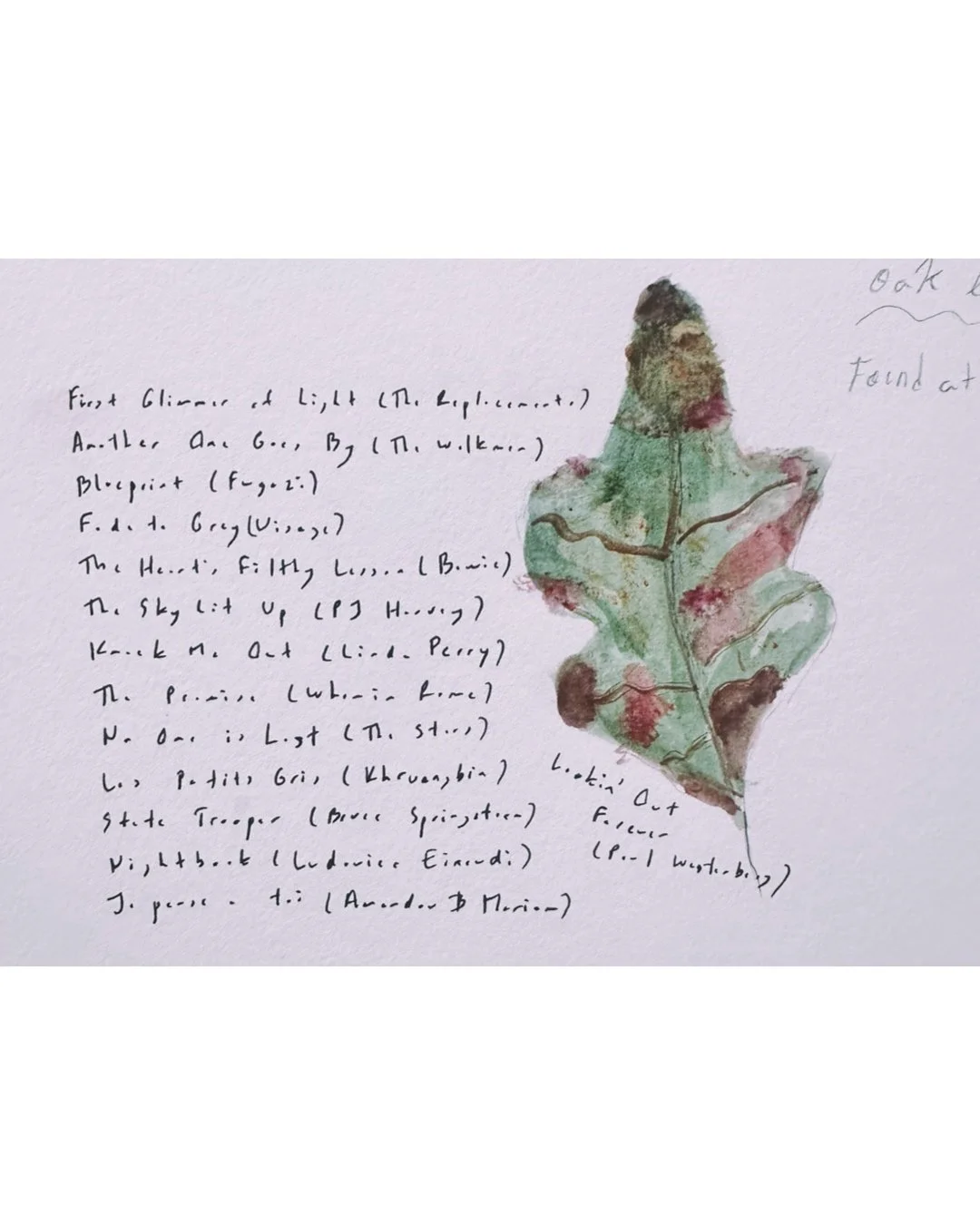
Hark! I playlist myself.
… and there is always a book in the margins. Yesterday and today, that book testified to its own appendix-issues in the titling. A Year with Swollen Appendices by Brian Eno. A logbook of interiors and impressions recorded in the year of no lords, namely, 1995. Immersed in the details — music, art, distortion, the genocide in Bosnia drumming through the background of Eno’s interiors and motifs — I am looking for “what a difference / a little difference would make” (to quote Fugazi).
A few excerpts from the final month, the first and last breath of that December, in Eno’s telling —- with my brief, contextualizing notes softened by italics.
1 DECEMBER 1995
Note from Elvis C. [Costello] asking if I knew of an artist who worked with glass boxes making tiny theatre sets' with leaves and natural objects. I thought of [Jospeh] Cornell, but when I asked Jenny and Tony at the Todd Gallery they suggested Jane England, who's had several group shows called 'Art in Boxes’. Sent the catalogues to him. Lunch with Jenny.
Working all day on Koan pieces. It's a different kind of work now - since I am trying to replicate Discreet Music as accurately as possible (in order to make a 'Discreet Mutating Music'). This is actually very hard - trying to duplicate the complicated analogue conditions of the original: a synth that never stayed properly in tune, variable waveform mixes and pulse-widths, variable filter frequency and Q, plus probably something like 30 audible generations of long-delay repeat, with all the interesting sonic degradation that introduced. Digital is too deterministic. At the purely electronic level, there are very few molecules involved, and their behaviour is amplified. The closer you get to 'real' instruments - including physical devices such as tapeheads, tape, loudspeaker cones, old echo units, analogue synths - the more molecules are involved, and the closer you get to a 'probabilistic condition. This is an argument for strapping a lot of old junk on to the end of your digital signal path - valves, amplifiers, weird speakers, distortion units, old compressors, EQs, etc. - in the hope that you reintroduce some of the sonic complexity of real' instruments. There's nothing wrong with the pristine formica surfaces of digital: it's just that one would like to be able to use other textures as well. Think Haim Steinbach.
Anyway, my attempts to replicate Discreet Music result in interesting failure after interesting failure. On the route to it I get diverted. What comes out instead is another good piece of music that isn't actually anything like Discreet Music. This is a kind of argument for life-drawing and other academic pursuits: the act of trying to make something in reference to an external standard makes you attempt things with the medium that you wouldn't have thought to otherwise. Perhaps it's also an argument for the trainspotterish Photoshoppers trying to make their glistening photographic daffodils ...
6 DECEMBER
[Eno is thinking about the absence of “harmonic drama” in a recent production experience, and how vocals require something more interesting than a harmonic plateau. He replays a conversation from earlier in the day on this subject…]
I said I thought that we had learned three things from African music. The first was pushed rhythm, which doesn't occur in traditional Western music much; the second was flattened scales; and the third was call-and-response.
Unfortunately people don't recognize the importance of call-and-response. This is because most songs are now written by the people who plan to sing them, and for them the picture is normally complete when they're in it (and uninteresting to them if they're not). But a listener likes more than this. The backing vocals, the response, are the voices of society: whether gossiping (as in ‘Is she really going out with him?’ ‘I don't know - let's ask her!') or affirming (as in ‘Amen!’ and ‘Yeah, yeah, yeah’) or warning (‘Foolish little girl..’). Even songs that are “personal” - where one doesn't want to invoke the conspiracy implied by group singing - can use the voices of conscience or of the various alter-egos. They turn monologue into conversation. Interesting to speculate on what other roles backing vocals could play: the voice of speculation ('what would happen if...)? of precise measurement? of disagreement? of doubt? of alternative ways of saying something (like shadow possibilities, parallel stories)?
15 DECEMBER
[Eno musing on shifting relations between culture and temporality, and the role of errancy in discovering new modes or ways of being. There are many sections in his diaries where the importance of just fucking around with sound becomes evident and he works this into his ontology.]
Think of distortion, for instance - all the things that technology does which we didn't want it to do. Think of how we learn to read 'distortion' as resonant with new types of meaning - so the grain of 8mm film comes to mean urgency, amateurishness, the invaluable unrehearsed moment caught. The overload of a guitar comes to connote the idea of breaking the frame of the equipment, doing something that can't be contained - and this adds a whole new side to one's expressive palette, because one can now juxtapose things that can be contained against things that ‘can't’ (inverted commas because of course such a usage is an artifice now - as all these usages become). And the artifice part is another interesting transition - when something moves away from being 'byproduct' or 'spin-off' or 'accidental side-effect' and becomes instead part of the available vocabulary, but still retaining some of the resonances of its accidental origins.
All of these processes add value. In fact they create value by conferring it where it has never been before. This seems to me an essentially human attempt to not take the world for granted - to try to look at everything as though it exists for purposes that we might not yet have discovered or noticed.
My friend Peter Schmidt used to talk about 'not doing the things that nobody had ever thought of not doing, which is an inverse process - where you leave out an assumption that everybody has always made and see what happens (e.g. music has to be made of intentionally produced sounds was the assumption that [John] Cage left out). In that version of this process, you discover a value in the absence of something - in fact you discover that the absence of something is the revelation of something else (Buñuel, the filmmaker, said, 'Every object conceals another' - a message that I often relay in the studio when overdubbing starts).
19 DECEMBER
[This excerpt follows Eno’s rant about the western states’ silence and complacency on the genocide in Bosnia and the obvious efforts to eliminate Muslim communities from Europe. Kosovo looms on the horizon as Eno parses the connection between political action and art in the neoliberal world.]
'CHANGE THE CONVERSATION - LEAVE OUT THE TORIES'
Whatever you now find weird, ugly, uncomfortable and nasty about a new medium will surely become its signature. CD distortion, the jitteriness of digital video, the crap sound of 8-bit - all these will be cherished and emulated as soon as they can be avoided.
It's the sound of failure: so much of modern art is the sound of things going out of control, of a medium pushing to its limits and breaking apart. The distorted guitar is the sound of something too loud for the medium is posed to carry it. The blues singer with the cracked voice is the sound of an emotional cry too powerful for the throat that releases it. The excitement of a grainy film, of bleached-out black and white, is the excitement of witnessing events too momentous for the medium assigned to record them.
Note to the artist: when the medium fails conspicuously, and especially if it fails in new ways, the listener believes something is happening beyond its limits.
Tim Cole, Jon Pettigrew, Jameos, Anthea, Rob Partridge for meeting about release of Koan. 'GENERATIVE MUSIC' name agreed.
31 DECEMBER
The last day of the year.
Picture frames that have to be switched on to open up - so you choose to see a picture, and it has duration.
Talking with Elvis Costello in the steam-room about the difference between scored and played music. When music is generated by a group of people playing, everyone tends to play most of the time. With scoring, you're likely to use instruments when you need them. No one feels bad about standing round for three-quarters of an hour and then going bong' on a timp if that's what the score demands. This is why scored music is more coloristic and contoured than most pop —- whole sections come and go; the dynamic and timbral ranges are very broad.
Anthea's new unthinkable future: that nuclear radiation, in small doses, will be found to be good for you (this to be discovered when, 30 years hence, the inhabitants of Mururoa atoll are all in outstandingly vigorous good health).
Tomorrow I can go to sleep without having to write this diary.
[…]
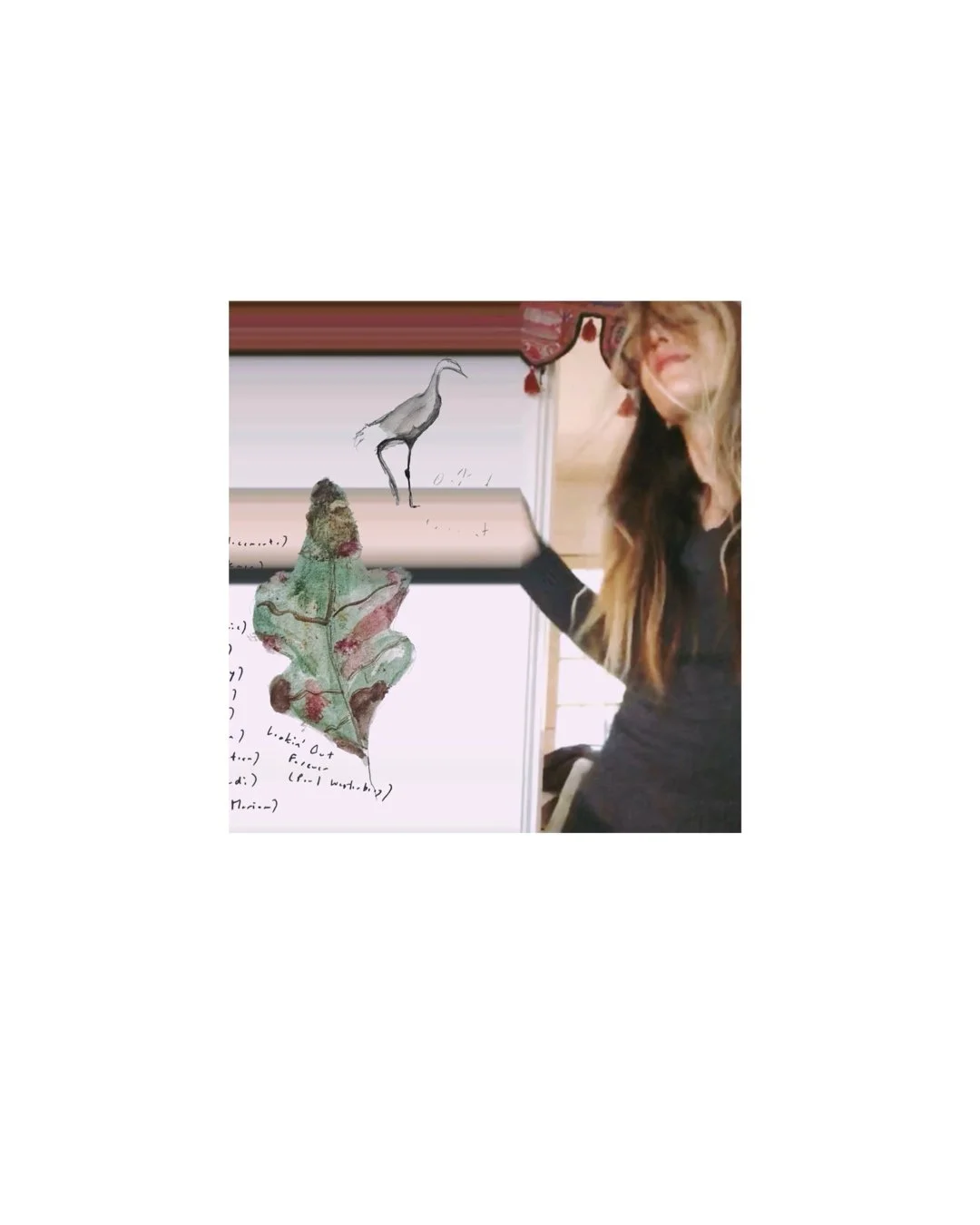
“Of such a kind was the only picture that adorned, and then but for a brief space, Jean's room. A spectral picture, composed of shadows; a phantom picture, a picture which did not last for long and, therefore, struck his imagination far more powerfully than would have done a motionless picture hung for him to look at all day long.”
— Marcel Proust, Jean Santeuil
*
A Year with Swollen Appendices by Brian Eno (PDF)