But the writing of the poem, the work of it, also asks permission to enter—asks, oddly enough, permission to trespass.
Sometimes I can feel that every poem I’ve ever read is linked to every other poem.
Curious thresholds demand offerings before they will open.
To write a poem may be to make just such an offering.
— Dan Beachy-Quick
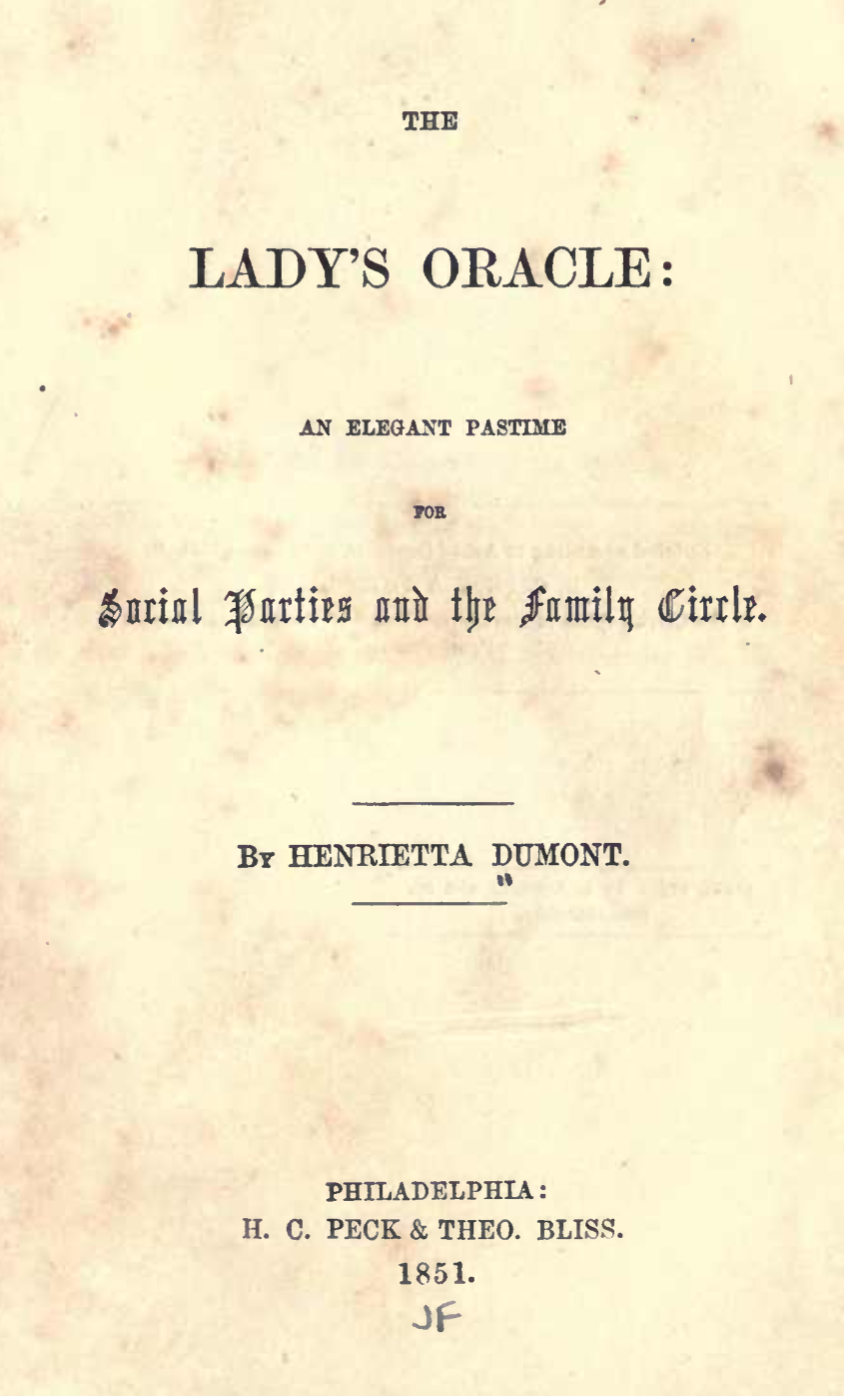
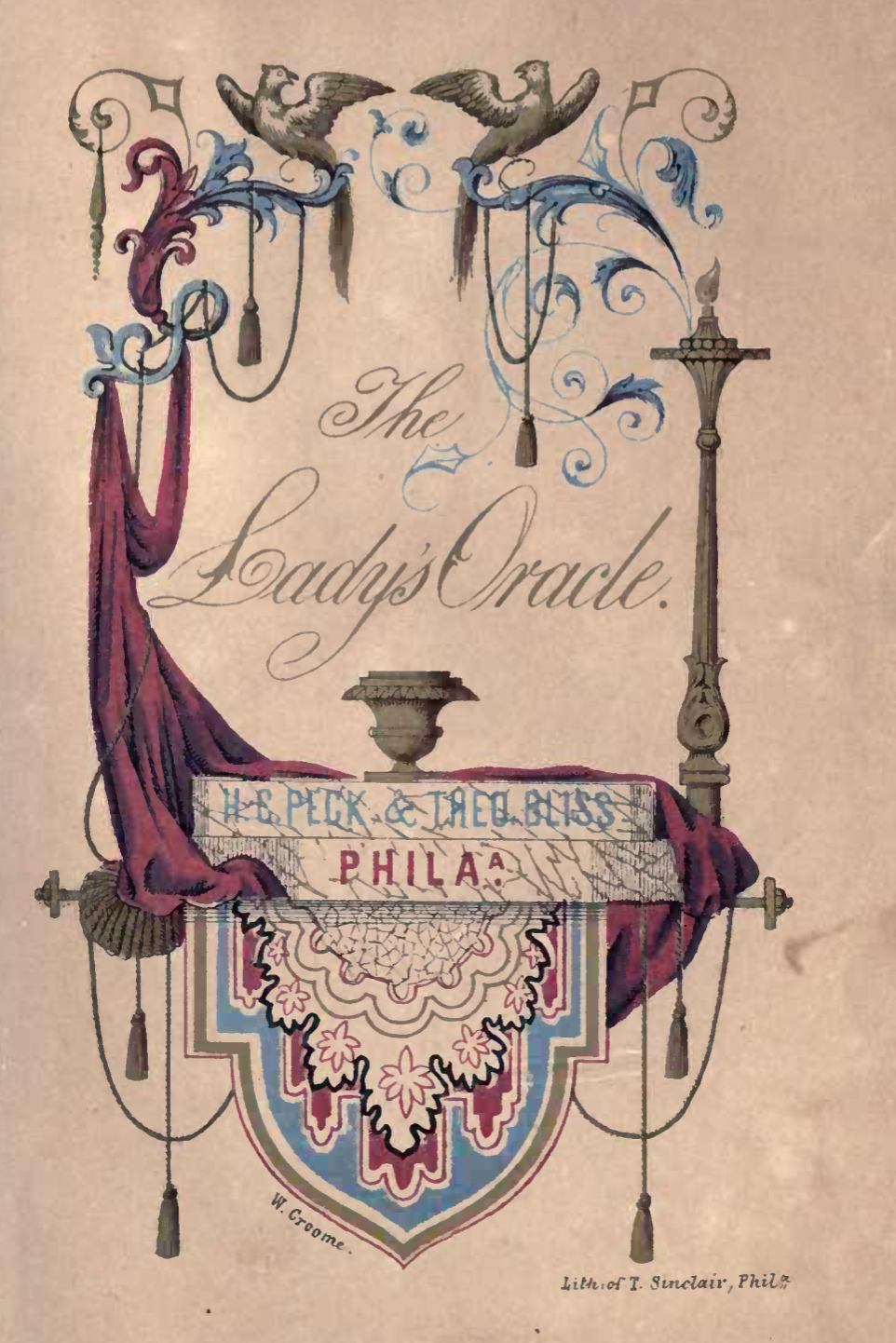
Speaking of oracular voices and gendered repetitions via citational practice, The Lady's Oracle: An Elegant Pastime for Social Parties & the Family Circle, written by Henrietta Dumont, details a 19th-century game involving questions and answers “between a lady and gentleman intended to provide amusement for social gatherings.”
The rules of the game are simple enough. Two players, presumably of different genders, take turns asking one another a question from the list of questions. After asking a question, the other player responds by selecting a random number corresponding to one of fifty ‘answers’ included under that section heading in the book. The author tells us that these ‘answers’ are “quotes from poets to avoid any appearance of personality.”
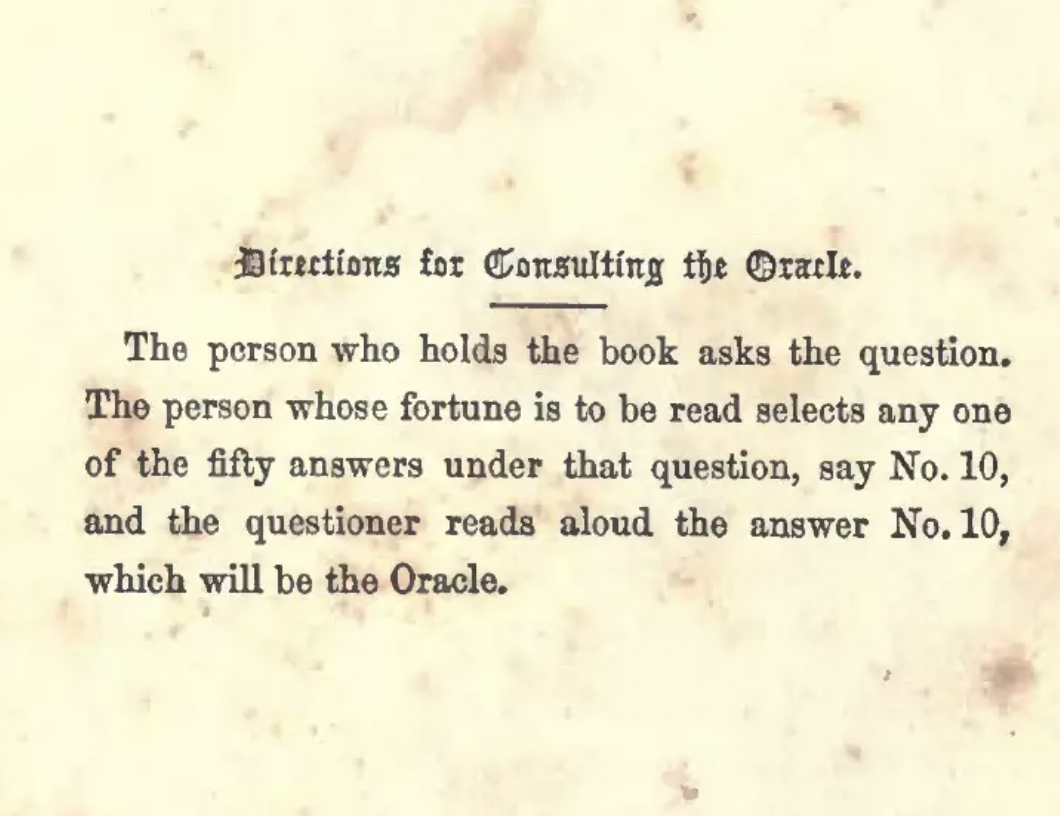
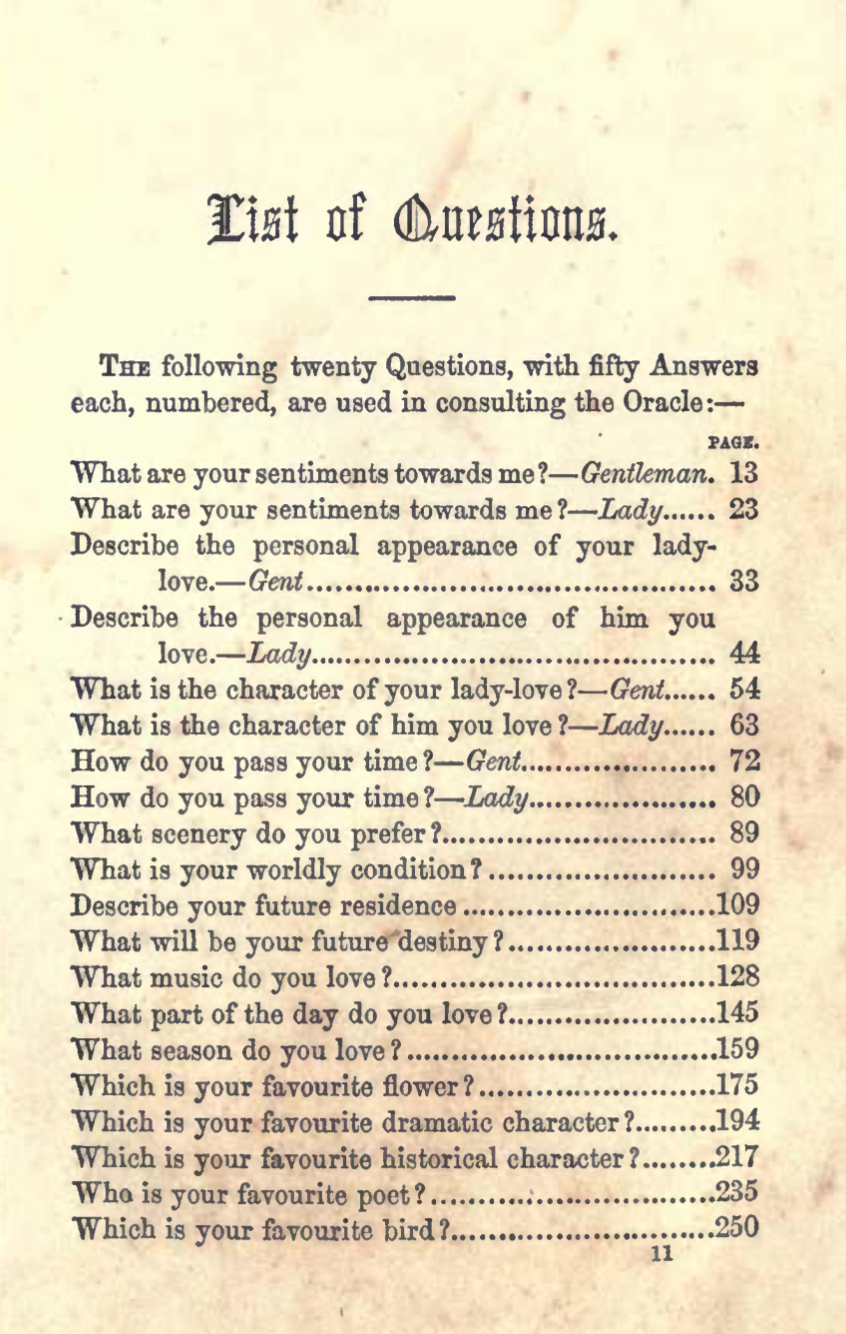
The game promises to “provide entertainment for an entire evening” and encourages innocent recreation to relax the mind from worldly cares. While some view leisure as wasted time, the brief introduction attempts to build the case for leisure as a means of self-improvement, a practice that leads to more health and happiness.
If you’d like a glimpse at some of the answers (hint: lots of Burns, Shakespeare, etc.), here is your gander.
I would only agree to play this game given different Social Conditions than those presumed by The Rules.
I would, however, agree to play by The Rules if permitted to revise the Social Conditions so that I might play the “gentleman” to someone else’s “lady.”