If the Marne throws itself in the Seine
it’s because I won the Marne
If there’s wine in Champagne
it’s because I pissed there
I threw my gun in the air
but the bullets spit in my face
that’ show I was decorated
Vive la republique
— Benjamin Péret, “Hymn of the Patriotic Old Soldier”
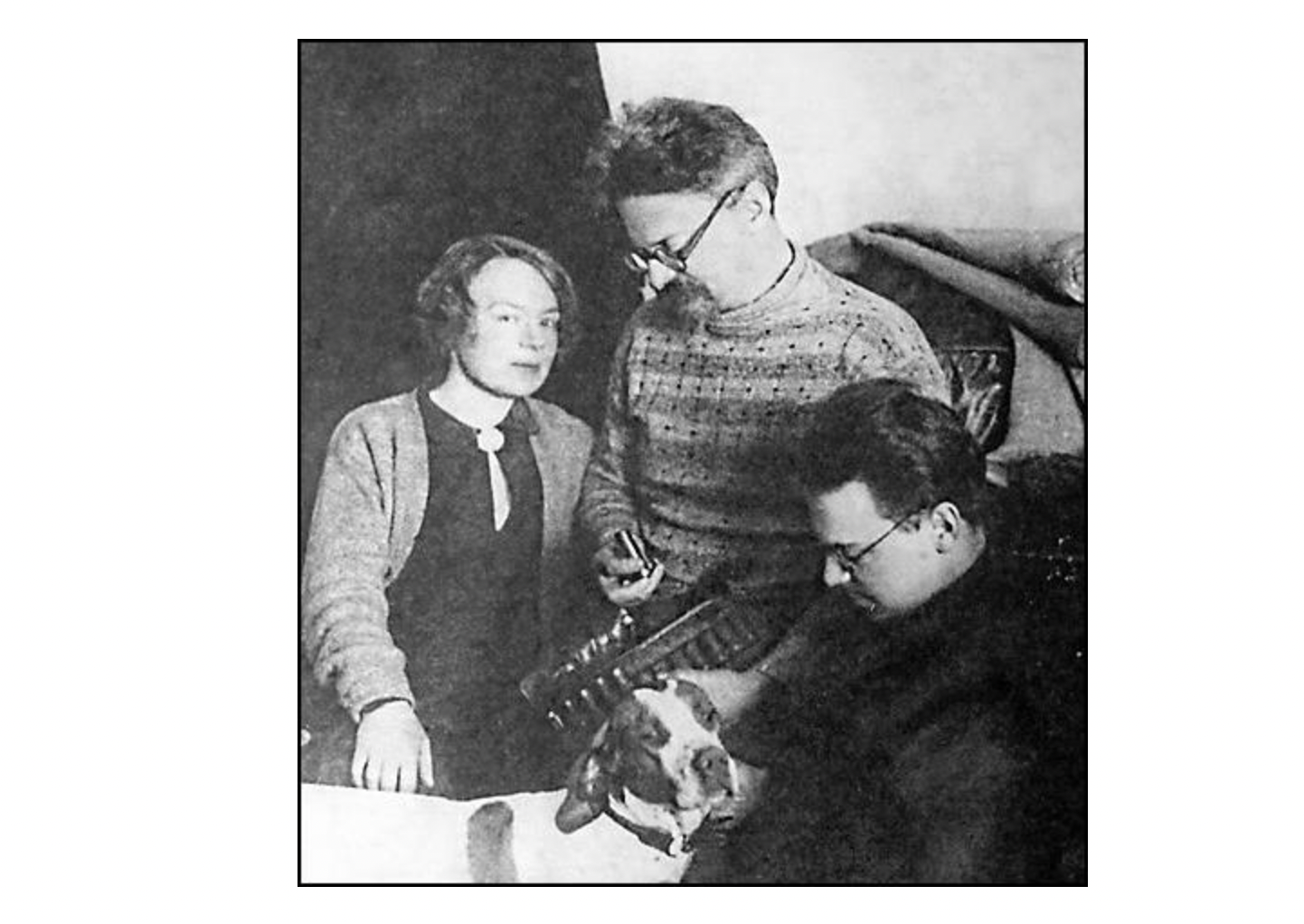
Natalia Sedova, Leon Trotsky and Lev Sedov
1. An open letter
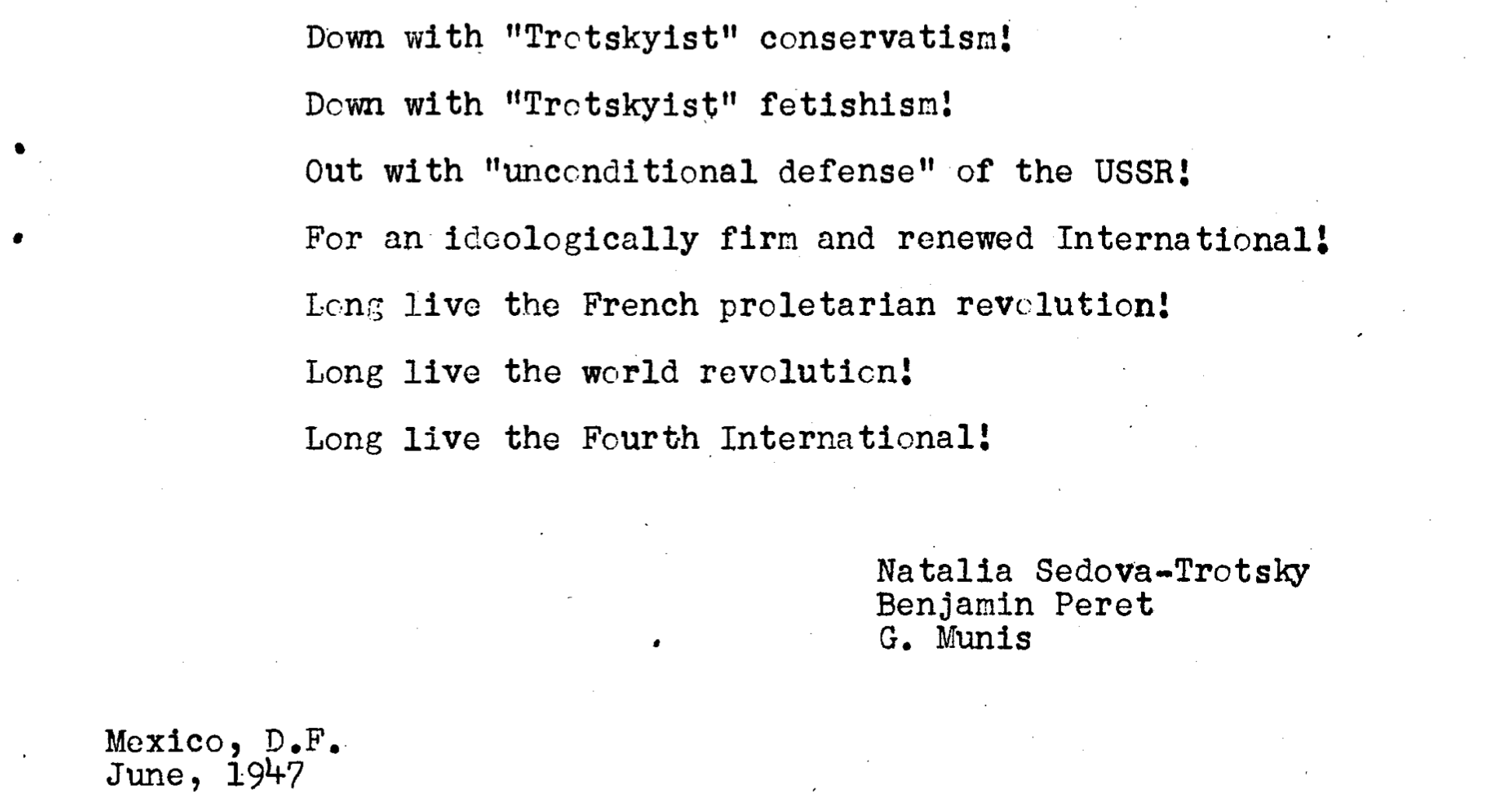
A few excerpts from the 1947 “Open Letter to the International Communist Party, French Section of the Fourth International,” signed by Natalia Sedova-Trotsky, Benjamin Peret, and G. Munis:
The world labor movement ought to have triumphed over the old capitalist world and the Russian counter-revolution during the imperialist war or immediately afterward. The war was simultaneously a result of the crisis of the world labor movement and the opportunity for its recovery and definitive victory. The ideological causes of the crisis and with them the organizations responsible for it should have been destroyed. But a reverse phenomenon has been produced. The organizations which caused and heightened the crisis have increased their organic power over the working class, binding it more strongly than before to the general system of the world counter-revolution. We, on the other hand, have nowhere attained the organic force, the ideological authority and the combative prestige which give a revolutionary party its qual ification as such. This result cannot be in any way accidental and still less a product of the objective circumstances. The crisis of the world labor movement acquired official status in 1914, when the Second International deserted to the capitalist camp. The Russian Revolution, in 1917 vigorously started the recuperation. But shortly afterward the Stalinist Thermidor arrived to add its own factors of ideological crisis to the old reformist factor. Since then Stalinism has been continually deepening its degeneration, getting prestige from the country of the revolution and money and stringent orders from the caste which has destroyed that same revolution. The social-democratic desertion was serious, very serious, and costly to the proletariat, but the intransigence of the Bolsheviks diminished its importance and the triumph of the Russian proletariat doomed it to a certain and early defeat. By turning against tho Russian Revolution and chaining to itself the Third International, the Stalinist Thermidor coincided with the social-democratic desertion, obstructed the complete recuperation of the workers movement and immediately itself deepened the crisis.
[…]
With deep distress, because the world leadership is a part of our organization, a part of ourselves, we cannot refrain from saying that the International Secretariat failed in its most elemental duties by not bringing up for discussion on the day follow ing its constitution the question of whether the “unconditional defense of the USSR” continued to be favorable to the world revolu tion or whether it seemed incompatible with it in the light of the tremendous supervening events.
[…]
Without doing anything here besides making assertions, we repeat, we declare to you, comrades of the French party, comrades of the International, that the “unconditional defense of the USSR” has revealed itself to be incompatible with the defense of the world revolution. Abandonment of the defense of Russia is of utmost urgency because it is fettering all of our movements, blunting our theoretical progress and giving us in the eyes of the masses a stalinoid physiognomy. It is impossible to defend Russia and the world revolution at the same time. Either one or the other. We pronounce ourselves for the world revolution, against the defense of Russia, and we ask you to pronounce yourselves in the same way. Be careful, above all, of those tendencies which hide their opportunism towards the imperialist war and the present situation by boasting about their fidelity to the program of the Fourth International on the Russian question! A fidelity of this kind is a destructive fidelity, similar to that of the “old Bolsheviks” in 1917 in respect to the old theory, completely bolshevik of the democratic dictatorship of the proletariat and peasantry toward which Lenin appeared as a revisionist. . . . . In order to be faithful to the revolutionary tradition of the Fourth International, we must abandon the Trotskyist theory of the defense of the USSR; we shall thus bring about in the International an ideological revolution indispensable for the success of the world revolution.
[…]
Stalinism is today a thousand times more dangerous for the revolution because it represents the ideas and interests of a triumphant counter-revolution in Russia which offers the world and more immediately Europe, its experience, its power and its particular solution against the proletariat on the march toward socialism. The Stalinist parties are today mere representatives and disciples of the counter-revolution installed in the Kremlin . . . The slogans of united front and government of the workers’ leaders constituted in Russia a whole at once inseparable from and derived from the forms of proletarian democracy existing in the soviets, which — this is of the utmost importance — were created and main tained with the collaboration of Mensheviks and revolutionary socialists, Stalinism is today absolutely incompatible with any proletarian democracy. Wherever organs of revolutionary power
have emerged, from Spain to Warsaw, Paris and Milan, it has hastened to destroy them. Stalinism cannot allow the revolutionaries to speak.
[…]
To sum up, the slogan of a CP-SP-CGT government such as has been used in France, the call for a Stalinist-reformist government, in general, is today entirely false and will serve only to hold back the masses where they are, and also — it is painful but necessary to say it —- develop the new potentially reformist tendencies existing in the Fourth International. We cannot refrain from telling you, comrades of the International Communist Party of France, that the crisis of your party in particular and that of the Inter nation in general will not be solved positively by supporting the Frank faction against the Craipeau faction, but rather by supporting the two factions which are against the defense of Russia and against the slogan of a CP-SP-CGT government. Fidelity to Trotskyism is not fidelity to the written word, but to the revolutionary spirit of Trotskyism. Between the two factions which today appear the strongest in France, the least bad will be that which offers the party a more democratic regime allowing it to carry out the political changes indispensable today through the widest and most democratic discussion.
[…]
Fidelity to Trotskyism is the firm, sincere, and courageous rectification of some of the assertions it made yesterday. The revolution also is revolutionary; it requires shifts, modifications and radical negations of its own former assertions. Yes, the revolution is also revolutionary!
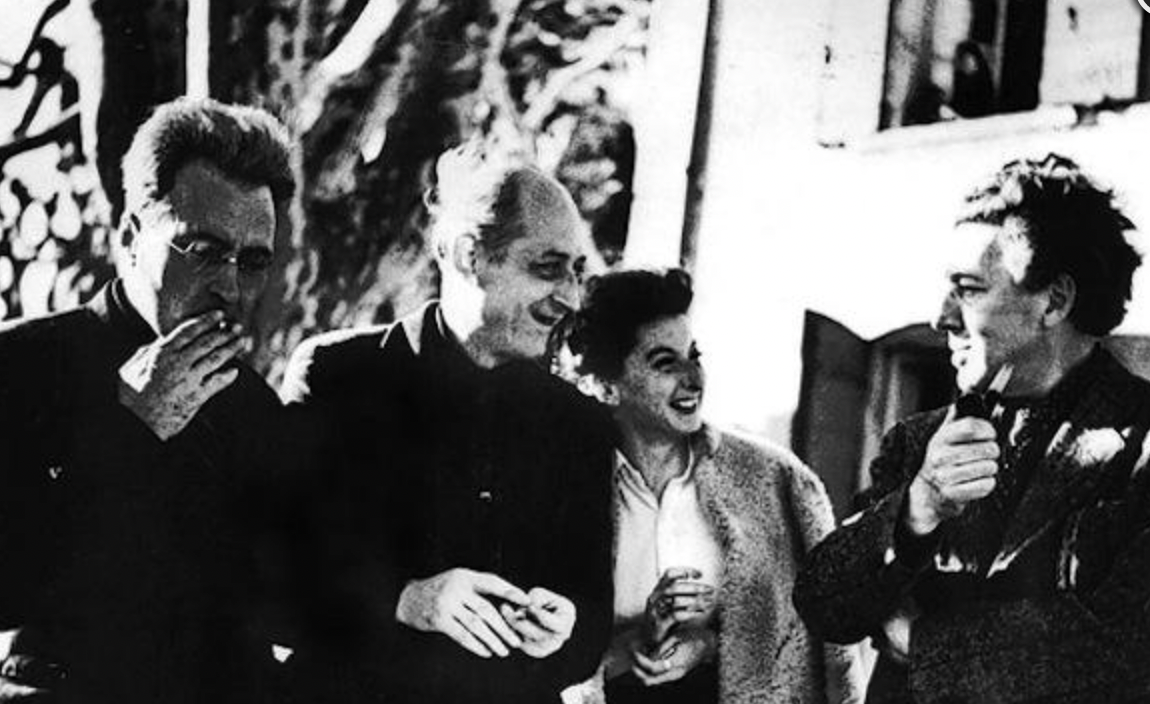
2. The rifts “sur” “realisme”
Many friendships were broken by Surrealism.
I quote: “Yves Tanguy severed ties with singer Jacques Prévert (whom he had met in the navy), and writers Raymond Queneau and Georges Duhamel for it. This did give him a decent career as a Surrealist, and Surrealism undoubtedly allowed Tanguy to penetrate the core of his art. Tanguy, a painter of portraits, animals and landscapes in gouache and other techniques, was never abstract, according to one of his contemporaries; everything he painted, was observed; his paintings are landscapes of the soul. Not only did he discard his friends, he also destroyed much of his pre-Surrealist work. Although he co-signed many of the Surrealist manifestos and followed the politics of leader André Breton, he remained nearly invisible within the group, an outsider who chose to follow his own path and finally departed to America in 1939.”
Speaking of Jacques Prevert, Benjamin Peret dedicated the following poem to him; the translation is by Marylin Kallet.
MY HAND IN THE BEER
To Jacques Prévert
The hanged man is a pirate
who had teeth
who had bones
with water inside
Then he ran like a serpent
his mustache drooped
his tongue climbed up on his eye
Then the grasshoppers and the onions
bananas and necklaces
left his pocket one by one
Happiness Happiness they said
his mouth is the sister of my mouth
and it feels good to walk in the street of She-Asses
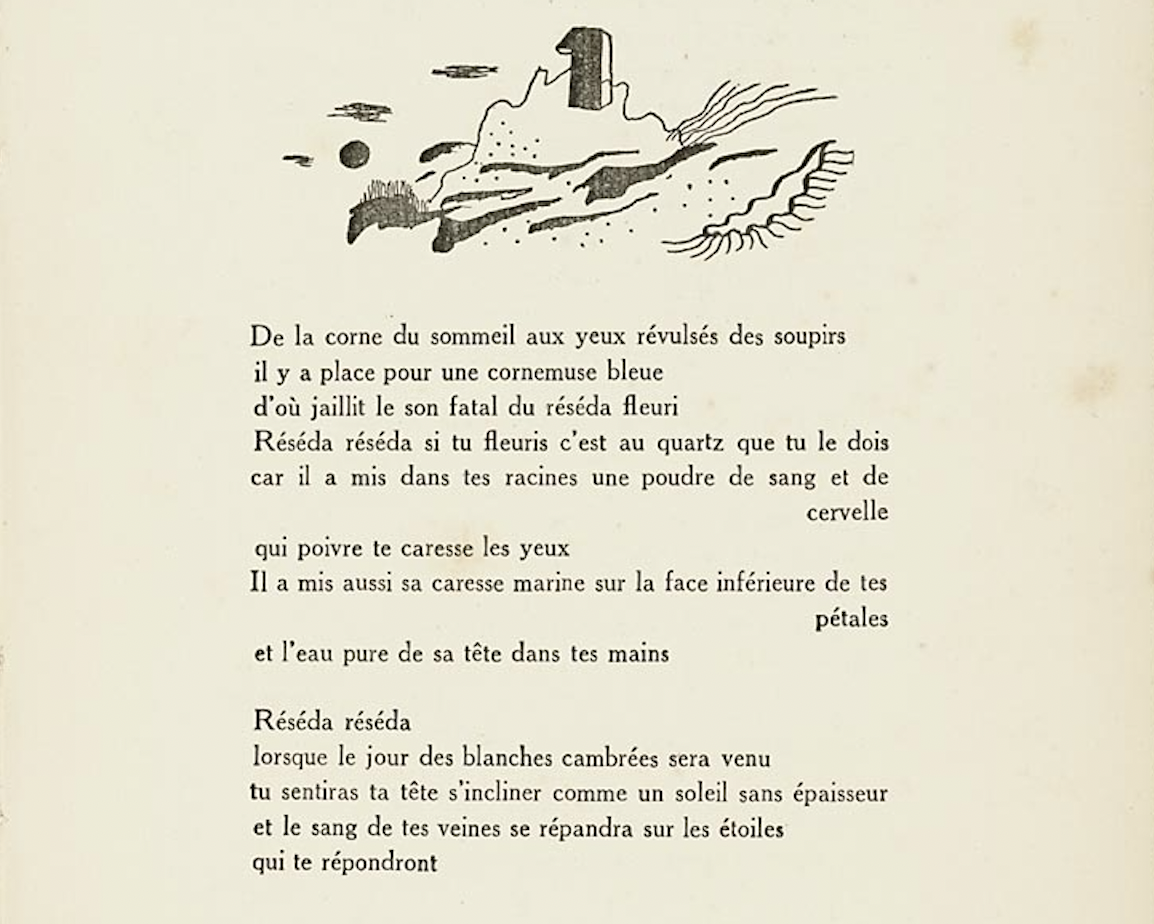
Tanguy made 15 pen drawings for his press partner, Benjamin Péret, in 1927. One of those poems (see below) has been a comfort to me in recent weeks.
To remember my ribbon of honor
I’ve painted my nose red
and put parsley up my nostrils
for the Military Cross
— Benjamin Péret, “Hymn of the Patriotic Old Soldier”
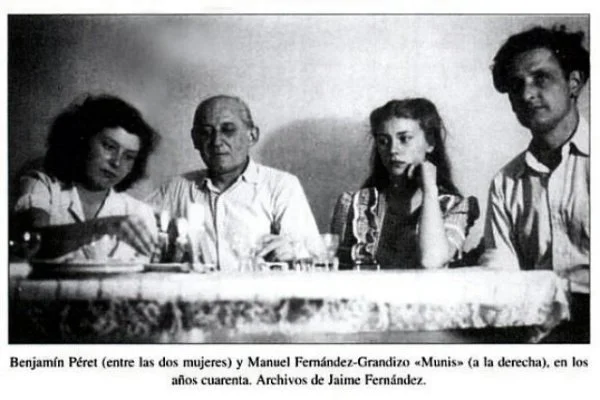
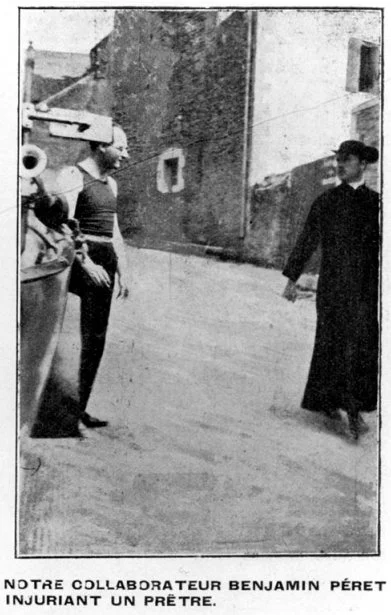
*
André Breton, Max Morise, Jeannette Ducrocq Tanguy, Pierre Naville, Benjamin Péret, Yves Tanguy, Jacques Prévert, Cadavre Exquis with Figure c. 1927
Benjamin Péret, Letterhead from 1920’s (MOMA)
Benjamin Péret, “Dormir, dormir dans les pierres : poème” (KB Nationale Biblioteek)
Cahiers des amis Panait Istrati, 14 May 1979
”Expansive Poetics: Benjamin Peret” (The Allen Ginsberg Project)
Grandizo Munis (Marxist’s Internet Archive)
Grandizo Munis and Benjamin Peret, “The Unions Against Revolution”
”Nathalia Sedova” (Spartacus International)
Rachmaninov, Elegie, Op. 3 No. 1
Rachmaninov, By the Grave, Op. 21 No. 2
Socialist Workers Party, Internal Bulletin Vol. X, No. 1, February 1948
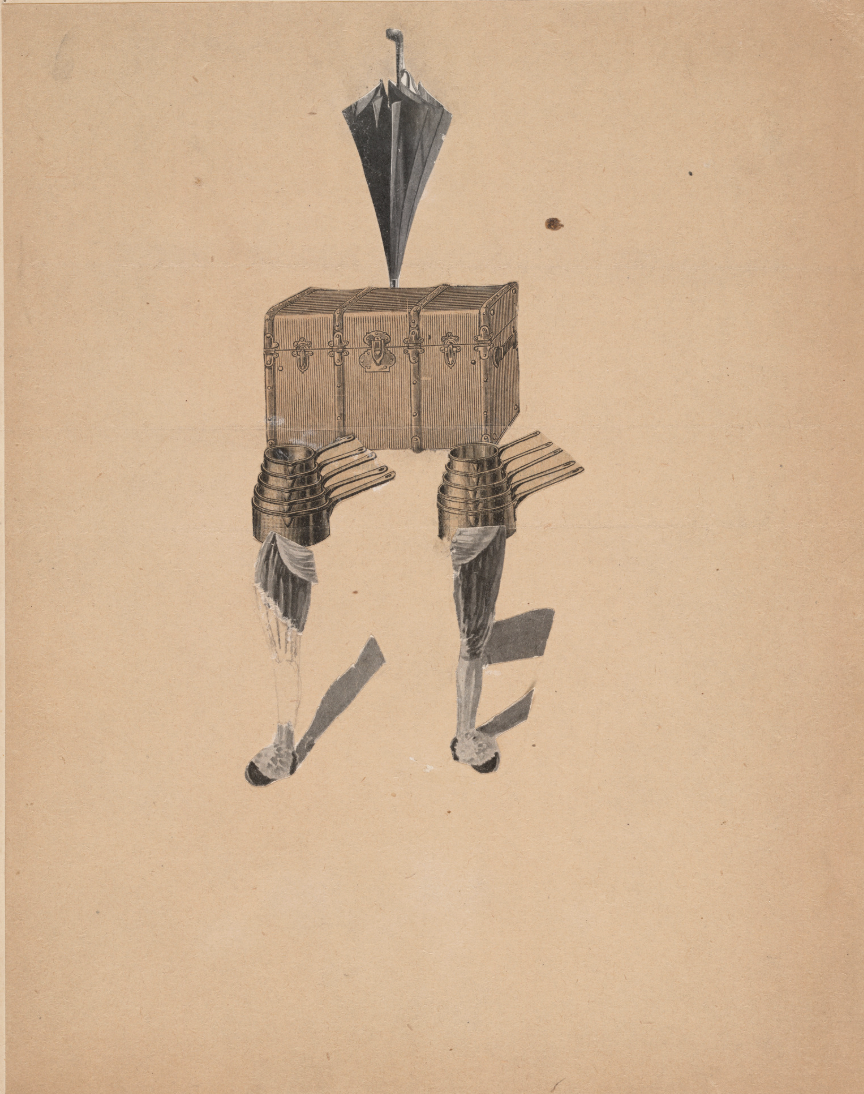
André Breton, Max Morise, Jeannette Ducrocq Tanguy, Pierre Naville, Benjamin Péret, Yves Tanguy, Jacques Prévert, Cadavre Exquis with Figure c. 1927 (Source: MOMA)