Yes I miss the kiss of treachery
— The Cure, “Disintegration”
Then the cock crowed
This morning
They dared to murder you.
In the fortress of our bodies
May our ideal live on
Mingled with your blood
So that tomorrow they won’t dare,
They won't dare to murder us.
— Poem enclosed in Fernand’s unfinished letter to Helène
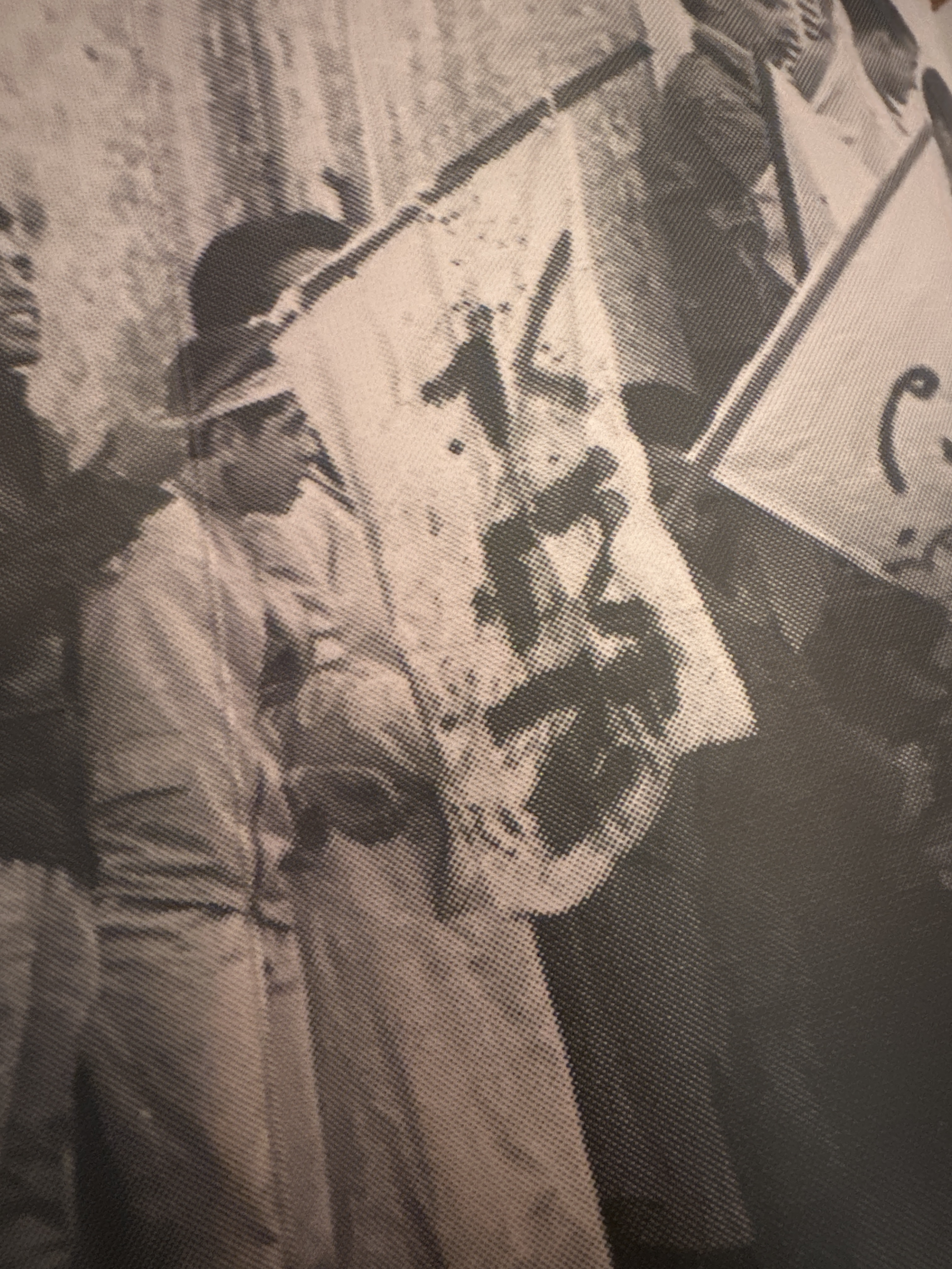
For betraying his “patria” and abandoning his role as a French soldier, Pierre Guyotat served out his prison term in solitary confinement during the Algerian war. His description of that experience is calm, untrammeled by affect. I recalled it while reading another book this week.
I don’t know where to start.
The poem I cited was culled from the ending of Joseph Andras’ book, where it is preceded by the following passage:
Helène folds the letter in half. Then in four. Anonymous. Only a postscript, in which she learns that the author of this poem, written in memory of Fernand, is a European-Algerian woman, a militant for independence sentenced to five years in prison.
I realize this offers little context— only the curve of what we like to call an ending. So I will try again, and open a different fold from a part of the story with fewer masks. A part that begins in a small French village, where a French Algerian who has come there to recuperate from a lung infection. Amid this efflorescence of chickens and birds and flowers, Fernand Iveton meets Hélène Ksiazeka, a single mother from Poland whose mother runs the boarding-house. The two exchange greetings; her eyes catch the light like “little frosted pearls.” His eyes follow her to the door.
Something begins.
He swallows a blue pill, a pill. . .
“the kind of wolf-dog blue which rummages around your heart, never asking for permission or wiping its feet on the doormat—- for this blue would not fail to make a doormat out of you, one day, if it could ever come to blame or love you. He had used indecision as an excuse, at a meal last week (the choice was caramel-cider tartlet or strawberry crème brûlée), to incite their first exchange. She was partial to caramel and asked him where his accent was from: from Algeria, ma'am, it's my first time in France, well, yes, they say Algeria's in France, sure, but still it's not the same, you have to admit that . . .”
They sit together in a restaurant.
“Hélène is wearing a light gray dress with a white collar; Fernand, for his part, has taken this opportunity to bring out the only tie in his possession.”
Two menus before them. And something begins— again.
Yet here she is now, in front of him, noticeably more at ease than he is. He could touch her if he reached out, but this very idea is, already, sacrilegious. And is he even thinking of touching her? Bodies are seldom thought of when this thing is born in the belly's depths. This unnamed thing no word can approximate or identify, this thing (the most appropriate term, in the end, for those first times out of time). A vague, crazy thing of vapors, fumaroles, ether, routing every attempt at rationality. A thing we know to be soaked in illusions, fineries, gildings and sands of an instant, but which we fasten onto and give it everything headlong, that thing, yes.
Fernand looks at her as others might contemplate a statue or a painting: he lacks the linguistic precision to formalize his thoughts, but he looks at the contours and shadows of her skin, the reflections, the more or less visible pores, the hands (it all seeme to concentrate on this point — thou hands, that gilt or slap, that one might hold or that pull away, the hands of woman loved, or desired, bear the same heartrending charge, the same sacred fever, as the mouth which one day, without warning, will draw near or withhold itself forever), that foreign smile and those eyes that a had poet would promptly compare to the sea without fearing to offend her (Helène is not for commonplaces, doggerel).
He doesn't know much about her, but what he knows is ample enough.
No need to ballast a beating heart.
She has a passion for dance, she tells him. She got that from her father. . .
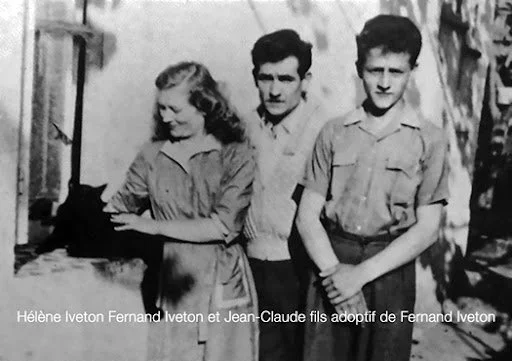
Some things begin as others continue, and they meet in the spaces that have never imagined the other, or made provisions to accommodate the emergence of new things.
There is the FLN, the death of a dear friend, the sense of “History” asking Fernand to act in a way that pushes the French CP out of its complacency on the Algerian cause.
He tries to plant a bomb in an abandoned shed. Someone betrays him.
The bomb is defused and the man who has become Helène’s husband is arrested.
He is told, in his cell, that he will be tried in a military court. The trial is in four days. Attempt to destroy, with an explosive substance, a building that is inhabited or used for habitation. The officer reads out the charges without looking up. He has fat cheeks and bad skin. Fernand is sitting on an iron bench, his feet still in chains. Articles 434 and 435 of the Penal Code. Risk of incurring maximum penalty. In other words—he specifies, as if it needed to be any clearer - death. Fernand is surprised not to find himself blinking at the sound of the word. Torture must've fried my brain, he thinks. Since yesterday, a nerve has been throbbing continually near the bicep in his right arm. The communist leadership, the other continues, refuses to get involved: the Party hasn't sent a lawyer. They are wary of that troublemaker Iveton: isn't he an anarchist, anyway?
Smells like sulfur, like bombs rolled under Tsarist carriages, explosives chucked in parliament or at a barracks, the pennants black and proud . . .
There are memories that replay in the mind of the man who is now incarcerated, cut off from contact with his friends and family, held in an undisclosed location, tortured according to the orders of a modern democracy.
These memories are events in themselves: they are what life becomes to the man who can no longer describe his relationship to it.
What does Fernand dare to imagine of his future?
He believes he will be exonerated. What is happening cannot be possible. He is living a bad dream that will soon end.
Immobilized, he brings other dreams into dialogue with the gray banality of the nightmare.
A man dreams to keep his grip on the existence that is left.
What are you reading? Ah, soccer again! Fernand demurs: there's L'Humanite right there, at the foot of the bed. I don't know if that's much better. She laughs. Then Fernand asks himself if he prefers her laughing, like this, head thrown back to leave her throat exposed, yet not offering it, either: a playful swan, a fair ribbon of spring, with those small white stubs beating their wings and that high-pitched trill, thin and frail (Fernand is getting lost). Or perhaps he prefers her serious, severe, as she often is, the wrinkle between her two eyebrows more pronounced, a delicate furrow, and that tragic look, a Slavic stare straight out of Dostoevsky (or at least that's the image that comes to his mind, again; he gave up on Crime and Punishment after the third chapter. He only remembers one sentence, very beautiful really, he had thought to himself: the hero's mother, the one whose name is impossible to remember, had written her son a letter that ended with I kiss you with a thousand thou-sund kisses, yours until the grave—that's lovely, that is, he told himself). Dumb question. There is no need to choose, he loves her both cheerful and serious: two colors of the same future.
There are welts on his chest, his arms, his legs. The prison cell is cold. The men in uniform flaunt their power and status.
Hélene. . . A name like an itch. A wound in the roof of his mouth that he cannot forget.
He thinks of her every day. He cannot keep from doing it. Cannot keep from picking up the scattered pieces of their story, as if he had to put them in order between these walls, give them a meaning in this gray shithole, bulb on the ceiling, bunk stained by former inmates, one toilet between three. Give them a direction, a solid outline, thick, drawn in chalk or charcoal. Three and a half years together: one with the other, one through and for the other. Fernand collects whatever pieces his memory more or less readily restores to him, to form a brick—a cinder-block of love alone capable, in the face of an uncertain future, to break the bones and jaws of his tormentors.
Helene. Her blonde hair, the wonder of the neighborhood. . .
There is an attorney who attempts to defend Fernand as a French citizen, or one who should benefit from the rights accorded to citizens.
Civilization puffs its chest, brandishing rod and tag Marianne trades in her tricolor nights-swapping pennies for chimeras.
There are moments thick with official symbols of justice, as when the state commissioner declares that whatever Fernand's intentions may have been, whether “to kill or not to kill innocent people—- the crime remains the same.”
The medical report is read out: the accused has "superficial scars on his tor and his limbs" but, due to their age, "the exact cause of all these marks is impossible to ascertain." Fernand asks to speak, permission is refused, and the commissioner continues; in the name of those little children who were sacrificed in cafés, it is important to punish criminals. Solemn, and with History ensconced on the tip of his tongue, he concludes: “You must also think of France, whose prestige and influence in the world are blemished by these monstrous acts.” The death penalty is therefore, in his view, required.
The momentum is built into the ticking of modern time.
Smadja protests against the little time— and that's an understatement, your honors!— the court lawyers had to prepare their client's defense, The pernicious atmosphere, he continues, this cold atmosphere, drunk on resentment and fury, is not conducive to a proper review of the cases we must judge Iveton not for attacks committed by others but for his personal actions, and those alone.
Is Fernand alone? He calls his loved ones into their absences, and holds them close.
There is Fernand’s friend and comrade, Henri, who was killed by French soldiers for his role in Algerian resistance.
I am not Muslim, Henri had written shortly before, but I am a European Algerian. I consider Algeria to be my country. I must fulfill toward it the same duties as all of its sons. As soon as the Algerian people rose up to free their land from under the colonial yoke, I knew my place was alongside those engaged in the fight for liberation. The colonial press shouts treason, while at the same time it publishes and endorses the separatist calls of Boyer and Banse. It also cried treason when, under Vichy, French officers joined the Resistance, while it was serving Hitler and fascism. In truth. the traitors to France are those who, to serve their own selfish interests, pervert in the eyes of Algerians the true face of France and of its people, whose traditions are generous, revolutionary, and anticolonial. What's more, every progressive man in France and in the world recognizes the legitimacy and justice of our national claims. The Algerian people long thwarted and humiliated, have taken their resolute place in the great historic movement of colonial liberation, movement which has set Africa and Asia ablaze. Its victory is certain. And this is not, as the biggest owners of wealth this country would have us believe, a racial conflict. . .
Henri Maillot’s desertion stunned France. He was known to be a sweetheart, a laid-back and generous fellow who identified with France, a man who risked his life to fight for his country. He was “a pied-noir member of the Algerian Communist Party and participated in the Algerian War.” He was a French soldier who “deserted” his military unit in 1956, and crossed the lines of loyalty, carrying a critical stash of funs and ammo to the Algerian opposition. He was a “traitor.” He was a man who died for a country that did not exist.
— And who was Henri Mariaini?
There are other letters that bleed through Fernand’s memories.
For you my love, he writes at the bottom of the letter he just finished.
— And who or what is History?
Helène will fold the letter in half. Then in four. “Anonymous.” “Only a postscript —”
Fernand will stare at the pasta and beef on his prison tray, just as he does every Sunday. Lukewarm. Its sauce “uncertain”.
He is reading Victor Hugo — again. This French novel is his companion, his friend, his surreal mirror.
Fernand bolts the meal, eager to return to his reading. Jean Valjean was not dead. When he fell into the sea, or rather when he threw himself into it, he was not ironed, as we have seen. He swam under water until he reached a vessel at anchor, to which a boat was moored. He found means of hiding himself in this boat until night. At night he swam off again, and reached the shore a little way from Cape Brun... Two bombs tear into the afternoon in the Algiers stadiums of El-Biar and Ruisseau. Ten dead, thirty or so injured, blood everywhere, wounds and mutilations. Two random passersby, unlucky enough to be Arabs, were lynched by an angry mob. Night slips over the city, a thick veil of silent mourning. Jean Valjean watches Cosette as she sleeps, feeds her, protects her, teaches her to read. He has come to see the world and mankind differently since loving Cosette. Fernand bids his two companions good-night. His tired eyes have trouble following the slack, wavering lines, but he means to keep on reading. Just a little more. Two or three pages. Jean Valjean knew no more where he was going than did Cosette. He trusted in God, as she trusted in him. It seemed as though he was also clinging to the hand of some one greater than himself; he thought he felt a being leading him, though invisible. However, he had no settled idea, no plan, no project. He was not even absolutely sure that it was Javert, and then it might have been Javert, without Javert knowing that he was Jean Valjean. Was not he disguised? Was not he believed to be dead? His eyelids won't stay open. He puts the work down after bookmarking his page with a canteen coupon, then turns on his side, in the fetal position, since he never could (and always wondered how others did) fall asleep on his back, flat out, staring at the ceiling. He sinks after a few minutes, without even realizing it. And suddenly noise, lights. The adverb, in truth, does little more than conceal the confusion that seizes Fernand: he opens his eyes, not sure where he is, what time is it, what's all this noise, is he dreaming or what? He turns his head, what time is it, I was sleeping, guards, guards, shit, what's all this noise? Guards are standing over him, sure enough, against the light of a white guards, guards, shit, what's all this noise? Guards are standing over him, sure enough, against the light of a white bulb. They tell him to get up immediately. Fernand does not understand. Abdelaziz is up, frowning: he understands everything. This way, Iveton. Your pardon was denied. Get up, now. Fernand complies. Stunned. Astounded. The brain still heavy with sleep. He is in his underwear and asks to put his pants on: one of the guards refuses, curtly. He is pushed. On the threshold he turns around and looks at Achouar and Abdelaziz. The first seems lost, haggard, perhaps even more so than Fernand; the second is grave, immovable, an ancient statue: his black eyes have severed at a stroke the fumes of sleep. Those sharp black eyes, beyond doubt, compel the convict to open his own, for good, this time. Brothers... says Fernand, but a hand is instantly clapped over his mouth, yanks him backwards. Panicking, Achouar asks what's going on; Abdelaziz does not answer. He is looking at the ceiling, lying down on his bunk. Fernand is hustled through the corridor. Dawn stirs, shakes its yellow folds. It is almost five. Headlights outside, the sound of a moving gate, of vehicles... The prisoners of Rarberousse sense that something unusual is afoot. As he makes his way, Fernand slowly begins, from scattered fragments, to piece it all together. Coty, Mitterrand, and the rest denied his pardon, his head will fall. He thinks of Helene. Of Henri. Stand tall, like them. He hollers into the passageways. Tahia El Diazair (Long Live Algeria)! Once. He hollers so as not to collapse or cry. A second tame. Tahia El Djazair. A guard tells him to shut it and holds a baton to his waist. Voices answer him already, voices which understand it all.
There is a moment when he is asked to speak. His death stands before him. The words a man is asked to deliver as he is forced to let go of the world. Last words, we call them.
“The life of a man, my life, matters little. What matters is Algeria, its future. And tomorrow Algeria will be free. I am convinced that the friendship between the French and the Algerians will be mended." That is all. The registrar thanks him. He is given a pair of pants and canvas shoes. He is putting them on when two Arab men enter, escorted by a few guards. Mohamed Lakhnèche, also known as Ali Chaflala, and Mohamed Ouenouri, alias P'tit Maroc. Fernand realizes that they are to be executed with him. The prisoners are hitting the walls of their cells with metal bowls and spoons. The prison's lungs fill up, inhale, exhale. In the surrounding streets, women are now shouting from their windows, supporting the combatants. Ululations, patriotic chants, and nachids. ينادينا للاستقلال، لالات Sit e e e se تضحيتنا للوطن خير من الحياة t looms proudly on the cement foor. There is the slanted blade, odious, there is the hole, round hole, perfectly أضحي بحياتي وبمالي عليك oa oa overflow and saturate the area. Smadja, Laînné and Father Declercq are present. They were waiting. Fernand is surprised to see them— he does not know, in fact, that his lawyers were told the previous afternoon, by telephone. The air is not cold; it is even rather mild. يابلادي يا بلادي، أنا لالأي وa ia ia
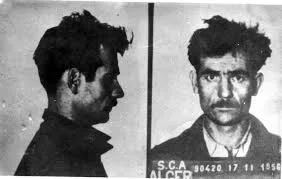
Someone embraces Fernand and tries to console him.
Be strong, he whispers, it's because of public opinion. You are French, you placed a bomb somewhere, to them that's unforgivable: you are to die because of public opinion. Fernand's stomach feels as if it is being lacerated, clawed, pierced by a thousand lead pellets. Fernand's stomach feels as if it is being lacerated, clawed, pierced by a thousand lead pellets. قد سلا الدنيا فؤادي وتفانلي لي Fernand repeats it three times, public opinion public opinion public opinion. He finds it hard to breathe. The Casbah calls the sky to itself in screams and ululations, an unbroken thread of sound. He is brought to the executioner, who wears a hood. Fernand does not know that this masked man, nicknamed "Monsieur d'Alger," is also called Fernand. The executioner, hearing the convict's name uttered by the chaplain, catches himself flinching. As if death were finally embodied— after all the heads he's dispatched with a most professional hand—in the sound of a first name which returns him, brutally, to their common humanity.
The tick tick tick sound carried across an entire paragraph in the beginning of the book returns at this point— even though Andras doesn’t record it. I hear the tick tick tick as Fernand walks to his death. It is unbearable to me— like a wail buried inside the propulsive rhythm, my only desire is to freeze the frame, to stop this march forward, to silence the machinery of the state’s violence and plead, argue, nothing nothing — the tick doesn’t stop.
Declereq asks him whether he requires the succor of religion; Fernand looks at him, tries to smile, fails, and answers no... no ... freethinker... his hands behind his back. I am going to die, he murmurs, but Algeria will be independent... Fernand goes first: custom dictates that the least "guilty" convict opens the proceedings, so that he need not witness others being put to death. His two lawyers withdraw to one of the corridors leading off the yard. Laînné kneels, bows his head, joins his hands together toward his Lord. Smadja stands, in tears, forehead against the wall. They do not want to look, they cannot. It is 05:10 when the head of Fernand Iveton, prisoner number 6101, thirty years old.
Two days after Iveton was guillotined, his lawyer, Albert Smadja, was arrested by French police and taken to the Lodi internment camp set up to “silence those who may denounce the repression, gel in contact with arrested militants, support their families and friends, or hamper the prosecution during their trials,” as described by Nathalie Funes. Two years later, at the end of 1958, Smadja was released from the camp.
In March of 1958, Jean-Paul Sartre published a text to the memory of Iveton in Les Temps modernes. By this point, the existentialist thinking that had driven the Resistance gained more adherents. Waiting around for consensus before taking action smacked of the bourgeouis reformism that had hampered anti-fascist groups. The Algerian cause led to a pronounced shift in how some revolutionists related to the Party. Like most political parties, the French CP groomed and limited the sort of action that could be undertaken in the struggle against French colonialism. Existentialism combined with an emphasis on praxis as fuel for concerted direct action campaigns.
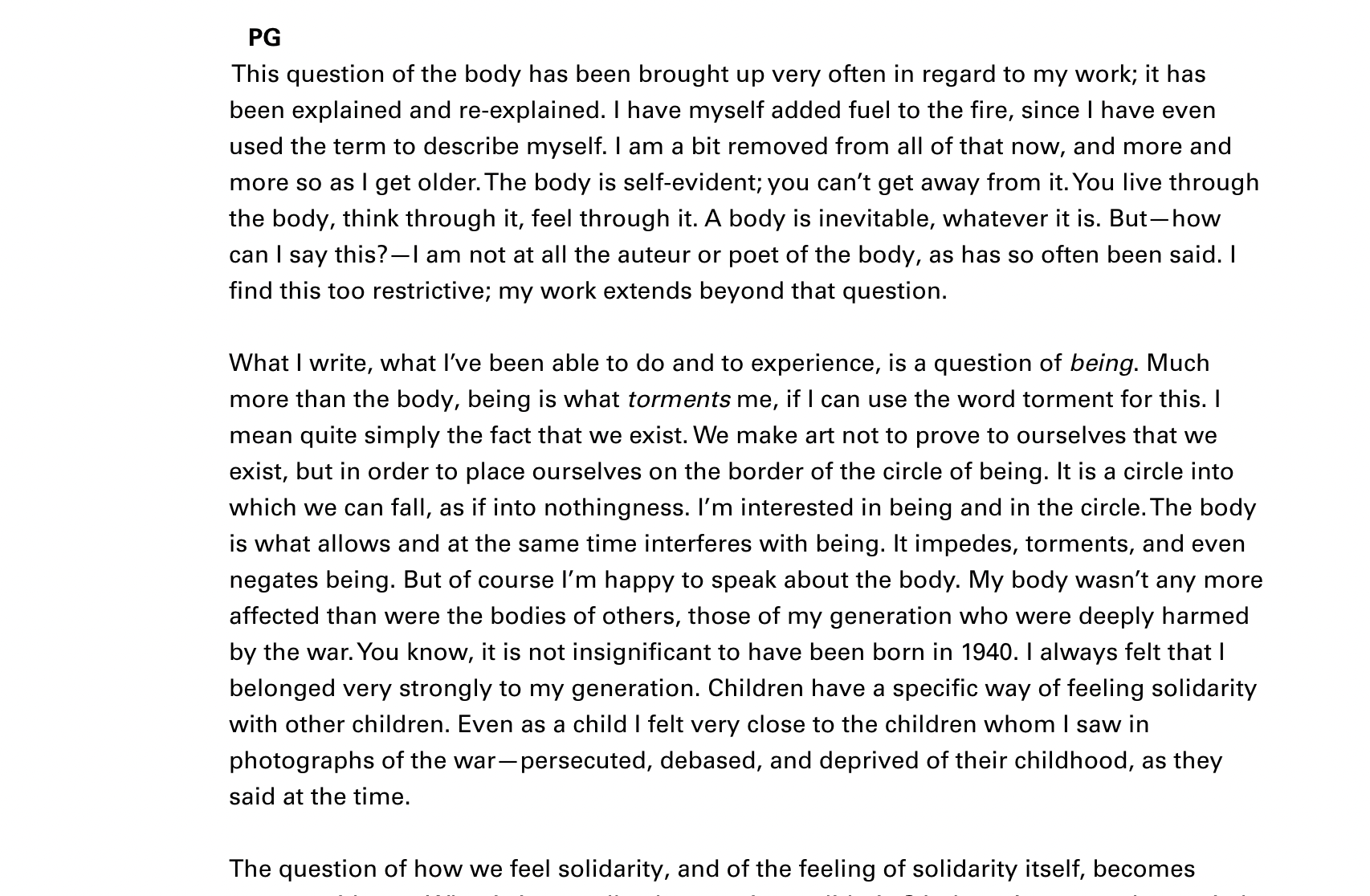
Pierre Guyotat in conversation with Noura Wedell.
In the afterword to his novel, Andras acknowledges his collaborators. The book would not exist without the investigative work of Jean-Luc Einaudi. “He has left us, but I thank him here,” says Andras of the man who “reported that throughout his investigation he was met with nothing but ‘the silence of the State.’”
What happened to Iveton’s loved ones and comrades?
André Abbou, author of Albert Camus, entre les lignes,' claims that the novelist "intervened" to try to save him.' The Guerroudi couple was pardoned by de Gaulle— Jacqueline died in Algiers at the age of ninety-five (a few weeks before the start of the writing of this book). Hélène Iveton and Fernand's father left Algeria without delay, she died on Sunday, May 10, 1998 in Arcueil. Joe Nordmann discussed the case in his memoir, Aux vents de l'histoire.'
Who was Fernand Iveton?
Guillotined on February 11, 1957, Fernand Iveton is the only "European" to have been executed by France during the Algerian War. In its coverage of his death, France-Soir, a leading newspaper, described him as a "killer.' Paris-Presse, another mainstream organ, called him a "terrorist."
In the fortress of our bodies
May our ideal live on
Mingled with your blood
*
Joseph Andras, Tomorrow They Won't Dare to Murder Us, tr. by Simon Leser (Verso Books)
Noura Wedell, “Pierre Guyotat: Interview” (BOMB Magazine)
Pierre Guyotat, Idiocy tr. by Peter Behrman de Sinéty (NYRB Classics)
The Cure, “Disintegration”
“But it is too late, and all that is left to do is either repent or forget. Of course, we forget. Society, however, is no less affected. Unpunished chines. according to the Greeks, infected the city-state.”
— Albert Camus on Iveton, in “Reflexions sur la guillotine,” Nouvelle Review francaise, June-July 1957