Do not all charms fly
At the mere touch of cold philosophy?
There was an awful rainbow once in heaven:
We know her woof, her texture; she is given
In the dull catalogue of common things.
— John Keats, “Lamia”
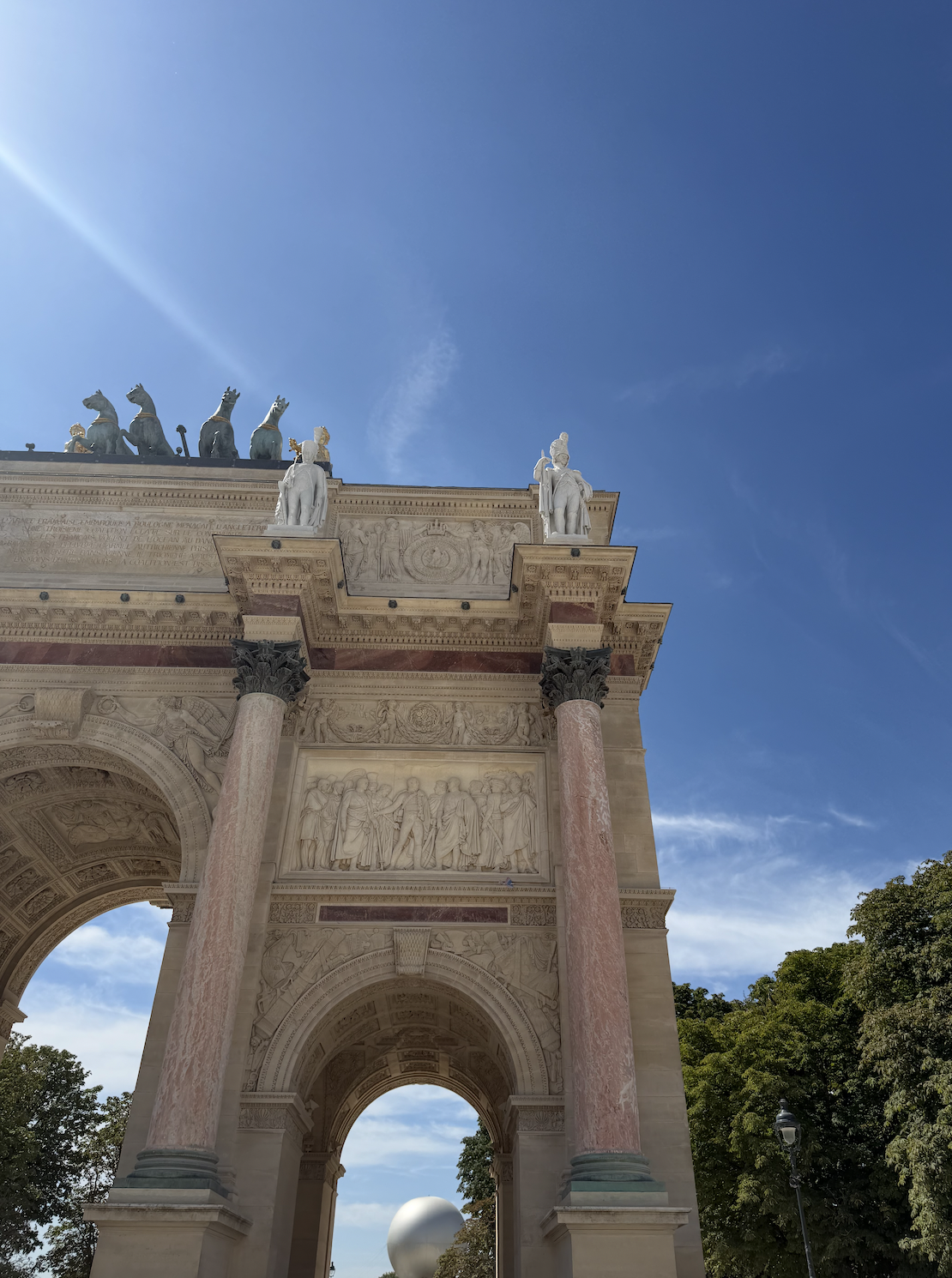
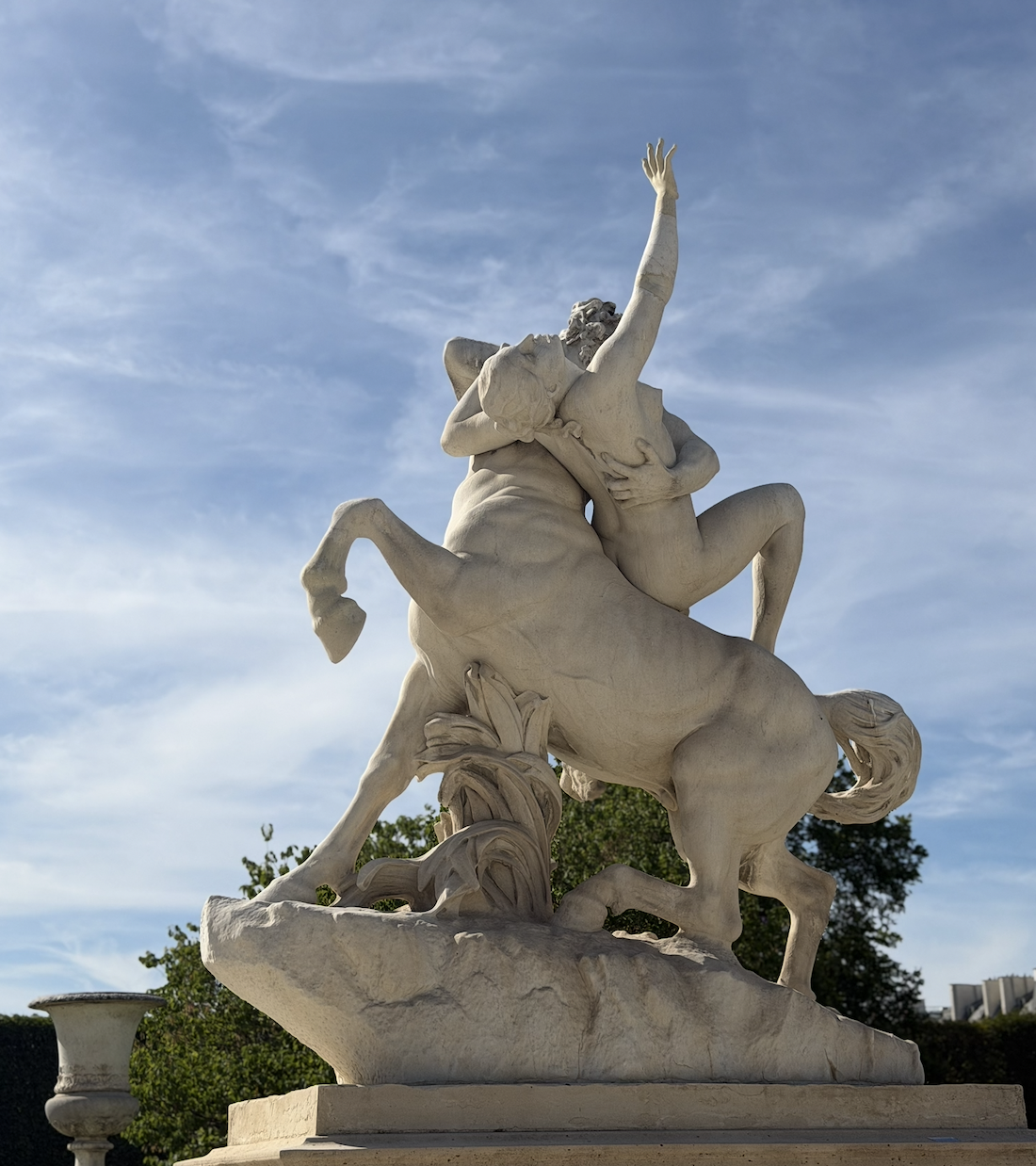
Paris met us with its insatiable sunlight— and the sun set around 10 pm, adding hours to the day. Reviewing photos, catching up on emails, and (inadvertently) thinking about Morya Davey's Index Cards as structure for a series on nostalgia as a vehicle for structuring “re-turns”. . . Short essays shaped by short, bracketed interludes engaging subjective reflections inside the body of texts and intertextual conversations, a sort of company in the time of multiple forms of distance. Close attention to etymology (the whorls of) and linguistic entanglement. Thus, I offer a few random interludes drawn from threads I met in France.
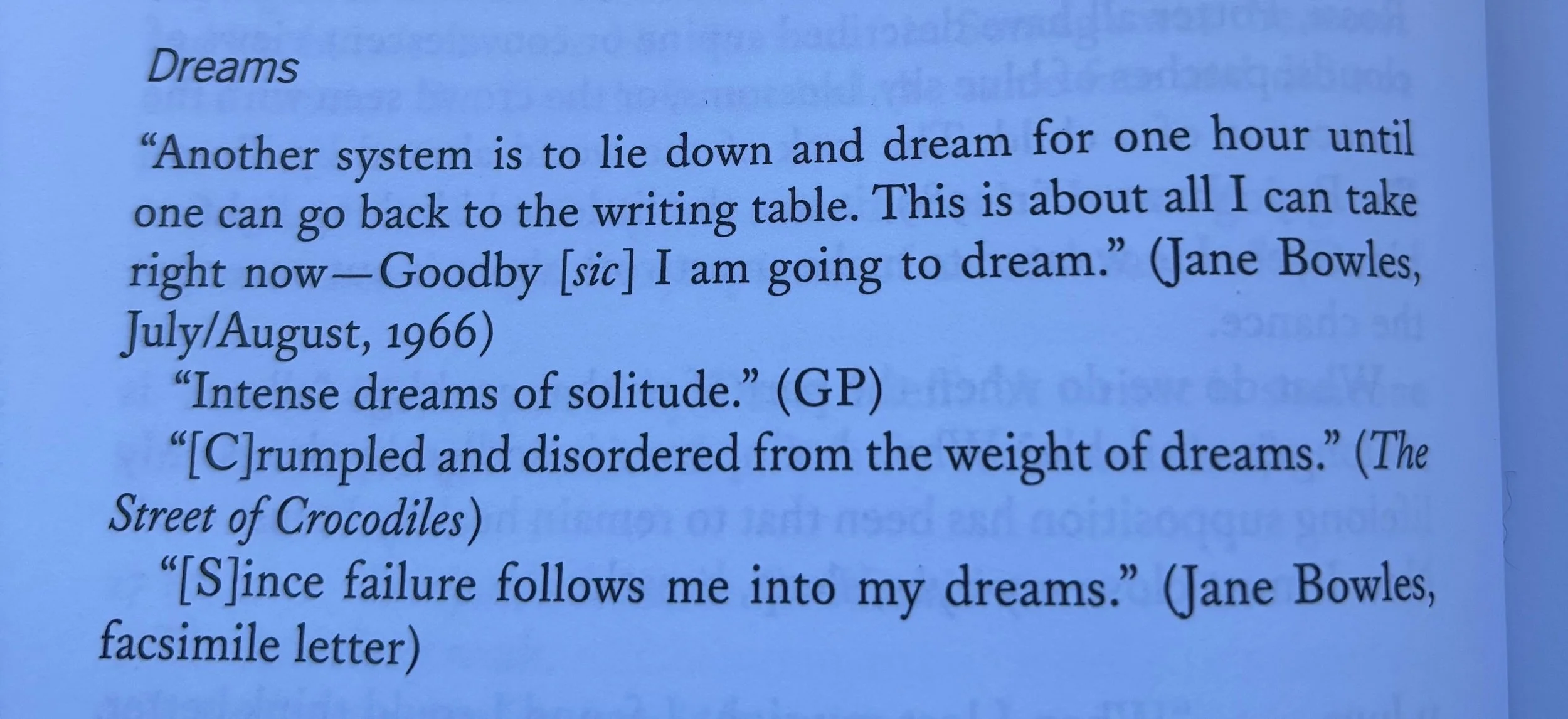
[excerpt from Moyra Davey’s Index Cards as posted by Patrick Cotrell]
FUGACE
Latin Root is fugere (to flee, escape) → fugax / fugacem (fleeting, swift). Passed directly into Italian and French as fugace (and Spanish/Portuguese as fugaz), retaining the literal sense of something that slips away or vanishes quickly.
“Fugace is an adjective in French and Italian that means fleeting, brief, or short-lived. It describes something that passes by very quickly, disappears fast, or does not last.” (Cambridge Dictionary)
In Italian, fugace (pronounced foo-GAH-che) literally means: “Without haste, but without stopping.” Or, “slowly, but steadily.” In English, fugacious means “fleeting, transitory, or lasting for a very short time.”
“Fugace” shares the same Latin root with the English words fugitive, fugue, and the rare adjective, fugacious ("fleeting").
“Tantôt, tu me reviens fugace / Et tu m'appelles pour me narguer / Mais chaque fois mon sang se glace / Ton rire vient tout effacer (Salvatore Adamo, lyrics from “La Nuit”)
Homophones. Adamo’s pronunciation of “fugace” (keyed to rhyme at a slant with “se glace” and “effacer”) could easily be mistaken for la fougasse, a delicious traditional Provencal bread often served with olive oil. “Etymologically tied to the Latin focus (hearth), fougasse was historically used by bakers as an oven-temperature tester before baking main loaves, inspiring the regional French proverb "Il ne faut pas brûler la fougasse.” (Wikipedia)
“Fougasse is often referred to as focaccia’s French cousin.” (Food Republic)
“Fougasse was the exponent par excellence of society at war, at home, in the street, on the road (he drew vehicles beautifully).” (London Historians Blog)
Cyril Kenneth Bird was the artistic editor and later editor-in-chief of Punch from 1949 to 1953. His cartoons were signed under the name “Fougasse,” which he took from the name of a type of military mine used in World War I.
Apollinaire’s wartime letters to Madeline, written while he was stationed in Provence, mention fougasse, playing on the homophonic relation between the bread and the bomb.
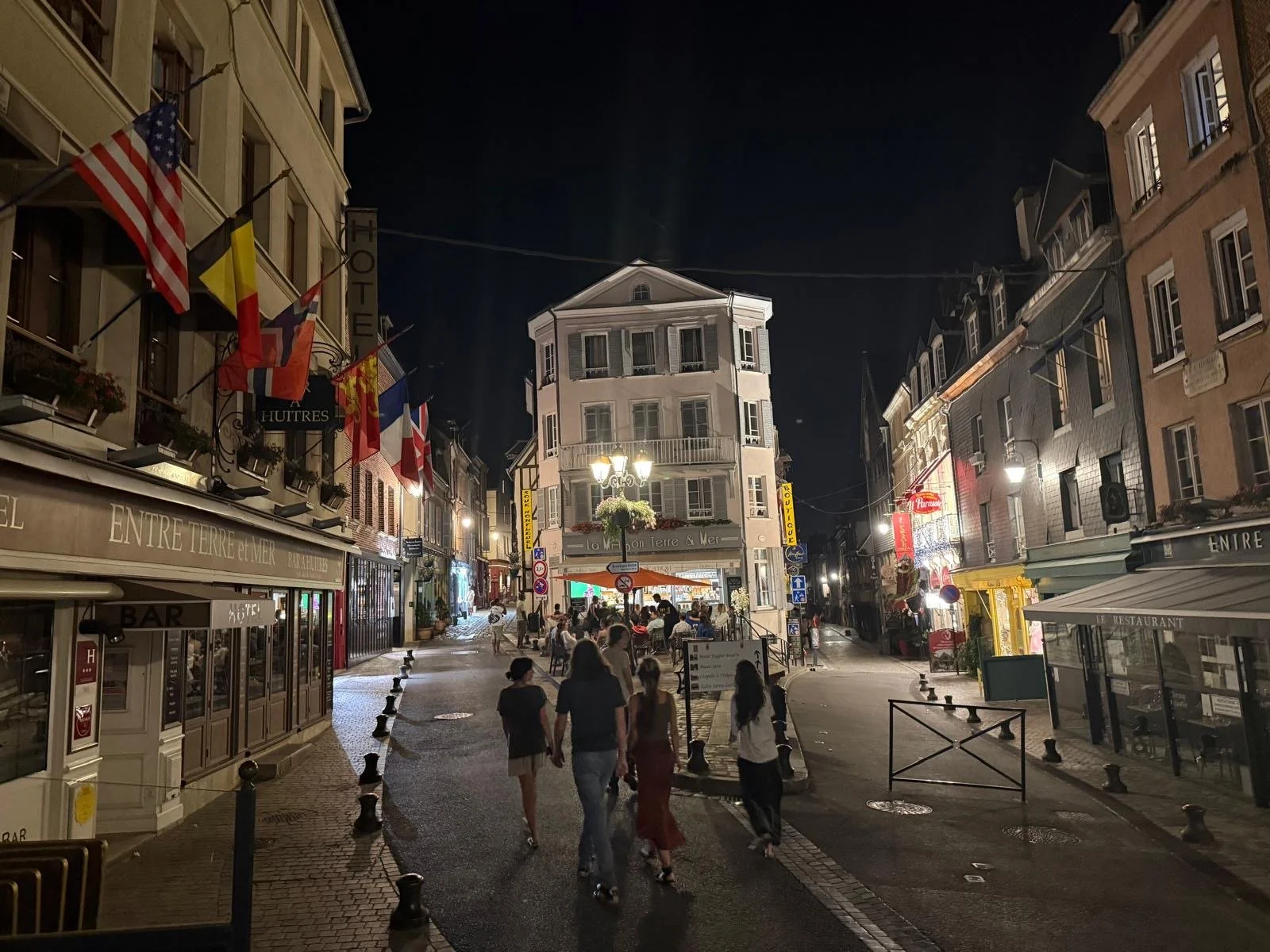
THE WINGS OF ONE’S YOUTH
“It was all very venerable, to be sure; but I far preferred the swallow that woke me in my youth, and the Muses that populated my dreams. The rays of dawn which, striking the bodies of the swans, cast the shadows of those white birds upon a golden billow; the rising sun that appeared to me in Syria in the trunk of a palm tree, as if it were the phoenix's nest—these were the things that pleased me most.” (Francois-Rene de Chateaubriand, Memoirs from Beyond the Grave, 1815-1830)
Chateaubriand’s efforts to detach himself from the machinations of the royal court, using the memoir as a re-visioning of official narratives. Intrigued by the role tenderness plays in creating the world of his youth, and how this relates to constructions of “innocence.”
White as the color of statues and winged things and innocence and angels.
“The pallor of death and Hope,” as quoted by Chateaubriand from a description of Vittorio Alfieri's death mask in Ugo Foscolo's Dei Sepolcri (1806), a Romantic meditation on death and burial written in response to the Napoleon's regulation of the sites and size of tombs.
Josip Novakovich’s re-turn to a place on paper establishes a very particular sort of tenderness, a tenderness that can only be mustered from across an impassable distance where the object no longer exists.
Roland Barthes and Jorge Borges on the way tenderness insists on keeping its childhood.
Adam Zagajewski’s use of the child voice in poetry as a way of reflecting a time prior to fragmentation as well as keying historicity. Twentieth century as time of political theology when expanded identitarian notions of citizenship implicated individuals in the defense of mechanized abstractions. Flags and other sacred symbols bind those guilty of crimes committed in its society. Existentialist approach threatens structural reading by accepting blame but in the end, you cannot put a ‘country’ or social group on trial without erasing the critical class and social distinctions which motivate political claims.
The originary blank which asks for a childhood, and something sacred, per Svetlana Boym on sacralization and the spectacle of Stalinism. Eschatology and teleology, per how the child is right to wonder, wise to believe everything and nothing in tandem.
Looking at statues of Dionysus could lead to madness, as happened to Eurypylus who opened a chest that was left in Troy as it was burning. The chest belonged to Cassandra and it contained a curse that concealed an image of Dionysus that others were forbidden from viewing. But he opened it, and words followed the image.
There was an awful rainbow once in heaven . . .
— Keats
*
Francois-Rene de Chateaubriand, Memoirs from Beyond the Grave, 1815-1830. Translated by Alex Andriesse (NYRB Classics)
Guillame Apollinaire, Letters to Madeline (excerpt at Brooklyn Rail)
John Keats, “Lamia”
Salvatore Adamo, “La Nuit”
Stine An, On Managing Oneself: Poetry Lessons from a Former B-School Basement Research Goblin (Sundress Publication)