Sometimes I need to slip out of my own head and into someone else’s straitjacket. Ergo cameo.
Since this is hard to read, I’ve attached a PDF at the bottom. Download it. Have fun with it. Cameos are the perfect compositional form for traffic.

Sometimes I need to slip out of my own head and into someone else’s straitjacket. Ergo cameo.
Since this is hard to read, I’ve attached a PDF at the bottom. Download it. Have fun with it. Cameos are the perfect compositional form for traffic.
Jean Luc Godard’s film, Masculin Feminin (see trailer above)
The song, “Visions of Johanna,” by Bob Dylan on repeat.
A sexual superstition you’ve heard or experienced (i.e. women can’t get pregnant if they’re on top). And why. And all the rest.
That time you did or did not try Ecstasy.
A moment in which you felt a slight gap between yourself and the world.
Rilke’s belief “in the possibility of love in a climate of death.” And how that looks.
The fact that Karl Marx’s favorite virtue in women was weakness while his favorite virtue in men was strength. Using this as the basis for a dialogue between Marx and Jenny von Westphalen, his wife.
That moment when Jenny Laura Marx and Paul Lafargue committed suicide together.
Something in response to Nelly Sach’s one line poem: “But silence is where the victims dwell.”
A poem or story for which the secret, unrevealed epigraph might be Sigmund Freud’s 1915 statement: "Our own death is indeed, unimaginable, and whenever we make the attempt to imagine it we can perceive that we really survive as spectators."
Grateful to my middles grill for taking this fancy video… and to Art Town in Birmingham for providing a space for readings and art.
P.S. I am SO HUNGRY to read and share these poems. Please email me at rainscented@gmail.com if you’re looking for readers and strange Romanian-Alabamians for your event or attic.
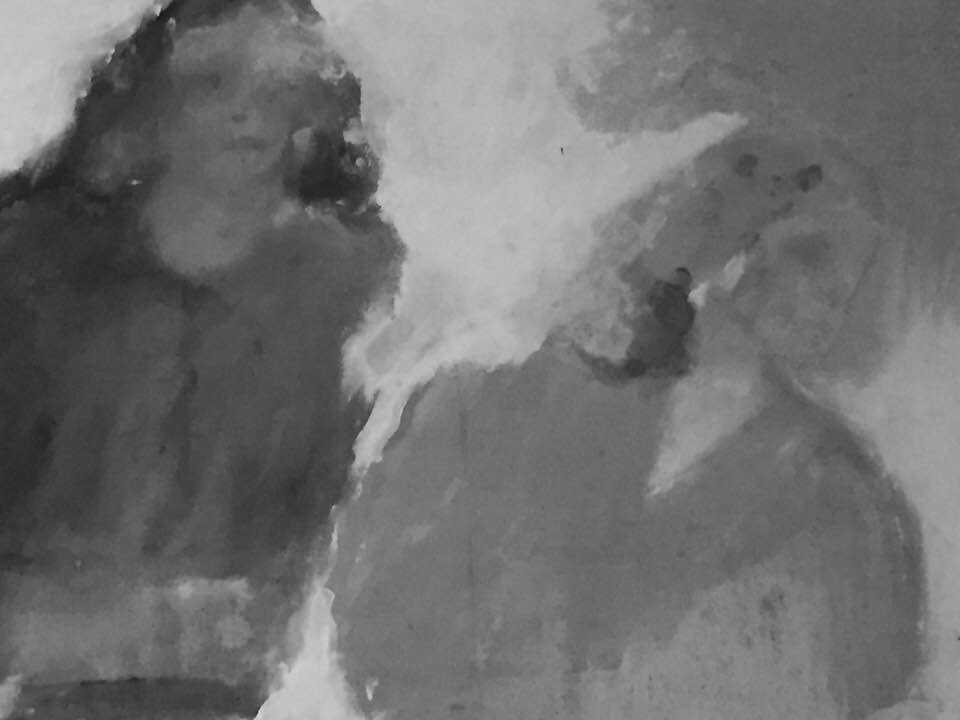
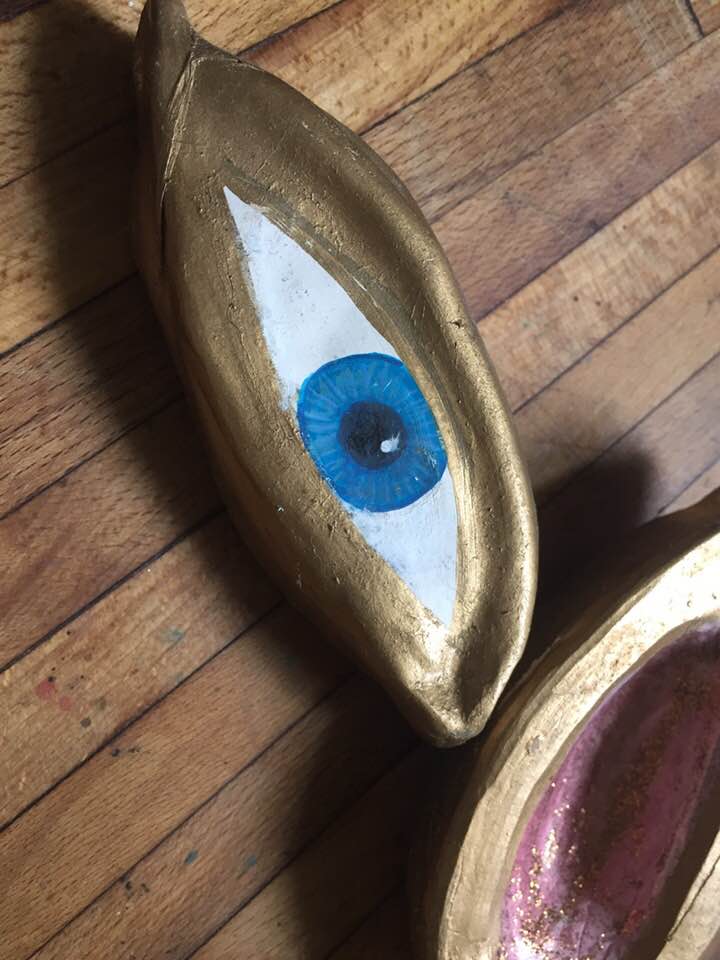
In her “Afterword: Reflections on the Grotesque” to Haunted: Tales of the Grotesque, Joyce Carol Oates writes:
“I take as the most profound mystery of our human experience the fact that, though we each exist subjectively, and know the world only through this prism of self, this ‘subjectivity’ is inaccessible, this unreal, and mysterious, to others. And the obverse—all others are, in the deepest sense, strangers.”
She reflects on the lure of the grotesque, the charm of the vampire as evidence that evil can be as seductive as it is repulsive—that it can render us not just victims but accomplices in its destruction. There is a sense of horror or dread bound up in the grotesque, a sense of perversion in which we can feel how something good begins rotting.
The stories in her collection include range the gamut of grotesque topics, including dolls, haunted houses, child abductions, rape, sexual violence, white cats, repetitive games and game worlds, murder of a child.
I’ve excerpted a bit of “Extenuating Circumstances,” my favorite short story from this collection below. You can download the entire PSF using the link.
Because I feared loving him too much, and in that weakness failing to protect him from hurt.
Because his crying tore my heart but angered me too so I feared laying hands upon him wild and unplanned.
Because he flinched seeing me. That nerve jumping in his eye.
Because he was always hurting himself, he was so clumsy falling off the swing hitting his head against the metal post so one of the other mothers saw and cried out Oh! Oh look your son is bleeding! and that time in the kitchen whining and pulling at me in a bad temper reaching up to grab the pot handle and almost overturning the boiling water in his face so I lost control slapping him shaking him by the arm Bad! Bad! Bad! Bad! my voice rising in fury not caring who heard.
Because that day in the courtroom you refused to look at me your face shut like a fist against me and your lawyer too, like I was dirt beneath your shoes. Like maybe he was not even your son but you would sign the papers as if he was, you are so superior.
(Read the remainder of Joyce Carol Oates’ story below. )
“Extenuating Circumstances” is structured as a legal apologia, with first person narrator confessing why she killed her child, and addressing it to the (absent) biological father.
Like a legal document, each paragraph begins with the word “Because…” followed by an extenuating circumstance.
The first paragraph: “Because it was a mercy. Because God even in His cruelty will sometimes grant mercy.”
Oates adds dread and suspense in both the formal framing and the resolute punctuation. Although some paragraphs include questions to the father, no statement ends with a question mark. The lack of question marks propels the dread forward, giving us the sense that the answer does not matter, the conclusion having already been acted upon. Like the verdict of our culture on single mothers.
It’s a fantastic story—and a fictional model for writing the grotesque in motherhood under patriarchy. There is a continuing sense that the mother is damned no matter what she does—damned by the child, damned by the role, and damned by the man.

My mom, Lydia Alina Stefanescu, with my sister and myself.
For my friend, Ruth, who urges me to make an appointment for the Sacrament of Confession
Concerning your letter in which you ask
me to call a priest and in which you ask
me to wear The Cross that you enclose;
your own cross,
your dog-bitten cross,
no larger than a thumb,
small and wooden, no thorns, this rose—
I pray to its shadow,
that gray place
where it lies on your letter ... deep, deep.
I detest my sins and I try to believe
in The Cross. I touch its tender hips, its dark jawed face,
its solid neck, its brown sleep.
True. There isa beautiful Jesus.
He is frozen to his bones like a chunk of beef.
How desperately he wanted to pull his arms in!
How desperately I touch his vertical and horizontal axes!
But I can’t. Need is not quite belief.
All morning long
I have worn
your cross, hung with package string around my throat.
It tapped me lightly as a child’s heart might,
tapping secondhand, softly waiting to be born.
Ruth, I cherish the letter you wrote.
My friend, my friend, I was born
doing reference work in sin, and born
confessing it. This is what poems are:
with mercy
for the greedy,
they are the tongue’s wrangle,
the world's pottage, the rat's star.
Anne Sexton, “With Mercy for the Greedy” from The Complete Poems of Anne Sexton (Boston: Houghton Mifflin, 1981). Copyright © 1981 by Linda Gray Sexton and Loring Conant, Jr. Reprinted with the permission of Sterling Lord Literistic, Inc.
To me, this poem is the ars poetica of confessional poetry. It was written in the brief span of time after Anne Sexton’s illegal abortion. Although Anne feared the child might not be her husband’s, she also feared the demands that another child would make on her writing life. We still find it easier to talk about abortions in terms of paternity rather than female personhood.
Loss was Anne’s muse, and with this abortion she discovered a new form of loss to write, a loss more damning for the silence that surrounded it. She started keeping a journal, inspired by Dostoevsky’s line: what filthy things the heart is capable of. Although she was close to WD Snodgrass at the time, it’s interesting that Anne didn’t share this news with him or any other male poets. Instead, she confided the abortion in a letter to her Catholic friend, Ruth Soter. In response, Ruth mailed a tooth-marked wooden cross and an encouragement to seek spiritual counsel.
“With Mercy For the Greedy” came from this exchange. I’ve always suspected the title has to do with the mercy Anne sought in her choice of writing over new motherhood—the “greed” and hunger to write for which this world does not forgive us. The poem itself presents two alternate forms of mercy: one found in religion, the other found in writing poetry. Both forms of mercy rely on the act of confession.
My friend, my friend, I was born
doing reference work in sin, and born
confessing it. This is what poems are:
with mercy
for the greedy,
they are the tongue’s wrangle,
the world's pottage, the rat's star.
I don’t think it’s an accident that the last stanza burns itself to the surface of our minds. I don’t think it’s strange that abortion is fugue which structures the piece. I don’t think it’s ironic that confession alienates female poets from gendered femininity that privileges the act of mothering over the tempest of writing. This is what poems are: an admission, a savaging, an out.
*The last line is also an allusion to Anne’s favorite palindrome: “rats live on no evil star.”
In her 1652 literary salon, Madeleine de Scudery introduced the word “roman a clef” to describe a genre of writing that is autobiography overlaid with fiction. Now also called by various names including auto-fiction, nonfiction novel, autobiographical novel, etc.
“So ask me again now—what is autobiographical about my novel—and I will talk about fidelity to emotional effect and contextual variance. About level shifts and category shifts and the impossibility of exact equivalencies. I might discuss the translatability of the source material and then take you through the reconstruction of sound or image or structure. I will mention how inner becomes outer, how sometimes all you can do is convey meaning or form but not both. I will talk about the tension in word choice and metaphor, the gift of plenty and the risk of nuance. I will invite you to wend with me, to wander through the words. Because I am always in the work and outside of it. I am and am not the story.”
- Michelle Bailait-Jones, “On the Impossibility of Locating the Line Between Fiction and Non” (LitHub)
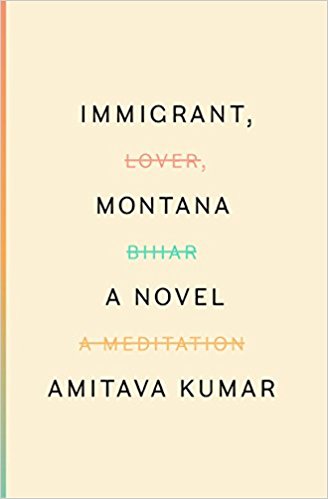

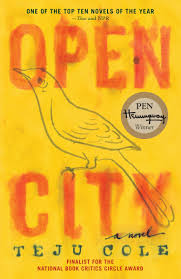
Example of nonfiction novel: Amitava Kumar’s Immigrant, Montana.
Multiple epigraphs, pictures, footnotes (academic and digressive), references to pop culture, explications of literary theory. Stories structured by associative leaps and hops from digression to digression. Dedicated to Teju Cole, whose style inspired it.
Kailash uses two voices to tell his story. There is his older self, speaking from twenty years’ distance with the help of his journals and notebooks, and then there is his guiltier, younger self. That’s the voice that the newly arrived, inauthentic-feeling Kailash uses to address an imaginary judge who wants to kick him out of the country.
- Joanna Biggs, “Erotic Exploration in Immigrant, Montana” (New Yorker)
Kumar explains early and forcefully why these subjects—geopolitics and sex; geography and desire; history and lust—should share pages. In an enormously funny yet simultaneously dark recurring device recalling Roth’s Portnoy addressing his psychiatrist, Kailash speaks to an imagined immigration judge whom he pictures adjudicating both his status in America and his libidinous proclivities. Sex, Kailash tells us, is the “crucial part of humanity denied to the immigrant. You look at a dark immigrant in that long line at JFK…you look at him and think that he wants your job and not that he just wants to get laid.”
-Sanjena Sathian, “Geopolitics and Sex, Geography and Desire: On Amitava Kumar’s ‘Immigrant, Montana’" (The Millions)
Teju Cole: “To be a writer in exile is a great thing. But what is exile now, when everyone goes and comes freely?”
Ben Lerner and Sheila Heti practice an auto-fiction in which the book turns in to the self while Alice Sebold and Teju Cole write novels that turn to the world.
The difference between fiction and memoir may be the difference—when it comes to meaning, that recyclable plastic thing we crave in our lives, and without which we become despondent and ultimately inert—between metaphor and referential mania. They say the truth shall set you free, but it seems rather to be the case that fiction, or, Stories About Fake People, who can be understood by means of the empathic engine of metaphor to be yourself, shall free you from that intolerable freedom we call meaninglessness.
- Rebecca Wolff, “Our Sense of Truth” (Lithub)
Phillip Roth’s view of selfhood as perpetual performance with a character in a book being only one variant of that enormous possibility.
“People constantly change their story… we are writing fictitious versions of our lives all the time, contradictory but mutually entangling stories that, however subtly or grossly falsified, constitute our hold on reality and are the closest thing we have to truth.”
- William Gass quoting Phillip Roth, “Deciding to Do the Impossible” (New York Times)
Tim Parks on Leo Tolstoy’s use of life for fiction. After Anna Karenina, Tolstoy chose the performance of goodness and sainthood over the writing of fiction, which felt to him like an indulgence. His relationship with Sonya, his wife, and their thirteen children, kept him rooted in the flesh and the material. Then in 1887, Tolstoy returned to fiction to write The Kreutzer Sonata (my personal favorite novella), in which protagonist holds his views on abstinence and material world and kills his wife in a fit of rage when he discovers she is having an affair with the violin teacher. Six years later, Sonya fell involve with her younger piano teacher but Tolstoy did not kill her. It’s not clear whether he wrote the script for the affair or predicted it. A character is not a steady state so much as a tension between various poles and forces. The problem is being anyone at all.
“Let’s offer this formulation: a certain kind of writer, for whom the day-to-day performance of self—the interaction of personality with the world—is complex and conflicted, invents multiple fictional selves who deal with the same predicament in different ways. Rather than establishing any ultimate truth about identity, such a writer explores possibilities that might be dangerous or incompatible in real life. In short, the writing becomes an extension of the living.”
- Tim Parks, “How Best to Read Auto-Fiction” (New York Review of Books)
In “Corn Maze,” Pam Houston talks about the blurred lines between fiction and nonfiction. When she toured for her first fiction collection, Cowboys Are My Weakness, the question she was asked most often was how much of this really happened to her? She answered honestly: “A lot of it.”
Houston maintains that truth can never be an absolute. The instability of truth automatically locates creative nonfiction between genres.
“When it was decided (When was that again, and by whom?) that we were all supposed to choose between fiction and nonfiction, what was not taken into account was that for some of us truth can never be an absolute, that there can (at best) be only less true and more true and sometimes those two collapse inside each other like a Turducken. Given the failure of memory. Given the failure of language to mean. Given metaphor. Given metonymy. Given the ever-shifting junction of code and context. Given the twenty-five people who saw the same car accident. Given our denial. Given our longings. // Who cares really if she hung herself or slit her wrists when what really matters is that James Frey is secretly afraid that he’s the one who killed her.”
The line of acceptable imagining in blurry. Houston gives example of three Italian kayakers which she loosely invented for an essay which the editor removed because they weren’t “real” in the sense of being verifiable. Maybe they were Spanish. On the other hand, the same editor added a fog to create atmosphere.
Her novel of 144 chapters does not purport to be nonfiction. And yet, as the James Frey scandal blew up, Pam Houston revisited her naming strategies.
“In past books I have used Millie, Lucy, and Rae. For the sake of sentence rhythm, I was leaning towards something with one syllable, but it would also be convenient to the book if the replacement name meant something as embarrassing as what the name “Pamela” means: which is all honey. I had considered Melinda, which on some sites means honey and could be shortened to Mel. I had considered Samantha which means listener, and could be shortened to Sam. But in the car with the elk in the pasture and the snow on the road and Jeff Tweedy in my ears I was all of a sudden very angry at whoever it was who put all that pressure on Oprah Winfrey. This book was in danger of missing the whole point of itself if my name were not Pam in it. If my name were not Pam in it, who was the organizing consciousness behind these 144 tiny miraculous coincident unrelated things?”
In naming characters for fiction, the conventions don’t always make sense. You can write fiction that resembles a real person more than the nonfiction that names them and proceeds carefully.
“Speaking only for myself, now, I cannot see any way that my subsequent well-being depends on whether or not, or how much, you believe what I am telling you—that is to say—on the difference (if there is any) between 82 and 100 percent true. My well-being (when and if it exists) resides in the gaps language leaves between myself and the corn maze, myself and the Las Vegas junkies, myself and the elk chest-deep in snow. It is there, in that white space of language’s limitation that I am allowed to touch everything, and it is in those moments of touching everything, that I am some version of free.”
Her writing tends to avoid didactic statements because she feels like she can’t speak for everyone.
“I have never felt comfortable speaking for anyone except myself. Maybe I had been socialized not to make declarative statements. Maybe I thought you had to be fifty before you knew anything about the world. Maybe I was afraid of misrepresenting someone I thought I understood but didn’t. Maybe I was afraid of acting hypocritically. Maybe I have always believed it is more honest, more direct, and ultimately more powerful, to tell a story, one concrete and particular detail at a time.”
And finally, in loose sum, a writing prompt of sorts from Alexander Chee’s essay, “The Writing Life,” found in How to Write An Autobiographical Novel: Essays:
“The writer Lorrie Moore calls the feeling I felt that day ‘the consolations of the mask,’ where you make a place that doesn’t exist in your own life for the life your life has no room for, the exiles of your memory.”
Lia Purpura recommends carrying an intermediary little pad as a catch-all that you can transcribe into your journal at the end of the day.
Found journals include the artifacts of daily life, the to-do lists, the odd objects, the sudden observations.
Review your journals for “patterns of thought” or “patterns of image.” Note recurrences and memories that keep begging to be addressed. Set tasks or writing habits for yourself in the journal. For example, “I’ll look out this window every morning for 3 months and record what I see.” Note the patterns that emerge in a single day of your life. How do these patterns juxtapose against the rhythms? What patterns emerge in a week? What obstacles continue to arise that thwart you?
David Shields describes “appropriation art” as “when you steal but make a point of stealing, because by changing the context you change the connotations.” How is this true? How does it apply to fashion? Give a few examples of writers and artists that create appropriation art.

“My idolatry: I’ve lusted after goodness. Wanting it here, now, absolutely, increasingly… I suspect now that lusting after the good isn’t what a good person really does.”
It is late enough for your whiskey-broke baritone
to ask how long this stew should simmer, how much longer
the kitchen needs.
After that, how much longer
will it take me to finish the story,
to write open the ice I can't crack.
How much longer
I love you
when language stretches
harrowed schedules.
We lack a verb
that asks nicely
for nothing.
No honesty unbludgeoned
by longing when we crave an equation
one can hold against an other.
A record of wrongs
becomes a recipe.
If fear is a failure
to thrive, wherever we stand
four feet remain outside a circle.
Two pairs of wanting-in.
I touch a clementine rind coiled atop
the counter. Witness carrots bubbling,
bobbing like toddler fists. You stir the pot
as my pen pickaxes paper.
Celebrate the bond & the
bondage, these marks round our wrists,
fresh singe of chains we jangle together.
I tell you, Chickadee
I am afraid of people
who cannot cry
Tears left unshed
turn to poison
in the ducts
Ask the next soldier you see
enjoying a massacre
if this is not so.
People who do not cry
are victims
of soul mutilation
paid for in Marlboros
and trucks,
Resist.
Violence does not work
except for the man
who pays your salary
Who knows
if you could still weep
you would not take the job.

Terry Baker. I just need to say his name today. Because he was beloved. Because I can’t escape our complicity in his death. We of the not-us yet.
Other things I need to say to the wild without expecting an answer:
Montaigne thought the best way to attack death was to think of it constantly—to imagine its presence when a horse stumbled or a tile fell from the ceiling. A constant imagining of death frees you from the yoke of mortal servitude by bringing death close, making it intimate and familiar.
Death is so intimate and familiar that sometimes I feel as if I’m cheating on my husband or neglecting my children by speaking so frankly to possible ghosts.
The writer’s role in selling the book, so different from the famish that leads you to write it. What do we redeem by getting published? Is there something to prove—some part of ourselves we’ve been excusing all these years only to suddenly discover it accepted?
Alternately, what do we redeem by being published? is another way of asking the simple question: What do we want from this world?
All of it.
Advice: Read Greg Jackson’s short fiction to practice juggling the freight of complex ideas with the shifting demands of scene and character. We are partly what we say but mostly what we think.
Revision: Be careful with conditional verb tenses that don’t contribute to tone. The conditional moves the action away— “would be” makes an action occur continuously, for all time, and therefore less poignantly. The generalization reduces the immediacy of the moment. Sometimes it’s better to remove the conditional when describing something hard because it makes it immediate and leaves space for forgiveness afterwards. Let it burn and die. Let it be truth.
Warning: Be mindful of the way in which female characters operate from passivity or powerlessness. Ask yourself questions that honor those complexities.
Poetry prompt: Read Naomi Shabib Nye’s “Famous.” Notice how the poem is structured around the definition and circling of the title word. Write a poem that turns on the reframing of a certain word. Use that word as the title.
Poetry prompt: Read Czeslaw Milosz’s “Conversations with Jeanne.” Notice how Milosz breaks the stanzas and makes use of patterned white space. Think about the effect of cutting that one line alone in the middle of the poem. Now think of friends or family with whom you maintain an ongoing disagreement about a specific ethical question (maybe divorce, abortion, end of life, etc.). Write a poem addressed to that person. Try to nurture the same level of distance that Milosz deploys in his titling of the poem as a “conversation.” As you write, think about the difference between a conversation and a dispute.
“Let the stars stitch you to sleep.”
“I must lie down where all the ladders start
In the foul rag-and-bone shop of the heart.”
Writing what love makes of us demands the courage to abandon cynicism, regret, and self-help-friendly shields. I'm deeply grateful to Mantis for publishing this poem from a series of compositions--and grateful to other journals in which future pieces from this series are forthcoming.
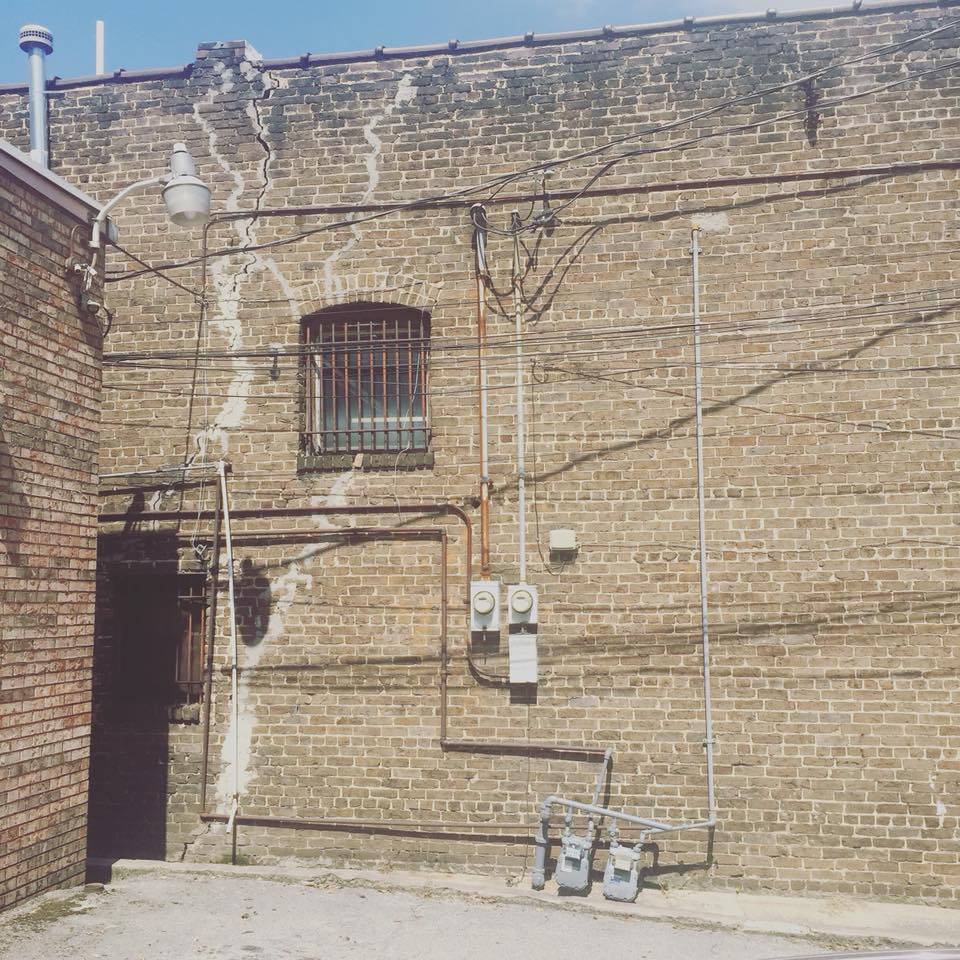
Kudos to Slate for republishing Geoff Dyer's essay, "Sex and Hotels." I looked forward to re-feeling those first-read frissons when I settled into our tackiest loveseat with Dyer onscreen. Edging into the second paragraph, I was startled to find the shoulders stiffening, the head shaking slowly, the lips tightening for a scrimmage. Frequently the female sitting on her hands to keep from asking the speaker that please-please-answer question, I am also the one who keeps a pen and notebook nearby to extinguish mental brush fires. The scribbler, the wilderness, the riot.
What follows is my dialogue with Dyer's piece across the interim between first read and present.
"A hotel room is horny because it is clean: The sheets are clean, the toilets are clean, everything is clean, and this cleanliness is a flagrant inducement to—what else?—filthiness. Ideally, the room is so clean as to suggest that it has never been used. It cries out to be defiled. If the room is, in a sense, virginal, then the act of breaking the seal on bars of soap and other stealable accessories has something of the quality of breaking its hymen. Slightly archaic it may be, but to speak of “taking a room” is, in this context, pleasingly suggestive."
"In a sense" is like a cotillion skirt in that one can hide a cannon beneath it. Upon examining the metaphorical sense in which a room is "virginal", we are presented with the likelihood of hymen. Considering the hymen-optics wherein cracking the seal on bars of soap and other cheap bathroom accouterments resemble the act of breaking a hymen, it becomes less clear which virginity is being tainted. I don't understand the virgin metaphor unless the hotel room is a born-again virgin of the megachurch type, in which case I don't understand what business the fetishization of mega-churchings has to do with the illicit, furtive sex we seek in hotels.
The immaculate cleanness of the hotel room isn’t alluring for its virginal connotation (especially since sex with virgins tends to be the least erotic and satisfying variant) so much as the blatant knowledge that I played no part in the work of spotlessness. I didn’t have to clean it and I won’t be responsible for any wine stains or disasters thereafter. Unlike sex with a virgin, the mess may be mine but the responsibility is on the house.
(Note: Dyer mentions this in passing but glosses over it as a form of luxury akin to having someone turn the sheets. The fact that I can't mention it in passing suggests a difference, perhaps, in the way Dyer and I experience daily household life. That difference is a minefield of untouched sex bombs.)
Maybe a hotel room is “horny” because it asks nothing of me except imagination tangled with banality, the perfect Moravian moment. And maybe a hotel room is thrilling because it’s secretly filthy; ultraviolet light would reveal splatters of sperm and bloodstains, a woman screaming while biting a hand, all the ways in which patriarchy follows us into the private spaces. This is the undertone of actual. Stanislaw Lem’s story floats through my head like a love letter I won’t share with my partner. My head is always a little dirtier than his, always more fascinated by the grime beneath the shiny American smiles.
"In international hotels, however, the passage through the lobby—a process of which checking in is the ritualistic expression—is also a passage from place to non-place. By checking in and handing over your credit card or passport, you effectively surrender your identity. By becoming a temporary resident of this non-place you become a non-person and are granted an ethical equivalent of diplomatic immunity. You become morally weightless."
Humbug. A hotel lobby is sexy not for its “moral weightlessness” but for its reckless, bureaucratized complicity in the exchange of transactional sex.
There I am, waiting in the brutal splendor of a hotel lobby where personal emptiness is magnified and reflected back from every gleaming surface-- I am breathlessly lonely, horribly aware, compressed by the emptiness spun into the architecture, the codified professional displays, the silent confession that all bodies in this lobby are missing something that going upstairs will not relieve. All the stairwell sex in the world will not unlonely us as we stand in the hotel lobby. When else is our weakness ever this stark?
"In the confines of the hotel you are no longer Mr. or Ms. Whoever, you are simply the occupant of a room. You have no history."
It’s not the relinquishment of identity that feels liberating—it’s the permission to fully inhabit the multiple, ever-mutating selfhood. To be Mrs. Someone and Mrs. None simultaneously. To be authentically doubled and dislodged from the strictures of rigid social roles.
Is there anything more volatile than a married mother who just turned forty and finds herself without a kitchen to clean, a dinner to cook, a family of mammals to over-feel and tend?
As a Romanian-Alabamian, I don’t play singles when it comes to identity. I need a polymorphous closet for all the costumes.
Basically, the more expensive the hotel the more arousing it is. There is, in other words, almost no distinction between the building itself and the prostitutes who ply their trade in it.
Money and price are a measure of preference, especially with respect to risk. For some of us, the lure of the thirty dollar motel room with vibrating beds and possible parking lot shoot-outs is more enticing than the platitudes of the fancy hotel. I need the sort of sex that acknowledges my desperation—the feeling that I’m risking my life for a moment of pleasure. The urgency matters. I don’t want to be insulated from the costs of my desire—I want to feel them panting down my neck.
Of course, it helps when the motel lacks an internet connection or a working television--because there is literally nothing left to do except sex. And conversation. And more sex. And not a single damned American Express card machine in sight.

Fakes: An Anthology of Pseudo-Interviews, Faux-Lectures, Quasi-Letters, Found Texts, and Other Fraudulent Artifacts, edited by David Shields and Matthew Vollmer, is hot in my head right now. Shields and Vollmer define “fraudulent artifacts” as “a text purporting to be a particular form of writing… which also tells a story, stirs thoughts and emotions, inspires inquiry, initiates action, and/or calls into question that which is—or has purported to be—real.”
Here's the frame: An artifact is by definition an object constructed by a human being. Every artifact arises from a series of decisions taken by its maker. These artifacts are governed by social conventions and how we use or abuse them, how we fill the box. Conventions are nothing if not a way to create expectations. These expectations are a primary tool in the writer’s arsenal.
A fraudulent artifact infuses a received form with a story, thus creating an object “more authentic than the original upon which it was based.” The deceptiveness is self-reflexive as well as confessional.
Notice where risks can be taken in each form or genre and then "redraw the limitations." Use the form as vehicle to carry narrative. Make sure artifact reveals something about the narrator, generally the maker of the artifact. And, if you're smart, read the introduction to the book online in PDF for free, where the authors lay this out more cogently.
“Experimental fiction is the art of telling a story in which certain aspects of reality have been exaggerated or distorted in such a way as to put the reader off the story and make him go watch a television show. Another aspect of the experimental story is the innovative use of language.
The ending of an experimental story is very important. It should make no sense, thus disrupting the reader’s dominant paradigm. You, the reader, should just sit there, stunned, asking yourself, “Wait, am I missing the last page?””
“Breaking the rules involves risk. Risk produces tension. Tension produces energy. Energy produces momentum.”
Note: This isn't exhaustive. And many could fall under multiple categories.
HOW-TO GUIDES & INSTRUCTION MANUALS
"How To Become a Writer" by Lorrie Moore
"A Guide to Fooling Yourself" by Lauren Schenckman
"How to Date a White Guy" by Naira Kuzmich
"How to Measure Your Breast Size" Laura Madeline Wiseman
"How to Skin a Bird" by Chelsey Biondollilo
"How to Be Another Person in 5 Days" by Rebecca Bernard
"How to Explore a Graveyard" by Lindsey Palka
"A Manual for Surviving an Accidental Drowning" by Cait Powell (safety manual)
"Installing Linux in a Dead Badger" by Lucy A. Snyder
"Instructions for Extinction" by Melanie Rae Thon
"Confirmation" by Kristina Ten (religious instructional)
"After Your Milk Comes In" by Lauren Goodwin Slaughter (sleep training guide)
"Parenting 101" by Chella Courington (parenting how-to)
"The Etiquette of Adultery" by Tara Laskowski
“The Instructions” by Eric D. Anderson
“Rudderless Fiction: Lesson One” by Rick DeMarinis
”The Putti” by Shelley Jackson
Marriage manual (see Stanley Crawford's Some Instructions to My Wife...)
Housekeeping manual
Social story or social prompt for ASD persons
"Travel Tips" by Manuel Martinez
"Elevator Pitches" by Jonathan Lethem (elevator pitches for movies)
"Prayer for Alien Abductees" by Rob Kenagy (liturgical form)
"Rules and Regulations for Benehmen!, the German Board Game of Discipline" by Teddy Wayne (board game rules)
"A Game of Clue" by Steven Millhauser (board game rules)
INTERVIEWS OR PROFILES
"Brief Interviews with Hideous Men" by David Foster Wallace
"Interview With a Moron" by Elizabeth Stuckey-French
"Office Women: Three Portraits and Thirteen Questions" by Clare Polders
"The Explanation" by Donald Barthelme
”The Lawrence Quint Interview” by Charles Baxter
”An Explanation for Chaos” by Julie Schumacher
”On Not Growing Up” by Ben Marcus
Immigration interview
Any one of Michael Martone's illustrious third-person bios
"Unauthorized Biography" by John Yua (informal bio)
CLASSIFIEDS
"Single Woman for Long Walk on the Beach" by Ron Carlson
"Will Babysit for Little $$$$" by Ben White
"Writer Michael Martone's Leftover Water" by Patrick Madden (an Ebay listing)
"Selected Personals from the American Psychiatric Association's Dating Website" by Frank Ferri
Robin Hemley's "Reply All" by Robin Hemley (listserve)
Advertorials
Missing pet flyer
Missing person poster
Obits
EPISTOLARY FORMS
"A Novel in Nine Letters" by Fyodor Dostoevsky
"Letters to Jim Harrison" by Sean Lovelace
"To Whom It May Concern" by Michael Sheehan (open letter)
"Dear Committee for the Socialization of Illegal Aliens" by yours truly (letter to government agent)
"Love Poems for the Border Patrol" by Amitava Kumar
"Letter to my love" by Tif Holland (love letter)
"Why, Honey?" by Raymond Carver (love letter)
"Possible Postcards from Rachel, Abroad" by David Shields (potential postcards)
"Postcard from the Bum House" by Stephanie Dicksinson(postcard)
"Dear Fiction Editor" by Kyle Brown
"A Cover Letter From an Art Major Seeking a Job That Literally Requires Him to Apply the Skills He Learned in School" by Oyl Miller (cover letter)
"Reference #388475848-5" by Amy Hempel (traffic ticket correspondence)
"Letter to a Funeral Parlor" by Lydia Davis (customer complaint)
"Shrinkology" by Sea Sharp (customer complaint)
"Letters to Wendy" by Joe Wenderoth (novel as epistolary series addressed to a business establishment)
"I Can Speak!" by George Saunders (product refund request)
"Apology #9: Not About the Toaster" by Edward Hardy
"Letter to Stephen Hawking" by Samantha Hunt (fan mail)
"The San Diego Snake Company's September Newsletter" by Meg Favreau (newsletter)
"A Memory of the Christ by the Apostle John" by Adam McOmber (religious epistle)
"The Book of John" by Stephen Yuan (biblical epistle)
"Diary of the Blockage" by Amelia Gray (diary)
"Editorial Notes From Your Twitter Troll" by Orli Matlow (editorial notes)
Break-up letter
Recommendation letter
Rejection letter
Sympathy card
Congratulations card
Notebook entries
Wedding announcement
Email correspondence
Twitter dialogue or twitter DM chat
ACADEMIC ASSIGNATIONS, ASSIGNMENTS, SYLLABI, & VARIOUS PAPERS
"Prospectus" by Amie Barrondale
"It Looks Like This" BY Caitlin Horrocks (high school essay)
"How I Contemplated the World from the Detroit House Of Correction and Began My Life Over Again" by Joyce Carol Oates (English class essay)
"Writing Prompts for Girls and Women" by Leigh Stein (writing prompts)
"Book Report" by Jenna Lee (book report)
"Reading Comprehension" by Peter Cherches (assignment)
"Have You Ever?" by Ian Frazier (assignment)
"Conjugate "to be", using complete sentences" by Ani King (grammar exercise)
"Impressions and Preliminary Maxims Gleaned From Teaching High School English" by Will Slattery
"The Professor of Longing" by Jill Talbott (syllabus)
Mike Topp's "Stuyvesant Bee #88" by Mike Topp (high school newspaper)
Will Slattery, "Impressions and Preliminary Maxims Gleaned From Teaching High School English"
"The Preliminary Notes" by Rick Moody (notes on teaching)
“A Field Guide to the North American Bigfoot” by Ben Greenman
"The Instrumental Side of Human Communication" by Wendy Brenner (conference presentation)
"Zeno's Paradsox (of which he had several)" by David Jose Villaverde (summary of concept in philosophy or rhetoric)
"Key Concepts in Ecology" by Michelle Ross
"The Varieties of Romantic Experience: An Introduction" by Ron Cohen (psych course lecture)
"Poetic Template for Introducting a Featured Bard" by David Alpagh (introduction)
School journal
Science project description
Book review
White paper
Field report
Analysis of intital conditions
SCIENCE, MATH & THEORETICAL MEASUREMENTS
"Phantoms" by Steven Millhauser (case study)
"Problems for Self-Study" by Charles Yu (theorizing conceputual physics)
"Let X" by Chad Simpson (math theorem and notes)
"Variant Table" by Elizabeth Wade
"The Pain Scale" by Eula Bliss (scale of measurement)
"Mouths" by Steven Zultanski (statistical compendium)
"Demonectomy" by Lish Troha (description of medical prodecure)
"The Heart As Torn Muscle" by Randall Billings Noble (description of medical condition)
"Update" by Nels Hanson (medical history)
Medical discharge report
Psych evaluation
”A Primer for Punctuation of Heart Disease” by Jonathan Safran Foer
"Drug Facts" by Lauren Trembath-Neuberger (drug reference)
SPEECHES AND LECTURES
Keynote speech
Political stump speech
Lecture notes
EXHIBITS
"The Extinction Museum: Exhibit #71 (flap of lichen preserved between two panes of glass)" by Tina May Hall (museum exhibit brochure)
"1001 Xanadus" by Malcom Sutton and Francois Lemieux (ancient text)
"Artist Statement #64" by James Bradley (artist statement)
LEGAL DOCUMENTS AND REPORTS
“Will and Testament” by Matthew Vollmer
"Vis a Vis Love" by Mieke Eerkins (marital contract or prenup)
"Appeal" by Mike DiChristina (legal appeal)
Rich Ives' "Declarations of Attendance"
Estate inventory
Divorce decree
Police report
Security incident report
Noise complaint
Suspicious wildlife activity report
Suspicious activity report
Workplace employee assessment
Nonprofit donor report
Nonprofit request for funding application
Business plan
REFERENCE & PARATEXTS
"The Year's Best Fiction 2008: The Authors Speak" by J. Robert Lennon (anthology)
"Acknowledgement" by Michel Martone (acknowledgements)
"Table of Contents" by Lance Olsen (table of contents)
"The Year's Best Fiction 2008: The Authors Speak" by J. Robert Lennon (anthology)
"Acknowledgement" by Michel Martone (acknowledgements)
"JoAnna Novak" by Joanna Novak (third person bio)
"Liner Note" by Jonathan Lethew (liner note)
"A Note on the Type" by Ben Greenman (liner note)
"Contributor's Note" by Michael Martone (contributor's note)
"Disclaimer" by David Means (disclaimer)
"Dildo" by Shirley Jackson (description or explanation)
"History" by R. M Berry (introduction)
"Introduction" by Ben Greenman (introduction)
Enclyclopedia entry
Wikipedia entry
INDEXES ETC.
"The Index" by J.G. Ballard (index)
"An Index of How Our Family Was Killed" by Matt Bell (index)
"Words for Snow" by Jil Talbot (lexicon)
"Glossary of Chain Accidents" by Temim Fruchter (glossary)
"Primary Sources" by Rick Moody (annotations)
"excerpts from a dictionary of coincidences, vol. i" by Sean Brijbasi (dictionary)
"The People Catalogue" by Michael Parris Lee (compendium)
"Compendium of Chinese Ghosts, Part I & II" by Elaine Chiew (compendium)
Rob Wittig's"The Fall of the Site of Masha" by Rob Wittig (website)
"Mr. Plimpton's Revenge" by Dinty W. Moore (google map)
Facebook post with comments
Spam
Nextdoor.com post
Internet banner
YouTube comment
Subreddit chat transcript
Travel guide or intinerary
Dwaine Rieves' "The Animal; Questionnaire 1"
Customer satisfaction survey
Mary Kay Jordan Fleming's "Parent Readiness Quiz"
"Questionnaire" by John Yau
Claudia Cortese's “Origin Story” and “Answer Key to Origin Story”
Nancy McCabe, "Can This Troubled Marriage Be Saved?: A Quiz"
Art Taylor's "Master the Art of French Cooking" (recipe)
Colin Nissan's "It's Decorative Gourd Season, Motherfuckers" (seasonal advice column)
Heather Murphy's "To Reduce Your Likelihood of Murder" (safety tips)
TV transcript
Dictation transcript
Informational video transcript
Phone text transcript
Neighborhood garden club monthly minutes
Captain's log
Pilot's log
Amber Sparks' "The Noises from the Neighbors Upstairs: A Nightly Log"
Travel diary
"Tunings, Counterfactuals" by Michelle Herman (memoir)
Dream journal
David Shields' "Life Story"
John Barth's "Life-Story"
Eulogy
Epitaph
Kevin Brockmeier's "The Jesus Stories" (holy scriptures)
Resume
Ingredient list
Menu or meal plan
Spotify playlist
Kelle Groom's "25 Reasons to Attend the Gala"
Lea Page, "Things I Did After Each of 32 Rejections"
Kathyrn Lipari's "12 Things I Can Tell You About Cutting"
Rich Ives' "Improperly Used Tools of Parenting"
Matthew Williamson's "Discarded Notions"
Meg Pokrass' "To-Do List"
Sofi Stambo's "Lists" (shopping lists)
Deb Olin Unferth’s “Things That Went Wrong Thus Far”
Dennard Dayle's "Recent Activity" (credit card statement)
Kristen Iskandrian's "Remarks My Immigrant Mother Has Made About Babies"
Jack Pendarvis' "Our Spring Catalog" (publisher's catalog)
Other must-reads in my innovative fiction craft bible:
Gary Lutz, "The Sentence Is a Lonely Place"
David Miller, "16 nonfiction forms and how to write them"
Nolan Liebert, "Be Brave: Experimental Writing Ahead"
Richard Thomas, "Dissection of 'Twenty Reasons to Stay and One to Leave'"
Lydia Davis, "Odd Behavior"
Rick McGrath, "J. G. Ballard's Graphic Experiments"

And a few things I've never seen which may possibly exist but would still be very cool to read at some point:
Retirement community newsletter
Application for political asylum
Eviction notice
Currency transaction report for withdrawal or deposit of large sum at bank
Hobby Lobby supply room inventory
Hobby Lobby secret abortion fund
Hobby Lobby Recovery Group minutes
GoFundMe profile
Mall parking lot prophecy
World of Warcraft guild rules
Personal fitness goals questionnaire
Ketosis and Halitosis report
"20 epigraphs I almost put in a poetry chapbook before I stopped huffing bath salts"
Notes from a Roy Moore sermon
Conscious uncoupling announcement (see Gwenyth Paltrow and Chris Martin for possible template)
"Suspicious wildlife activity report from Lifeway in Nashville, Tennessee"
"List of fortune cookie fortunes that actually happened"
Product recall for specific translation of Bible
"Why I didn't graduate" graduation speech transcript
Amazon.com wedding registry
"Writing Retreat That No One Can Afford" application
22 things you did instead of writing a memoir
21 things you did instead of telling your spouse the truth
20 ways to protest Trump while shopping for groceries at your neighborhood Piggly Wiggly

And, of course, it's always a tough call when deciding where to submit your innovative form fiction. Some literary magazines nurture a special affinity for formal and genre innovations. Take the time to learn more about the editors and the landscape. Then pick your best piece and roll the dice.
Black Warrior Review
Container: focus on pieces "contained" by interesting structures
DIAGRAM: innovative formalist aristocracy
decomP
freeze frame fiction
ideomancer
Pidgeonholes
Smokelong Quarterly: focus on innovative flash
Synaesthesia
The EEL
The Journal of Compressed Creative Arts

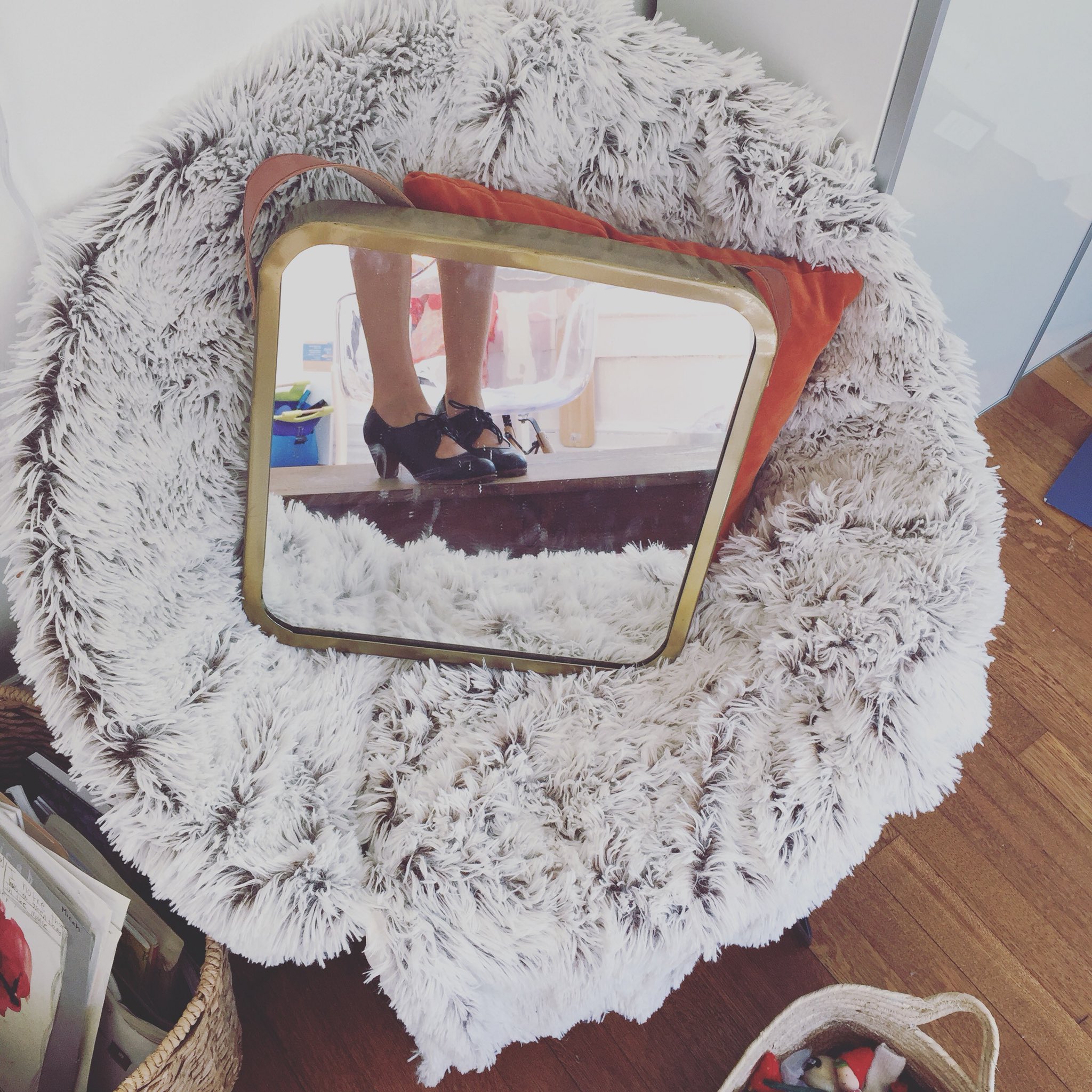
I'm finally stealing the time to learn a dance that my mother used to love--"it's the most feminist dance, Alina, no man to worry about pleasing, no fellow that needs to feel like he's leading". My writer side can't resist the urge to string those steps into a story, a series of Spanish instructional words describing parts of the body as well as flameno steps. The list form feels natural in stories trace new discoveries of knowledge or half-developed skills.
Though the feel is contemporary, list stories actually borrow from a classical rhetorical device, enumeratio, which divides or segments a big idea into navigable, numbered parts. We are hella fortunate to have so many incredible models in this form--Deb Olin Unferth’s “Things That Went Wrong Thus Far” comes to mind. In this flash, Deb uses the numbered list to narrate a couple's vacation from the first person POV. Each number makes further use of letters to expand the details. The strategy reminds of Benjamin Fondane’s “cine-poems” in that the list is structured by discrete emotional events rather than punctuation.
Since I'm not a fundamentalist about text or rules, some of the "enumerations" aren't as clear or numbered but the feel was somehow "listed." Without further ado, a long list of enumerated stories of various veracities that I admire and love. Because what's so great about having a cool list if you're not going to share it?
Aaron Burch, "Overcast" (Memorius)
Amorak Huey, "Where the River Is Shaped Like Words and the Words Are Shaped Like Blades" (The Collagist)
Andres Neuman, "The Things We Didn't Do" (The Paris Review)
Annabelle Carvell, "Good Girls Don't Use the F-word" (matchbook)
Ashley Adams, "What the Water Told Us" (Heavy Feather Review)
Barry Graham, "Thirteen Ways of Looking at a Road Trip" (Everyday Genius)
Barry Graham, "The Same Story" (FRiGG)
Blake Butler, "The Copy Family" (Fifty-Two Stories)
Caitlin Horrocks, "70 Sentences That DuoLingo.com Believes I Will Need to Know In Spanish" (CHEAP POP)
Carmen Lau, "Brief Interviews with Fairy Women" (The Coil)
Carmen Maria Machado, "Especially Heinous: 272 Views of Law & Order SVU" (The American Reader)
Chris Ames, "Twenty-two voicemails" (Heavy Feather Review)
Christopher Merckner, "Cabins" (Lithub)
Claire Polders, "Office Women: Three Portraits and Thirteen Questions" (Necessary Fiction)
Claudia Cortese, "The Hunger Essay" (Gulf Coast)
Claudia Cortese, "The Red Essay" (Mid-American Review)
Claudia Cortese, "The Twine Essay" (Black Warrior Review)
Deb Olin Unferth, "Things That Went Wrong Thus Far" (Boston Review)
Debbie Urbanski, "An Incomplete Timeline of What We Tried" (Motherboard)
Elaine Chiew, "Compendium of Chinese Ghosts, Part I & II" (Jellyfish Review)
Eshani Surya, "Between Colitis Flares, Expect the Following Symptoms" (New Delta Review)
Eugenio Volpe, "Quadrupled" (FRiGG)
Glenn Shaheen, "Water in Its Three Forms" (matchbook)
Gwen E. Kirby, "Shit Cassandra Saw That She Didn’t Tell the Trojans Because at that Point Fuck Them Anyway" (Smokelong Quarterly)
James Yeh, "Girl With Cool, Damp Mouth, of Four Very Short Stories" (Everyday Genius)
Jamie Grefe, "Obscurities of the Doom Horizon: A Series of Forty Eight Interconnected Stories" (Gone Lawn)
Jennifer Egan, "Black Box" (The New Yorker)
Jennifer Genest, "Ways to Prepare White Perch" (New Delta Review)
Jeremy M. Davis, "The Terrible Riddles of Human Sexuality, Solved" (Evergreen Review)
Jeremy Packert Burke, "Russian Verbs of Motion" (Nashville Review)
Jim Ruland, "The Lever" (Fanzine)
John Meyers, "Seven Confessions" (Cease, Cows)
Joshua Cohen, "Indentical City" (Fanzine)
Kate Petersen, "Homework 3 (Spring 2016)" (The Collagist)
Katherine D. Stutzman, "First Lines from Frank O'Hara" (jmww)
Kathy Fish, "A Room With Many Small Beds" (Threadcount)
Kathryn Lipari, "Twelve Things I Can Tell You About Cutting" (Smokelong Quarterly)
Kathryn McMahon, "Twelve Things Only the Mosquitos Know" (Cease, Cows)
Kristen Iskandrian, "Remarks My Immigrant Mother Has Made About Babies" (PANK)
Lea Page, "Things I Did After Each of 32 Rejections" (Brevity)
Leigh Stein, "Writing Prompts for Girls and Women" (The Rumpus)
Leonard Michaels, "In the Fifties" (This Recording)
Lindsay Hunter, "Three Things You Should Know About Peggy Paula" (Fifty-Two Stories)
Louise Phillips, "21 Stories About Samantha" (Requited)
Mark Atkinson, "Five Fears" (Gone Lawn)
Mark Budman, "Super Couple" (New World Writing)
Marsha Pelletier, "How to End a Relationship" (Nailed)
Matt Bell's "An Index of How Our Family Was Killed" (Conjunctions)
Megan Giddings, "Three Boyfriends" (Passages North)
Meghan McClure, "The Grieving House" (Pithead Chapel)
Mercedes Lucero, "How to Heal a Family in Three Easy Steps" (Fiction Southeast)
Meriwether Clarke, "The Grimm Brothers: A list essay" (North By Northwestern)
Molia Dumbleton, "Twenty Four Hours" (Gone Lawn)
Nicholas Grinder, "Formers (By Alphabet)" (Caketrain)
Paul Crenshaw, "12 Bible Stories in Need of Revision" (Subtropics)
Peter Wild, "Radical Adults Lick Godhead Style" (Fifty-Two Stories)
Randal Eldon Greene, "Irony" (3 A.M. Magazine)
Rebecca Barnard, "How to Be Another Person in Five Days" (Smokelong Quarterly)
Rebecca Orton, "Every Age She'd Ever Been" (Gone Lawn)
Richard Siken, "Field of Rooms and Halls" (Gulf Coast)
Rob Roensch, "Peter" (Bull: Men's Fiction)
Robert Lopez, "Three Subway Stories" (Okey-Panky)
Stan Brown and Brad Adler, "40" (Evergreen Review)
Stephen Graham Jones, "Modern Love" (Everyday Genius)
Steven Millhauser, "Thirteen Wives" (The New Yorker)
Suzanne LaFetra, "Nine Days" (Brevity)
Tara Laskowski, "The Etiquette of Adultery" (Necessary Fiction)
Tuli Kupferberg, "101 Ways to Make Love" (Evergreen Review)
Victoria Redel, "The Way It Began" (The Literarian)
Wendy Oleson, "How I Liked the Avocados" (Smokelong Quarterly)
Will Slattery, "Impressions and Preliminary Maxims Gleaned from Teaching High School Creative Writing" (Essay Daily)
Tangentially, a flashback to one of my list attempts: "Seven Stories About Girl Scars" (Tinge)
(Lots of thanks to Wigleaf, where I first discovered so many of these stories.)
Bonus: a few list stories forms I haven't read and someone should maybe try.... lists that might be fun and somewhat summer-tasty... lists I'd love to see or read:
A field guide to the plants in your backyard
Colors of night
Nicknames you wanted to use but didn't
Hotels or motels where you've stayed and what happened
Ice cream flavors
Toenail polish colors
Ways to say asshole in various languages
Little Free Library books
Phantom Hour. By James Meetze. Boise, Idaho: Ahsahta Press, 2016. 83 pp. $18.00.
James Meetze's Phantom Hour embraces metaphysical uncertainty. In this collection which Meetze inscribes "for my father and for his memory", we encounter a poetics of amnesia and absent memory. The geography is immediate, located within the human body, its failings, and the mind which negotiates time through memory. Poetry becomes a vehicle to bear absence, to speak silence.
For the son who aims to paint a portrait of his father, dementia offers a heavy brush painting over the curves, erasing beloved details and particularities, obliterating perspective and light, leaving vague shapes and abstracted loss. "Memory is the architect of forgetfulness", but also the agent of preservation, the palette in which we hold one another captive, the curator of what is to come. The language reveals memory's antipodal nature, a back and forth, erase and rewind, interrupted by the way in which objects render the absence of memory palpable.
To convey this dizzying motion, Meetze makes use of form, alternating between lineated stanzas and lyric into heavy prose blocks.
This drifts between his father and memory of the person his father was when he had the ability to say it. The poems are his "profession":
to record the trail of our flesh: this.
When he offers "lyric as lineage", Meetze addresses his father as a son who writes in order to remember-- "to know the narrative of our blood." The flesh is a staging ground for embodied history, and the narrative of blood is filled with the stories of others:
I address myself in reference to what I remember.
This address includes multiple audiences-- the father he knew, the face behind the phantom, and the fear of ghosts dwelling in our own blood. While the science of genetic mapping can offer us new certainties about the origins of Alzheimer's, it provides no exorcism, no cure for genetic haunting. The phantom in the gene code-- this "genetic disposition"-- the science of what we cannot prevent. These are questions which others must answer for us. In our name.
Family history hides inside a surname-- "a noose", by Meetze's metaphor-- which renders us subjects, a place in our common past from which the serialized self is "hung", simultaneously extinguished and eulogized. Meetze seems to suggest that mythologies provide a way to incorporate the change and transform surprising events into safe, holy, untouchable spaces.
Want and story and loss inhabit me
speaking words aloud to make them real things.
The phantom hour is marked by the absence of the human and yet the memory which intervenes re-builds this absence into a physical fact, solid as "gray matter". Meetze's muse expands to include the mind itself, our place in that mind, the rituals of entry and exit. And the risk inherent in writing for phantoms.
Unlike automatic writing which transcribes the words of the absent, we are faced with the terror of possible forgery. Fear of forgetting, of wronging, of perverting, is present. Love tempts us to idealize our parents as parts of a usable past. This temptation lies in the hollows of Meetze's half-shades:
Look, ghost, you too are legend, madman
a stanza in our longer story.
The ethics of remembering hinges on this blurred boundary between remembering and rendering. When a body is rebuilt or re-membered, it is an approximation of an original, at best. We see this ethics at work in the construction of memorials and public monuments in which a certain valiant aspect of the memory is rendered solid and immovable.
The ghosts this poem is written for
are the ghosts of the poem.
Neuroscientific studies show memory to be a process of constant revision. Each time a particular memory is accessed, the mind rewrites and revises. The violation of lived reality is inescapable in the act of honoring the past. In Meetze's use, honor is not merely verbal but "perpetual condition". He juxtaposes the rigidity of his father's honor--its diligent manners, its formal gestures-- against the fluidity of memory itself.
Everything is not what we assume
and this is the problem; the body in this world
moves between challenges and finds its way
to that other world in which the ghosts say.
The saying and the said. the careful use of syntax to reverse expectation, as in the line: "The specters of our past are with us to say." Our loved ones cannot stay, Meetze acknowledges, while asserting a greater privilege, the possibility of "saying".
"Sacred to the memory" it says.
If only, like this, the mind
were a stone
and the story its engraver.
This distinction between saying and speaking is a fascinating ontological question which deserves further poetic treatment.
The liturgical aspects of poetic longing emerge in Meetze's interspersed incantations of holy words ("Here is the body, and here the blood."), and the pulse of fear released by careful caesura and lineation.
My prayer is narrative; it too is a form of song.
Those hold together everything we remember.
We abandon the chronological linearity of historical time to for the multiplicitous memories and associations of neurological time. How to deal with an end to our linear, earthly lives?
These questions are not meant to be answered.
I think existence hinges on our unknowing.
The poet's challenge is to acknowledge the awe in these questions rather than depict their tidy resolution. The tools of the human spirit, the poet's screws and hammers, have not kept pace with scientific discovery. We are left with the same broken techne:
When I asked, a caesura
where an answer should be.
This house could be.
You or I were not yet there, were,
in some small way, lacunae,
imagined in absentia.
Meetze's assertion--"I am nonlinear"-- dangles between response and proposition. This interstitial, in-betweening spirit is the poet's voice. Giving up the things we have memorized and known in exchange for the things we cannot believe-- the phantoms, the nonlinear time, the material insistence of placed objects-- we permit the memories to speak for themselves. Meetze acknowledges: "These memories comprise my council." But the council does not absolve us. We are left with the responsibility of reconciling our family histories in the larger context of current life.
Meetze flirts with Jean-Luc Godard's suggestion that art has no obligations to memory and no duty to render reality truthfully, since truth is an outcome inherent to the process of well-made art. Despite this implied freedom, the placed poet, the poet charged with family history, struggles with the intimacies of memory, or how it becomes a process of negotiation within families, a narrative woven and rewoven by different voices, a "we" that unthreads into separate strands:
No one wants
to be a river
more than we.
"Remember lest you be haunted" is the twentieth century's warning, the vestige of totalitarian regimes, gulags, and nationalisms. But Meetze remembers in order to be haunted, as if the haunted is one emboldened by courage to hunt forbidden images. The poet becomes the haunted hunter of memory. We trust him for being loyal to the memory rather than the world which makes use of it.
As the cycle winds down, Meetze returns to absence. Rather, he returns to the absentia of poetry:
The phantom is in the hour of the book, it is the book, and the work the words do in the absence of their author.
Though Meetze doubts his role as son, progenitor, and patriarch, he establishes his bearings in a poetic vice. His father did not trust the poet to tell a true story. Yet, when Alzheimer's arrives, it is the poet who is best equipped to bear this journey towards loss.
In the moving finale, Meetze gives his father permission expand the boundaries of what we see. A simple envoi for an unfathomable journey:
I hope it is sound.
Poised between wine and the blood, the invisible act is transubstantiation. This transubstantive space that lingers between the shadows of synapses is Meetze's lodestar. It is courageous, metaphysically transgressive-- utterly shameless in its sublimity.
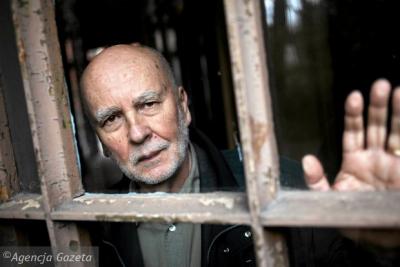
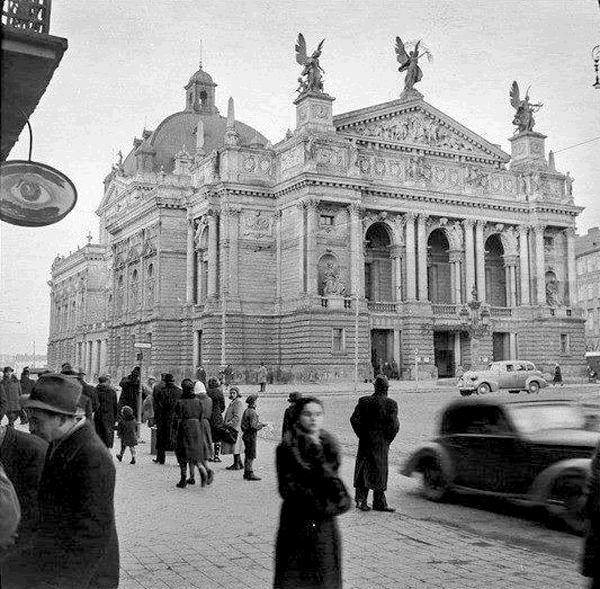
Poetry Daily published a beautiful excerpt from Adam Zagajewski's Slight Exaggeration and I need to save--to savor and swizzle-straw--the parts that struck me. So I've kept the saliency in conversation with poems that run back through my head, run back on railroad tracks as if scheduled.
“I won’t tell all regardless. Since nothing much is happening anyway. I represent, moreover, the Eastern European school of discretion; we don’t discuss divorces, we don’t acknowledge depressions. Life proceeds peacefully around me, a gray and exceptionally warm December outside my window. A few concerts.”
Encounter
by Czeslaw Milosz
We were riding through frozen fields in a wagon at dawn.
A red wing rose in the darkness.
And suddenly a hare ran across the road.
One of us pointed to it with his hand.
That was long ago. Today neither of them is alive,
Not the hare, nor the man who made the gesture.
O my love, where are they, where are they going
The flash of a hand, streak of movement, rustle of pebbles.
I ask not out of sorrow, but in wonder.
“A poem is like a human face—it is an object that can be measured, described, cataloged, but it is also an appeal. You can heed an appeal or ignore it, but you can’t simply measure its meter. You can’t gauge a flame’s height with a ruler.”
Tortures
by Wislawa Szymborska
Nothing has changed.
The body is susceptible to pain;
it has to eat and breathe the air, and sleep;
it has thin skin, and the blood is just beneath it;
an adequate supply of teeth and fingernails;
its bones can be broken; its joints can be stretched.
In tortures, all this is taken into account.
Nothing has changed.
The body shudders as it shuddered
before the founding of Rome and after,
in the twentieth century before and after Christ.
Tortures are just as they were, only the earth has grown smaller,
and what happens sounds as if it's happening in the next room.
Nothing has changed.
It's just that there are more people,
and beside the old offences new ones have sprung -
real, make-believe, short-lived, and non-existent.
But the howl with which the body answers to them,
was, is and ever will be a cry of innocence
according to the age-old scale and pitch.
Nothing has changed.
Except perhaps the manners, ceremonies, dances.
Yet the movement of hands to shield the head remains the same.
The body writhes, jerks and tries to pull away,
its legs fail, it falls, its knees jack-knife,
it bruises, swells, dribbles and bleeds.
Nothing has changed.
Except for the course of rivers,
the lines of forests, coasts, deserts and glaciers.
Amid those landscapes roams the soul,
disappears, returns, draws nearer, moves away,
a stranger to itself, elusive,
now sure, now uncertain of its own existence,
while the body is and is and is
and has nowhere to go.
“ Musil wrote a beautiful speech when Rilke died—he was among those who recognized the poet’s greatness early on. I also found a description of the tragicomic talk Musil gave at the Congress for the Defense of Culture in Paris in June 1935. He had no idea that the Congress had been organized by the Communists, and thus only Hitler’s system was open to criticism: the Soviet Union was off-limits. But Musil defended the artist’s individualism and warned against the collectivism emerging in various European nations. He insisted, too, that there was no connection between culture and politics, that culture’s very existence depends upon some delicate, capricious, unpredictable element, hence even a decent political system won’t automatically produce great art..... ‘The Man Without Qualities’ operates on an entirely different principle; all the references to political and philosophical reality have an intermediate character, they’re mystical, allusive. Musil was captivated by ‘der Möglichkeitssinn,’ the sense of possibility, by whatever happens exclusively in the conditional.”
“I can’t write poems in recent weeks either. It’s not the first time it’s happened. And it’s not worth going on about either. There’s not much to tell. Karol Berger found something Victor Hugo said on the subject—he told me about it as we were walking in Paris, in the 16ème. When someone asked him how hard it was to write poetry, he answered, “When you can write it, it’s easy, when you can’t, it’s impossible.””
Plans, Reports
by Adam Zagajewski
First there are plans
then reports
This is the language
we know how to communicate in
Everything must be foreseen
Everything must be
confirmed later
What really happens
doesn’t attract anyone’s attention
“An extraordinary person, an exceptional mind once lived there, someone who defied the tendencies of his time (but who said we should yield to the age’s tendencies?), who tried to synthesize all the events and ideas of his historical moment. He was the only serious intellectual I knew who studied even the Harry Potter series. What for? To find out what children were reading, what draws them, and what it says about a shifting world. He good-naturedly acknowledged Harry Potter; nothing bad in it, he said in his baritone. He was more like Thomas Mann than Robert Musil: only what really existed stirred him, not Möglichkeitssinn, not the sense of possibilities. He didn’t lack for mystical appetites, but his mysticism fed on the yeast of reality. In the long poems he was a shark. And a shark in his reading, devouring theology and philosophy, poetry and history. I think of this when I meet young poets on both sides of the Atlantic. Sometimes they seem to notice only the most recent issue of the trendiest poetry journal. As if poetry weren’t—among other things—a response to the state of a world that shows itself in a thousand different forms, the grief of the unemployed man sitting on a park bench on a lovely April day alongside philosophical treatises and symphonies.”
In Black Despair
by Czeslaw Milosz
In grayish doubt and black despair,
I drafted hymns to the earth and the air,
pretending to joy, although I lacked it.
The age had made lament redundant.
So here's the question -- who can answer it --
Was he a brave man or a hypocrite?
“And once again it was June—mild, long, slowly fading evenings, evenings promising so much that no matter what you do with them, you always receive the impression of defeat, of wasted time. Nobody knows the best way to get through them. March straight ahead or maybe sit at home before a wide-open window so that the warm air, saturated in the sounds of summer, may permeate the room and mingle with books, ideas, metaphors, with our breath. No, but that’s not right either, it’s not possible. You can only mourn them, those unending evenings, mourn them when they pass, as the days grow shorter. They can’t be seized. Perhaps these long June evenings can only be perceived by way of regret, remembrance, nostalgia. They can’t be plumbed: you’d need to head for the park, one foot in front of the other, while sitting simultaneously on the terrace and listening to the voices of the city fall still as the last blackbirds sing … But that won’t do either. Birdsong has no form, no adagio, no allegro. In a detailed study of music, a certain philosopher once observed that “nightingales don’t listen to other nightingales sing,” only somewhat exalted people do. Hence you can only tear yourself away when you get bored (let’s be honest here). Whereas a musical composition, subject to the discipline of form, forestalls the moment of our boredom...”
Indiscretion
by Ewa Lipska
Had she busied herself in time
with the systematic counting
of ship screws
it would not have come to this—
indecent acts of poetry.
“And just when it died, I was born. At dusk, in June, that distant life, which no longer exists—except perhaps on old postcards, where it’s diminished, turns into caricature, on postcards where we find, peering out at us, preposterous gentlemen with overripe mustaches and ladies with frantic hats upon which the gardens of Semiramis blossom, so that we can’t see ourselves in them at all. Only on these does it secretly appear anew. If only we could listen more carefully, look more closely … Someday something will happen, the inner reality will stand revealed. At the same time I realize that this sense of mystery, of secrets dwelling in these streets, in this park, is fleeting and hard to defend. If someone were to ask me ironically, “Mr. Zagajewski, what actual mystery do you have in mind?,” I’d be hard-pressed to answer. I also know that there are people, some of them highly intelligent, who can never be brought to acknowledge the postulate of a mystery hidden in a city, or a park, or a quiet street at dusk. No, they’d say, everything can be checked and measured, so and so many bird species make their home in the park, including two subspecies of woodpeckers, along with twelve squirrels, maybe two martens, and five bums.”
Forget
by Czeslaw Milosz
Forget the suffering
You caused others.
Forget the suffering
Others caused you.
The waters run and run,
Springs sparkle and are done,
You walk the earth you are forgetting.
Sometimes you hear a distant refrain.
What does it mean, you ask, who is singing?
A childlike sun grows warm.
A grandson and a great-grandson are born.
You are led by the hand once again.
The names of the rivers remain with you.
How endless those rivers seem!
Your fields lie fallow,
The city towers are not as they were.
You stand at the threshold mute.
“This crippled city requires not only sight and hearing, but imagination. Imagination, it’s true, bears only upon absent, distant places, as Proust says; we can’t imagine the street on which we’re actually walking, the room in which we’re standing, the person with whom we’re talking. But Proust lived in the classical era, before the disaster; he couldn’t foresee that one day there would be half-abandoned, half-existing cities, cities covered with a tarp of ugliness, cities lost and half-recovered. He couldn’t foresee that in such cities imagination becomes—must be—yet another sense, half imagination and half sensory apparatus, since here the everyday medically and empirically established senses don’t suffice, they must be supplemented by a half-shut eye, intuition … He couldn’t foresee our journey to Lvov, to a city that belongs to no one, not to those who left, nor to those who remain, and thus demands a new type of imagination. I didn’t speak at such length, of course, I couldn’t develop my argument, I was much more abrupt and emotional, clumsier, no doubt. Only now, as I sit in my room listening to music, can I write down what I really meant to say, conquering my eternal esprit d’escalier, I improve the imperfect reality of that evening when we sat in the cellar of that restaurant near Academic Street (the prewar name) in Lvov. Since after all I write this in order to revise my curtness, my clumsiness, to convert my scowls and half thoughts into longer, more convincing sentences.”

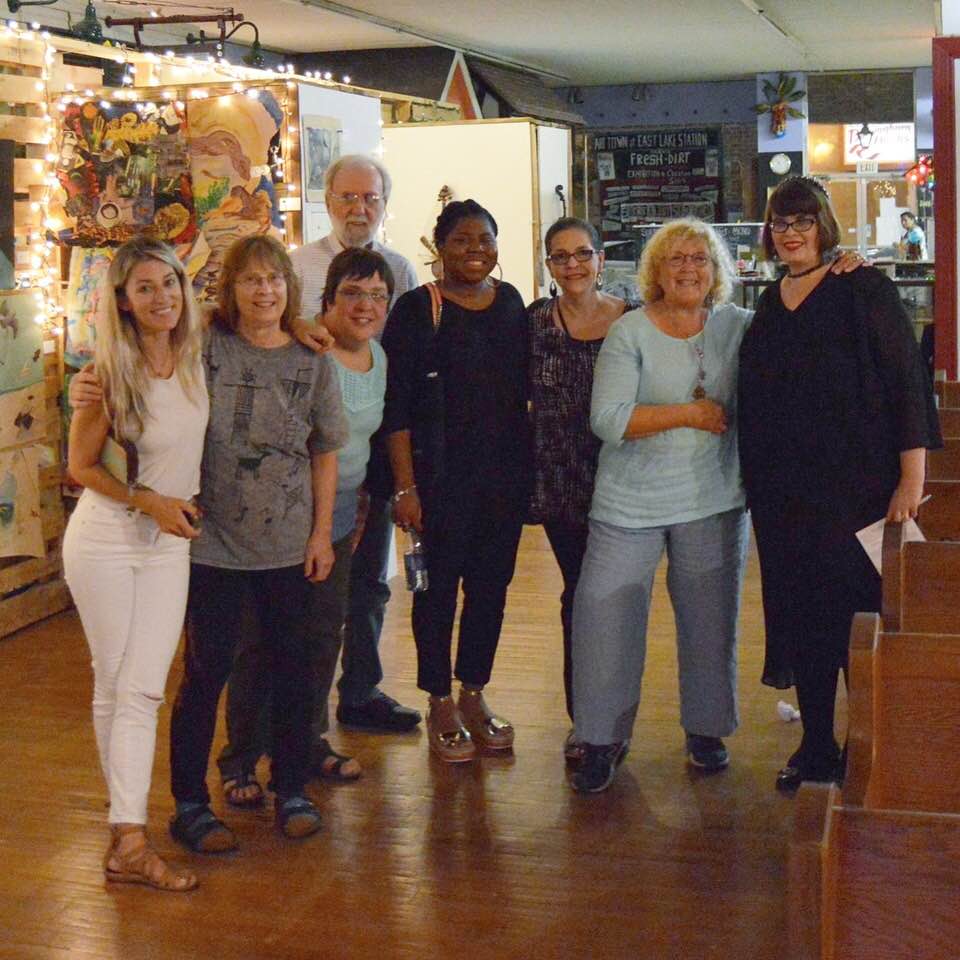
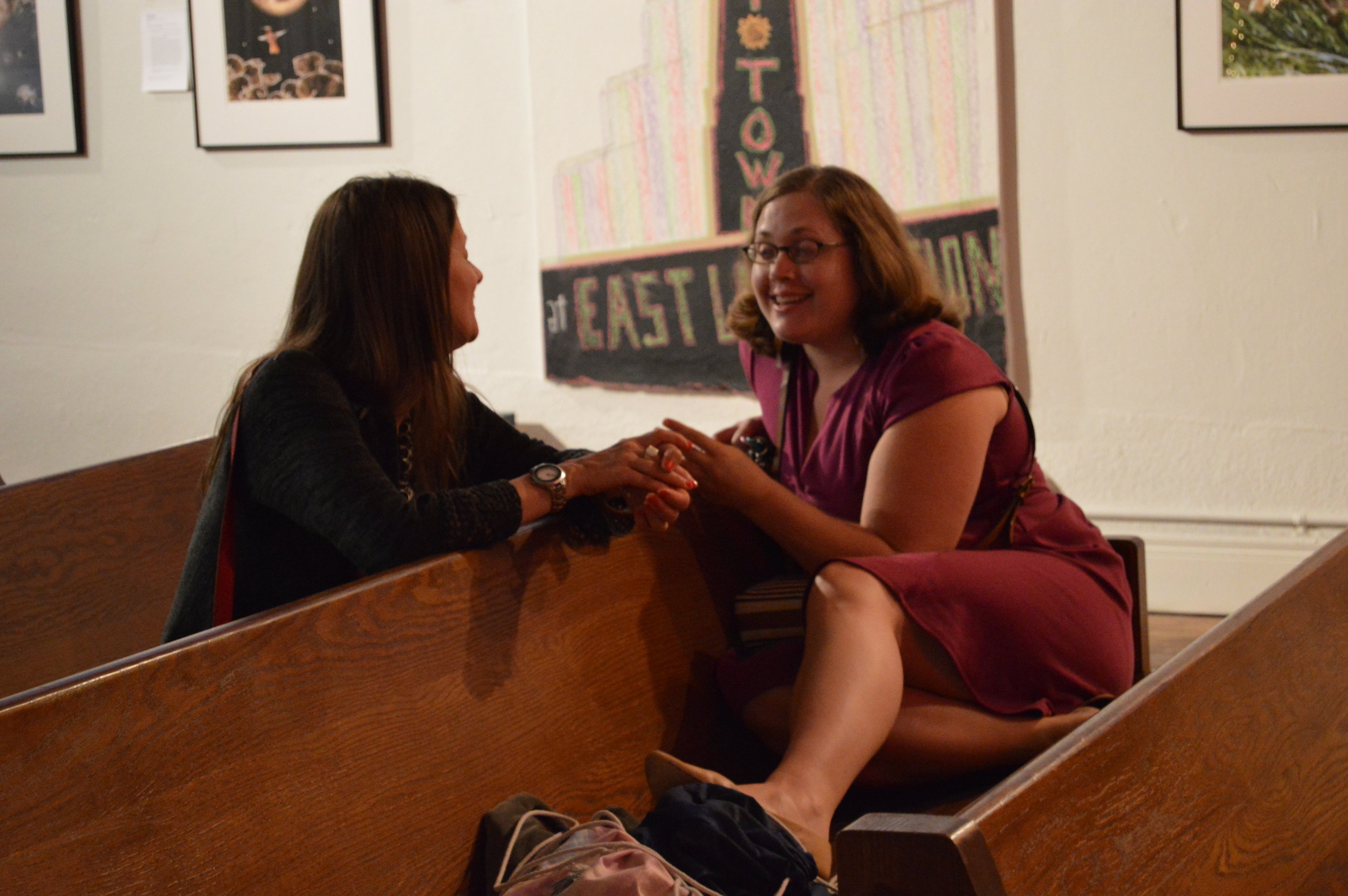
Yesterday, Heidi Lynn Staples and I launched our latest collections at a small place named Art Town in East Lake, a part of Birmingham. Being able to host a free book launch means the world to writers, and Art Town provided us with both space, a free sound system hook-up, a food set-up, tables, chairs, dishes, plates, anything we could have imagined.
It's hard to convey the coolness of this poster designed by Craig Legg, layered on top of old movie screen canvas pilfered from the former adult cinema across the street.... and it meant so much that Craig also added this book launch on the marquis across the street. That's right, Heidi and I were billed on the old adult theater sign. Don't be jealous.
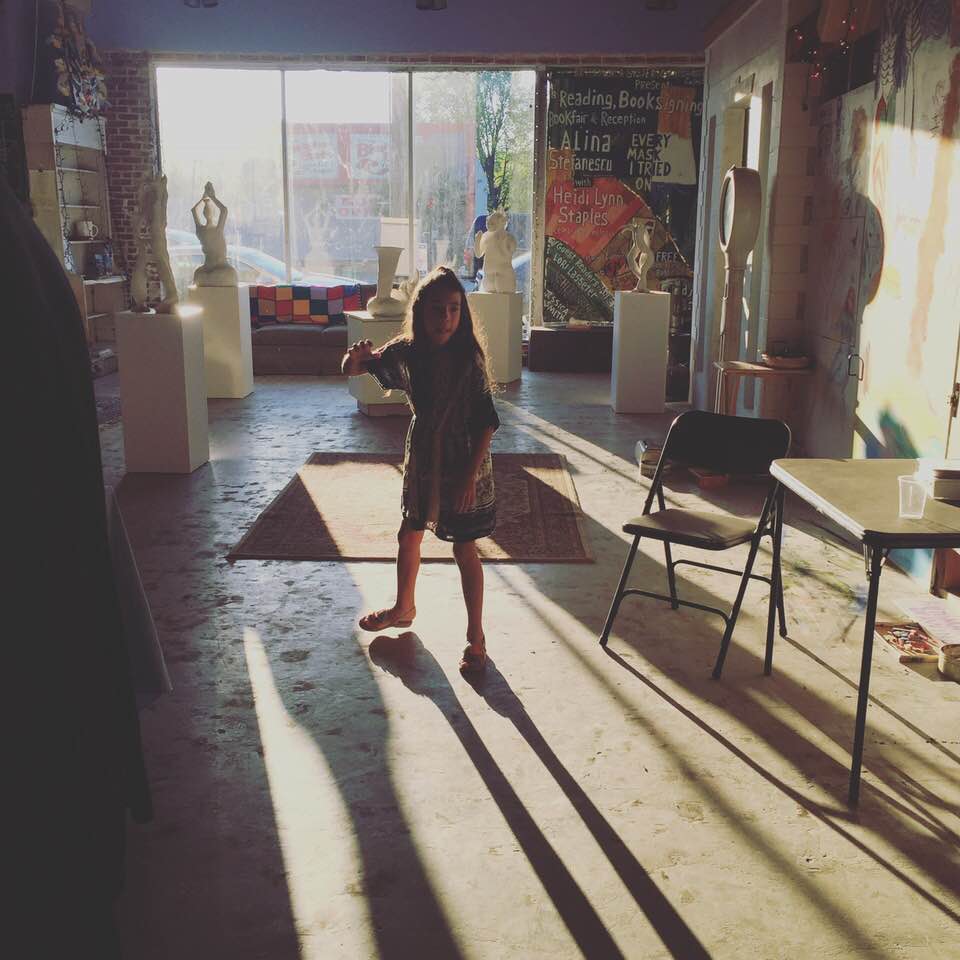
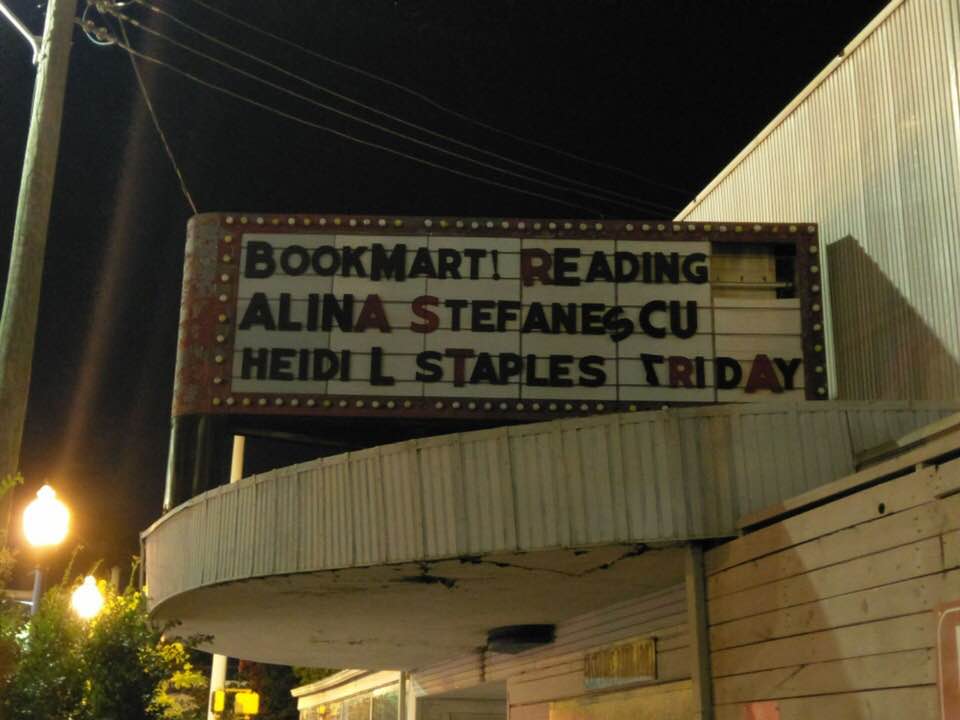
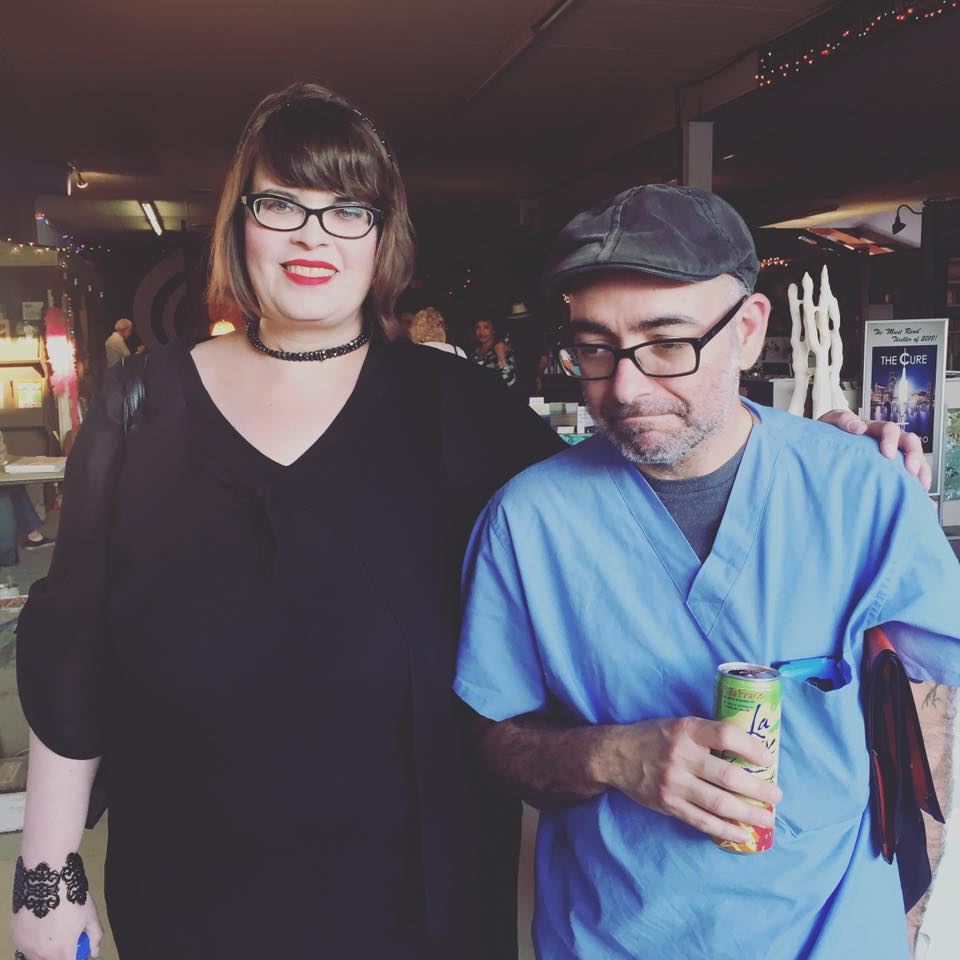
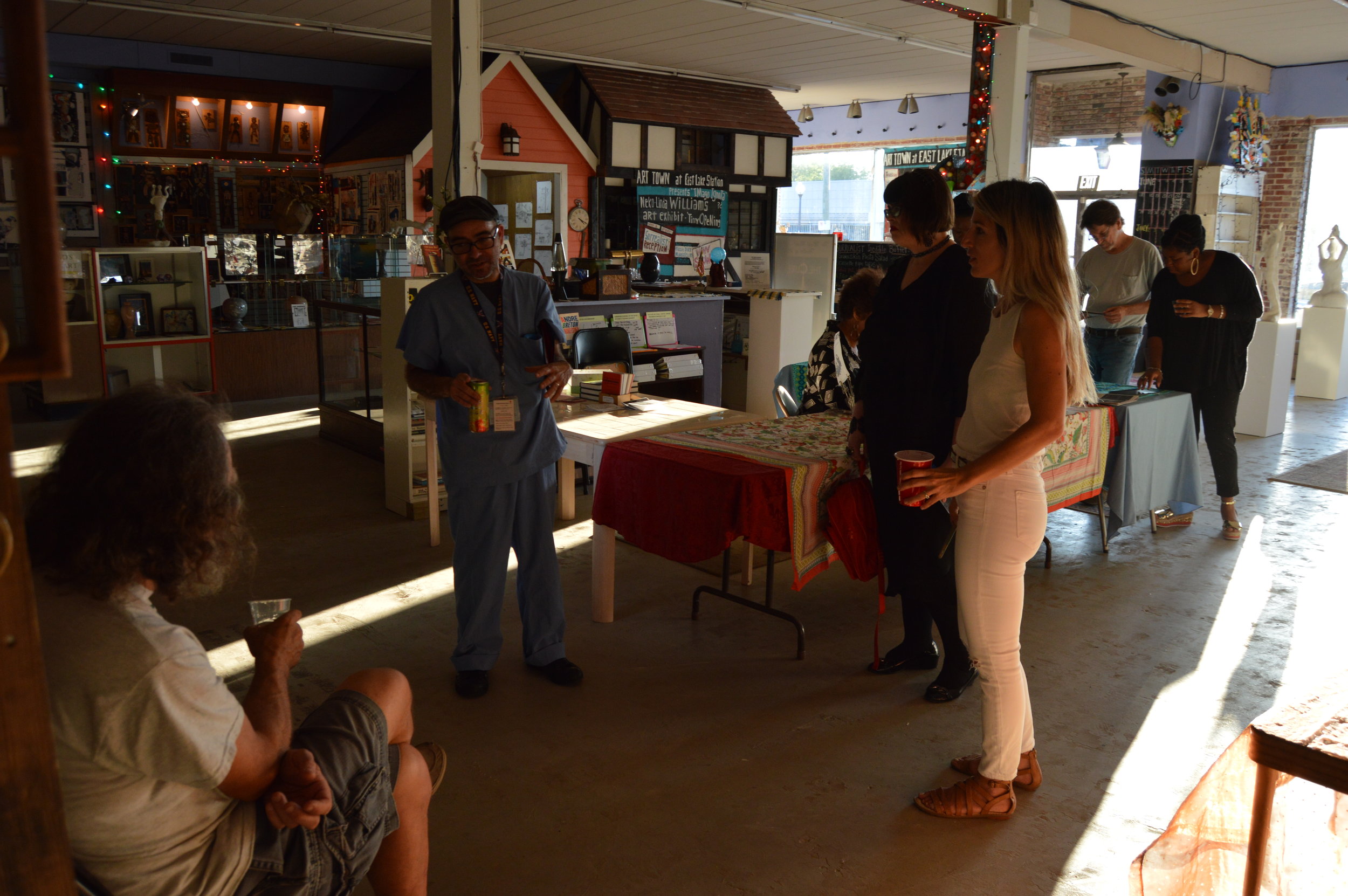

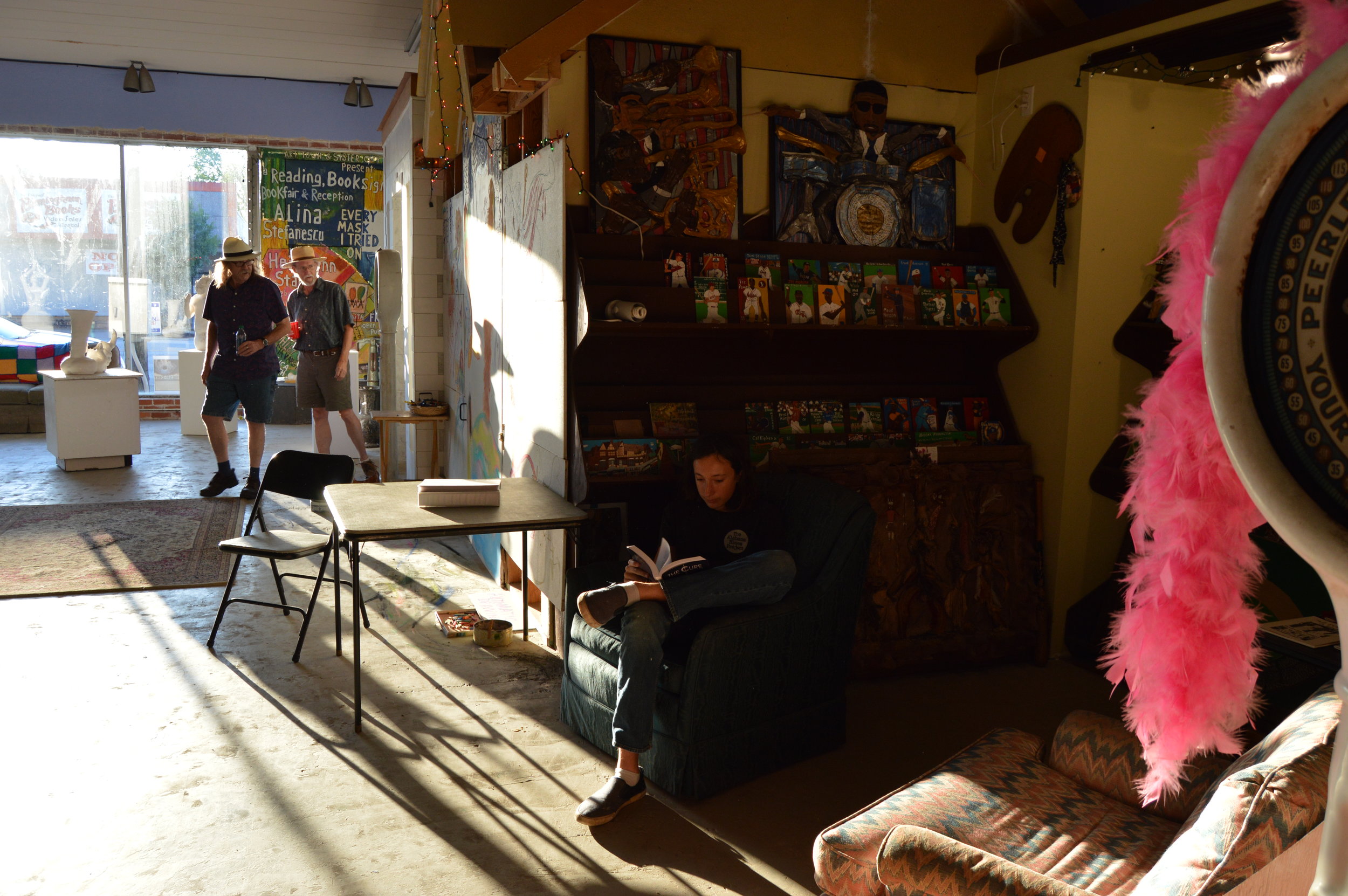
It was stupendous--and I was rendered, literally, stupid--by the opportunity to share the mic with fellow Birmingham writers and poets tonight.
Among my gratitudes, I have to mention Mojo Mamma Laura Secord and the women of Sister City Spoken Word Connection, a local writing collective that pops up whenever poetry needs to happen. I am proud to be a member and lend my voice to the many readings and fundraisers they've hosted throughout the years.


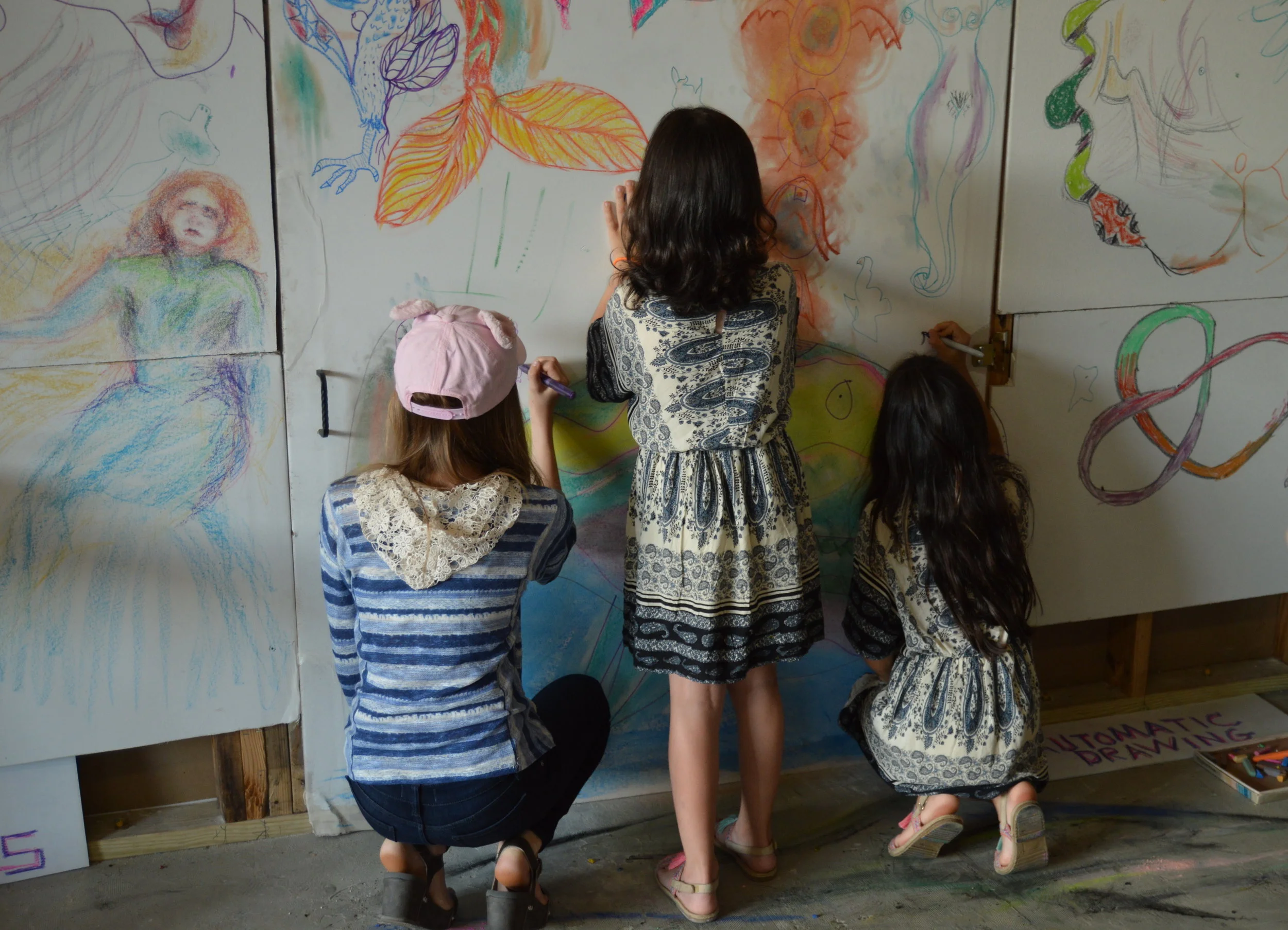
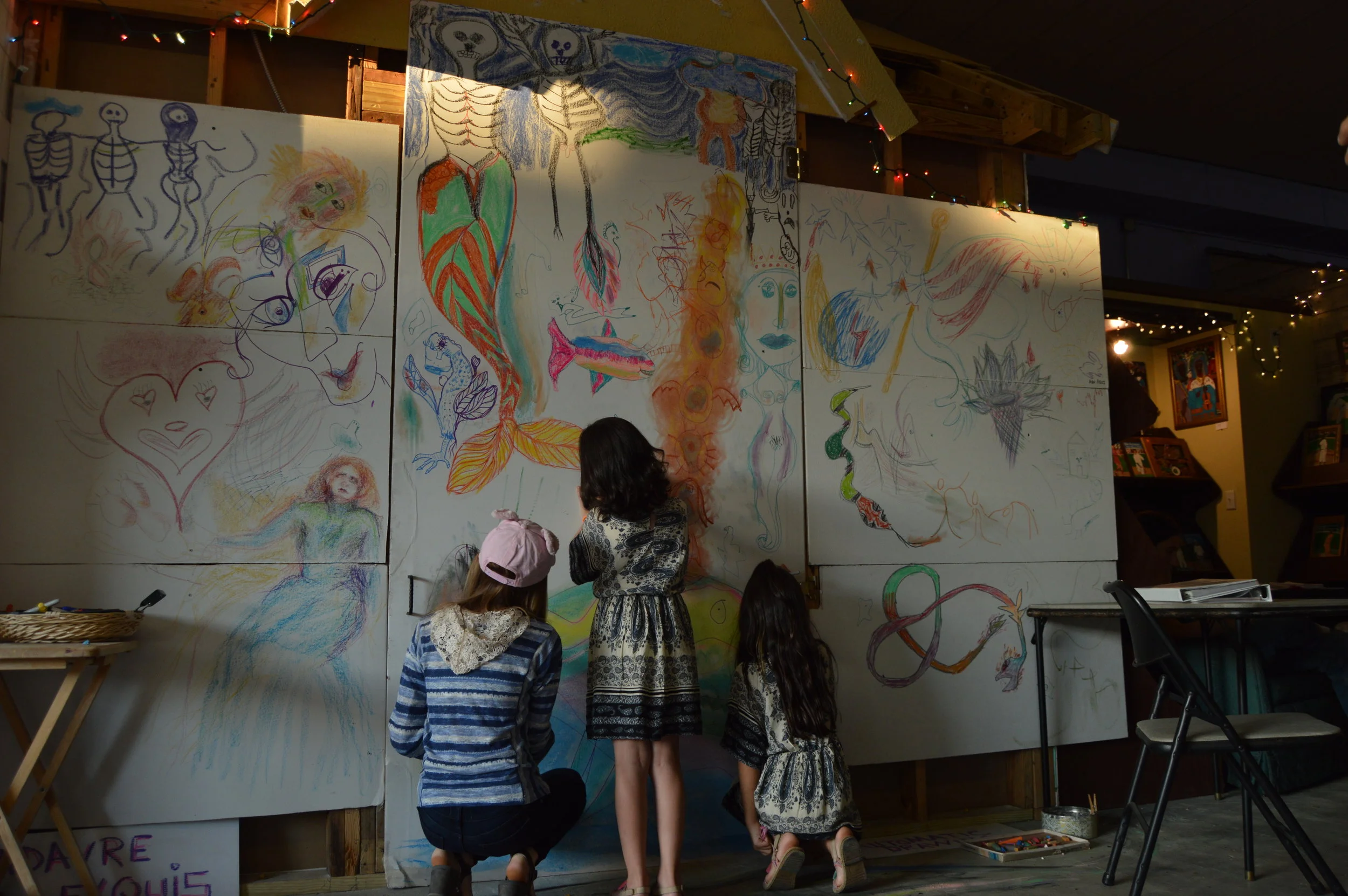
While the parents read, the kids will practice automatic drawing on the walls. Art Town has a strong penchant for surrealism, nourished by LaDonna Smith, whose multiple artistic talents include improvised violin solos, surrealist poetry, and anything her beautiful imagination conjures. This event would not have happened without LaDonna's encouragement and assistance.

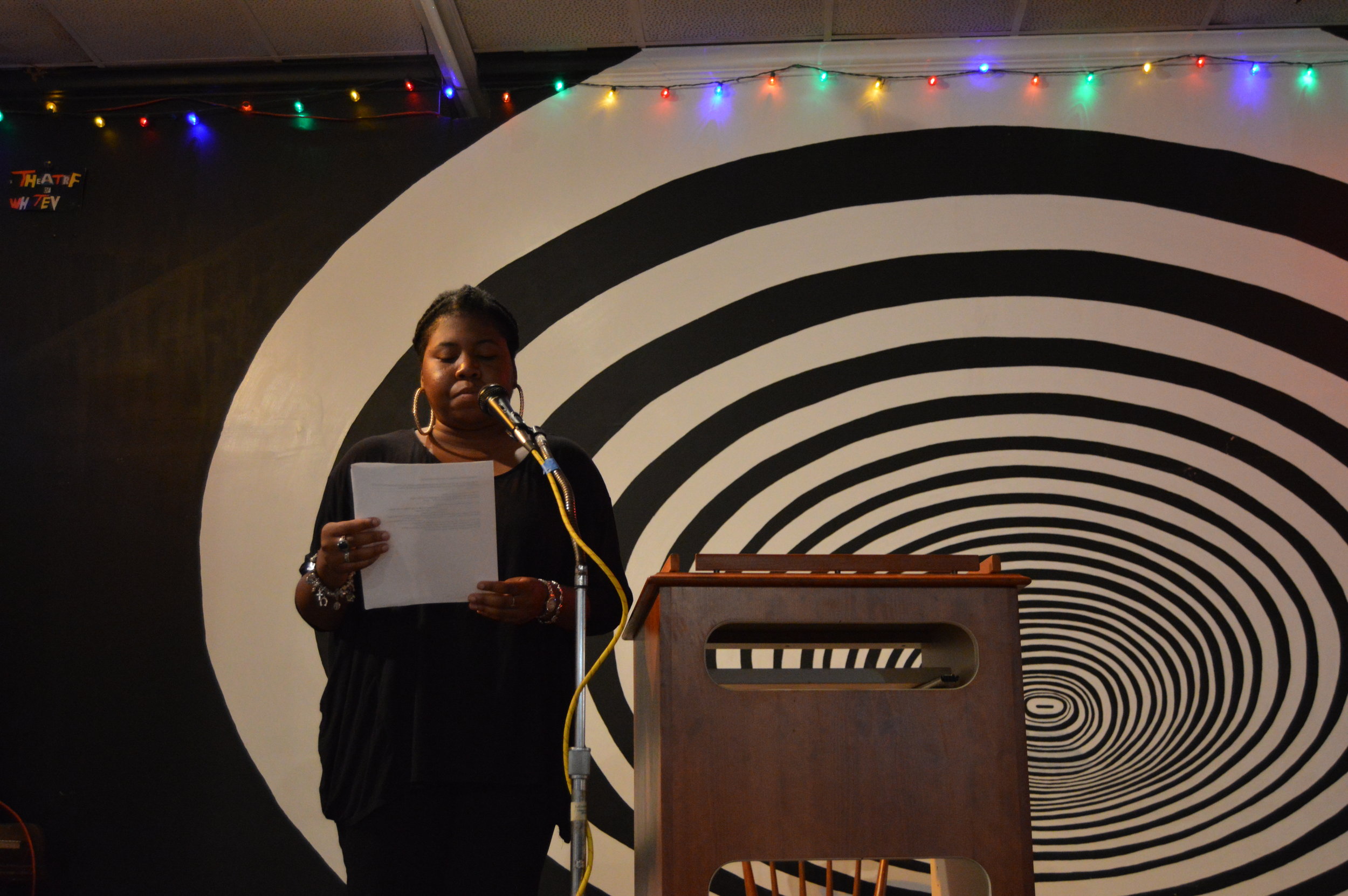
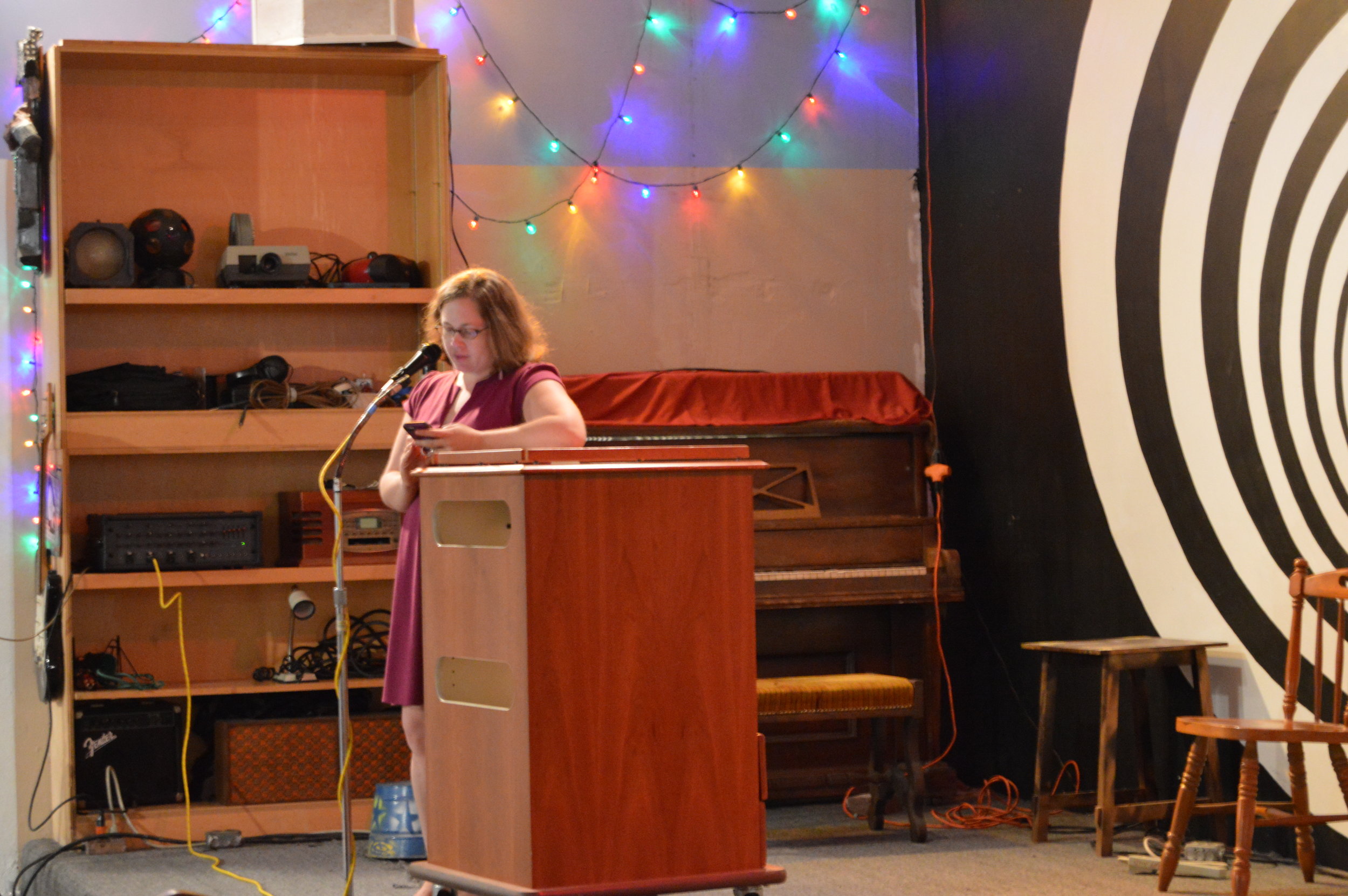
Feature readers Ashley M. Jones, Jessica Smith, Maria Vargas, and Lori Lasseter Hamilton warmed the stage (and the room) with their incredible poems.
“What lands lord the riverwalk? what in the lord is this lands all who walk? what when lord verb to walk the riverwalk to lord? what is lord over? what is lord under? a host of knobby riverwalk river cooters lords while neon nylon shorts thump thump thump the trail’s heartbeats or is beaten the fog wafts the deodorant wafts and as a barge of coal laden back slips along the Black Warrior river walk’s, water glinting with carcinogenic yet youthful highlights. ”
Heidi Lynn Staples read seven poems from her latest collection, A**A*A*A (Ahsahta Press, June 2018).
I read a few unpublished new poems from a collection-in-progress, including:
"When the Nice Men Hang Their Civil War Costumes to Dry on the Line"
"Longing in a Foreign Body"
"Chamber Tone Poem"
"Alabama, I Knew"
"Sul Porticello"
And then read a few unpublished micros from a fiction collection in progress, including:
"Zooooo"
"On being vulgar sometimes"
"On watching a woman fight with a man who is not her husband at the park"
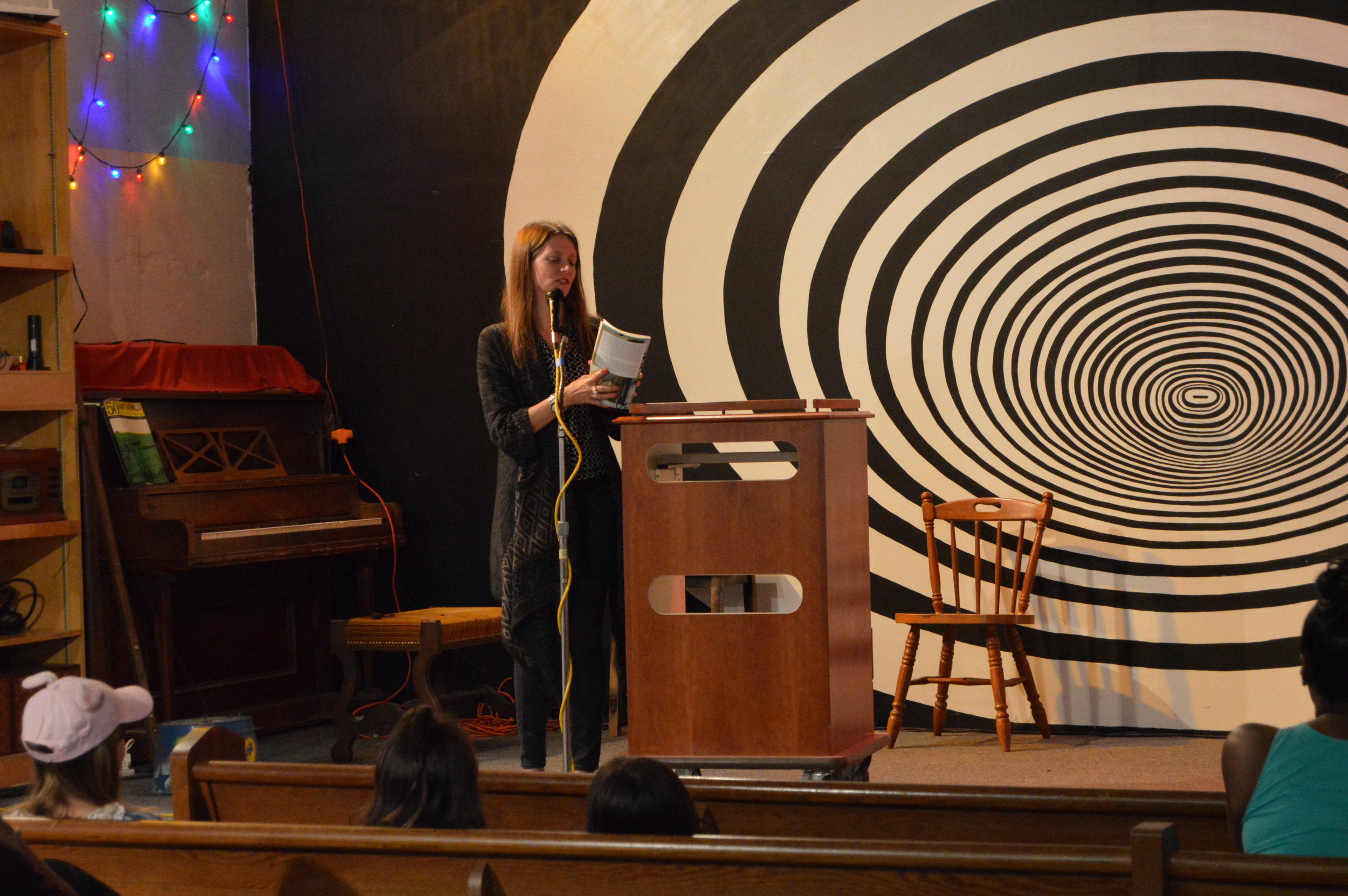
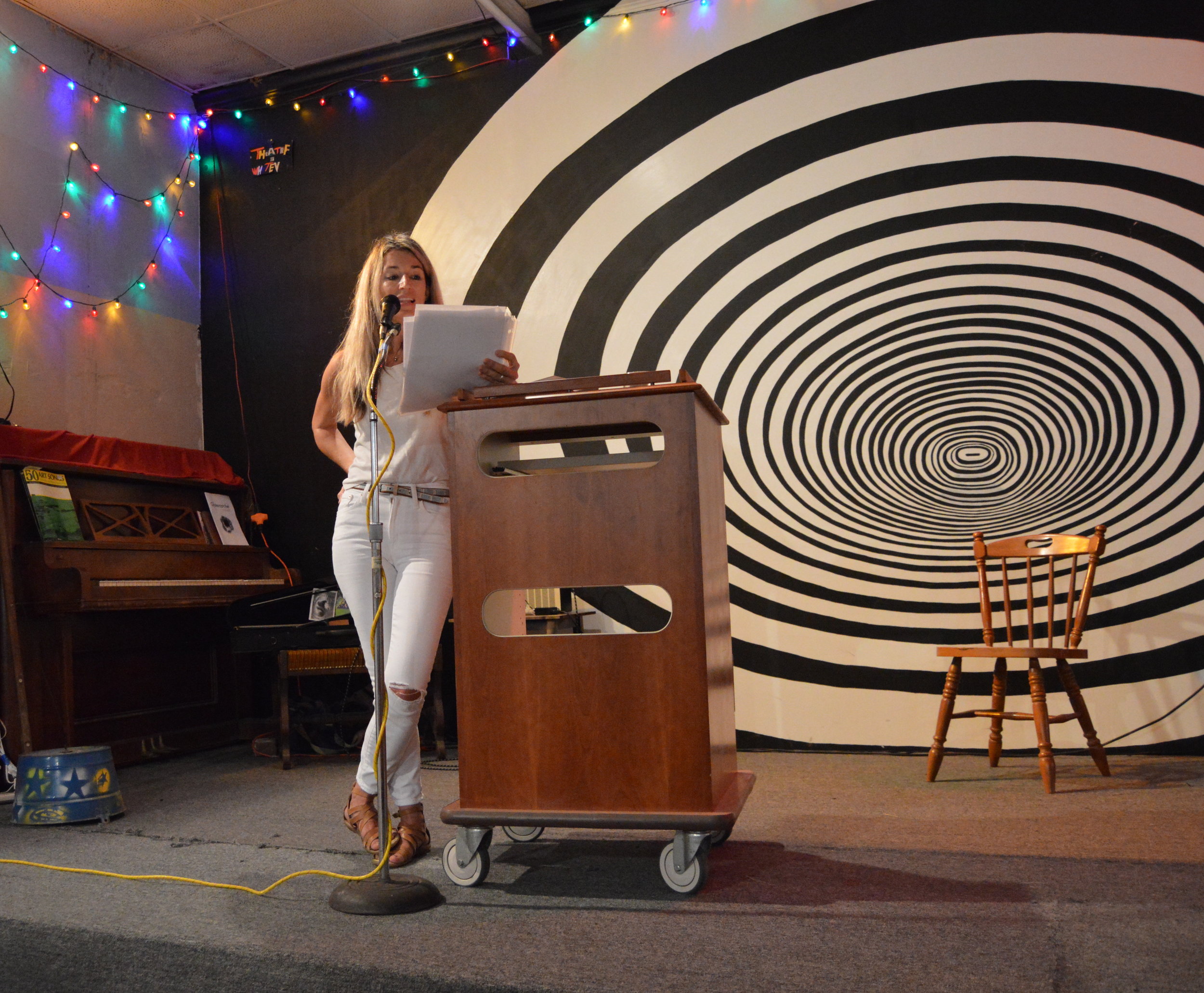
I finished off my set (or maybe I started) with a flash from Every Mark I Tried On, namely, "He Takes His Waking Slow," the title of which is inspired by a favorite poem by Theodore Roethke.
I love bringing poems to bear on fiction--dragging the lyric into the paragraph, changing the tempo of expectation, enlarging the possible escape route.
“Art—‘oh, Art’—besides being changeable, has the gift of ubiquity. ”

Paul Celan's 1960 speech, "The Meridian," is a gold mine of poetics. Celan explores the "theatrical death," which he suggests is iambic. The bolding is mine.
Ladies and gentlemen, I have placed my acute accent. I cannot hide from you any more than from myself that, if I took my question about art and poetry, a question among others, if I took it of my own--though perhaps not free--will to Buchner, it was in order to find his way of asking it.
Art makes for distance from the I. Art requires that we travel a certain space in a certain direction, on a certain road.
I am not looking for a way out, I am only pushing the question farther in the same direction...
La poésie, elle aussi, brûle nos étapes.
A man who walks on his head, ladies and gentlemen, a man who walks on his head sees the sky below, as an abyss.
He talks about poetry's unique DNA, a "strangeness and distance (perhaps of its own making).. for the sake of an encounter." A unique space in which brings "two kinds of strangeness next to each other." In order to sort "the strange from the strange," Celan introduces a word, "Atemwende," which means a turning of breath.
Poetry is perhaps this: an Atemwade, a turning of our breath. Who knows, perhaps poetry goes its way--the way of art--for the sake of just such a turn? And since the strange, the abyss, and Medusa's head, the abyss and the automaton, all seem to lie in the same direction--it is perhaps this turn, this Atemwende, which can sort out the strange from the strange?... Perhaps, along with the I, estranged and freed here, in this manner, some other thing is also set free?
Perhaps, after this, the poem can be itself... can in this now art-less, art-free manner go other ways, including the ways of art, time and again? Perhaps.
And so we witness the supra-reality of the poem's existence. Celan mentions the poetic practice of that time as one which shows a "strong tendency towards silence."
...the poem holds its ground on its own margin. In order to endure, it constantly calls and pulls itself back from an 'already-no-more' into a 'still-here.'
This 'still-here' can only mean speaking. Not language as such, but responding and --not just verbally-- 'corresponding' to something.
He describes the poem as a "presence in the present," almost as if it has a separate pulse, an Adam in the garden finding himself lonely.
The poem is lonely. It is lonely and en route. Its author stays with it.
Does this very fact not place the poem already here, at its inception, in the encounter, in the mystery of encounter?
The poem intends another, needs this other, needs an opposite. It goes toward it, bespeaks it.
For the poem, everything and everybody is a figure of this other toward which it is heading.
It's hard for me to imagine a lyricism this thick and interiorized in the current poetry world. We are seasoned in sharp edges, razors, word flips.... and maybe missing something. Celan doesn't make an argument for enlarging or expanding the scope of what we call art. In fact, he urges the opposite: "take art with you into your innermost narrowness. And set yourself free."
Inconclusively, poignantly, Celan pushes us deep inside these bodies which housed the monsters of the 20th century--now house the monsters of the 21st century--the planet's most reckless species, the hearts marred by dread.
...are these paths only detours, detours from you to you? But they are, among how many others, the paths on which language becomes a voice. They are encounters, paths from a voice to a listening You, natural paths, outlines for existence perhaps, for projecting ourselves into the search for ourselves... A kind of homecoming.
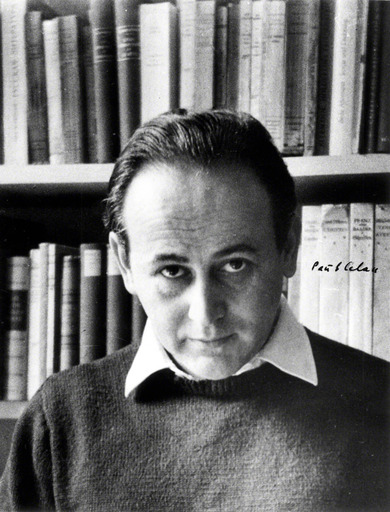

“Emptiness, my bride, who whistles who listens?”
“But when there is talk of art, there is often somebody who does not really listen.”
Jerome Rothenberg's book, Technicians of the Sacred, was hailed as the beginning of the ethnopoetics movement. His blog, Poems and Poetics, regularly features unique poets and writers from around the world.
I want to zoom into a fascinating conversation between Rothenberg and Heriberto Yépez, a conversation composed of fragments and pieces related to the disjointedness of the present, originally published in S/N New World Poetics, a publication edited by Charles Bernstein & Eduardo Espina. © 2012 and discovered by this mammal on Rothenberg's blog. A few fascinating quotes by Yepez:
A pantopia is an imaginary space or archive of persistent ruins and new components that not only constitute a compilation of free parts but most importantly makes possible the construction of a neo-memory—in which lightness-of-being permeates every stratum of reality.
The American dream means the dream of a new memory.
Pantopia has been also explored by American science-fiction and Hollywood movies—in order to develop a cybermnemics, a control of memories. In this shift from historical time to total containment-space, gathering, remixing, cross-reference and archiving are the rules of the game.
In writing almost everything is reactionary in advance. Literature can be defined as the forerunner of new methods of co-control in the upcoming de-capitalism.
“Cut to the chase” is how History was dismembered. And how cut-spatialized time invented both short story and collage.
The denial of depth in current American experimentalism and the denial of mammal evolution in the human species in American mainstream schools are part of the same American logic: this—We—is the only reality that can exist. Nothing can surpass us or be more profound than this.
Yepez on ethnopoetics * "About Me: In English", a poem by Heriberto Yépez * A counter-interview with Heriberto Yépez * Heriberto's vanished writing project, the Pessoan gesture or the post-modern post-workshop route * Archives of drafts for Paul Celan's Meridian at Stanford University


“Those who can ask without shame are viewing themselves in collaboration with—rather than in competition with—the world.”
1. Tell me a story about parents and competition.
2. In How Fiction Works, James Woods discusses writing over character by inserting a "descriptive pause" which draws attention to surface or a texture, an abrupt interruption that changes the pace or movement in a scene. He notes that fiction writer Joy Williams is an expert at this strategy of pinching loose strands from a small rug. Write (or rewrite) a scene using this descriptive pause to experiment with modulation and pacing.
3. Oscar Wilde said the most humiliating moment in his life was when he sat in the rain for thirty minutes at a train station between prisons, pummeled by the jeers and laughs of bystanders. Fingers pointing— being subject to a gaze he could not refute. He felt like rumor incarnate. Write a piece in which the edge between rumor and reality is revealed as a foreskin many do without.
4. In Ron Wallace's flash fiction, "Worry," he develops the following great metaphor: "Worry grew between them like a son, with his own small inconsistencies and then more pressing demands." By personifying worry as a child, Wallace shows how a married couple normalizes and nurtures worry, developing their own intimacy with it, holding it near, carrying it together. Try developing your own great metaphor that turns an emotion into a character. Alternately, write a flash fiction that offers a different metaphor for worry.
“A border wall is the opposite of fenestration. A clogging of the country’s pores, sure to incite inflammation.”
5. Justin Hocking describes "fenestrated writing" as writing through a window opening for light. Using his analogy, write two paragraphs, one walled, the other fenestrated, about the same topic. Notice your use of spacing and punctuation. How does white space survive a window?
6. A woman is grocery shopping when she notices a man watching her in the fruit aisle. She feels suddenly self-conscious. “What if he’s one of those men who looks down on women who buy bananas or grapefruits in the middle of June?”, she thinks. She opts to touch a few peaches, feel them out, check the expression on his face. He pretends not to notice. What happens?
“What I find far less appealing, for the most part, are stories that would seem to be in flight from all this, stories that hide some central kind of depth or complexity or fear, that do not tip a hand to a vast inner life, a primal reaction to impending death, or that sort of thing. Call it emotional artifice. It’s always a little bit depressing to be lied to, particularly with platitudes . . . It’s all good. No worries. That sort of thing. Really? No worries? None at all? OK. That said, there are poorly executed versions of the supposedly braver kind of writing, and all the distinctions fall away, because the result, without artistry, can be weak, unconvincing, embarrassing, pretentious.”
7. Revise and edit a recent piece of prose with an eye to Marcus’ view of the chem-trails that emotional artifice leaves across a story.
8. In an interview decades ago, poet Philip Levine said he didn’t have an enemy in Korea, meaning there wasn’t anyone there he wanted to kill. How is this definition of an enemy squared with our easy construction of dangerous others? Juxtapose this with NRA commercials of girls in shorts, spray tans, montage of slaughter weapons.
9. Write a flash about something you did to get attention as child. Or write a list flash of things you did to get attention as a child. If you were perfect, write a list flash of things that other kids did to get attention. And use that as a title without commenting on it—allow the text to absorb and reflect it instead.
10. Self-revelation fails when personal voice doesn’t scrutinize the connection between observer and observed. Just know that. Write it on the inside of your wrist in black pen. Now look up at your family and smile.